










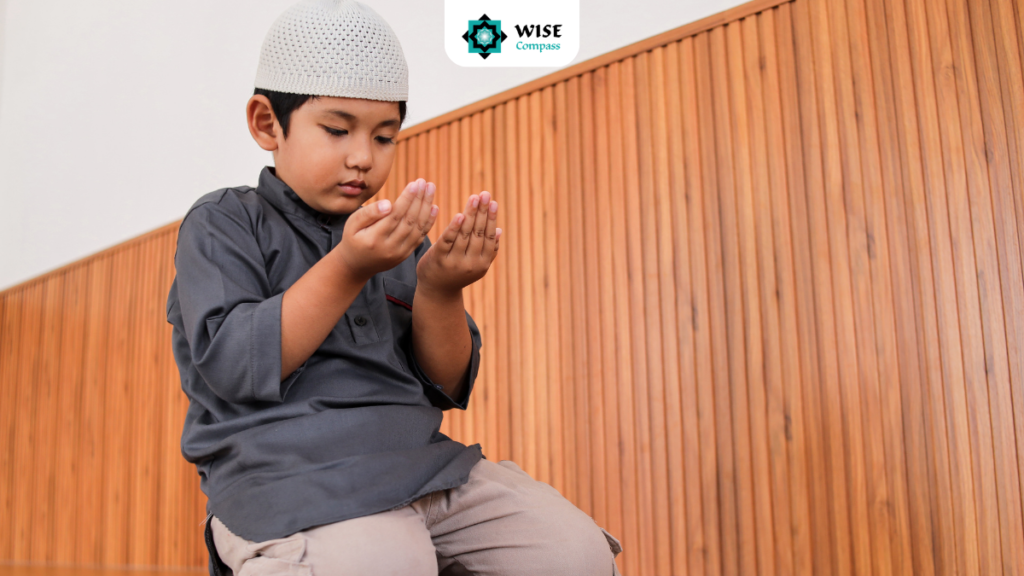
There is a conversation happening in your child’s life that most people never see.
It is not the conversation at school, or with friends, or even at the dinner table. It is the conversation between your child and Allah Almighty, the one that happens in the small, private moments: before they fall asleep; when they feel frightened and reach for something beyond themselves; when they receive something good and feel an instinct toward gratitude; and when they face something difficult and need to know that Someone is listening.
Dua is that conversation. And the parent who teaches their child to make Dua (supplication) is not simply teaching them a set of phrases to memorise. They are teaching them that the most important relationship of their life, their relationship with Allah Almighty, is one they can access directly, personally, and in their own words, at any moment of any day. The act of supplicating is not a robotic request list but a deeply personal and vulnerable conversation with Allah Almighty, the Most Merciful, the Absolutely Powerful.
This guide covers the best Duas for children to learn at every age, from the very first words a toddler can be taught to the more complex, emotionally rich supplications appropriate for older children. Each Dua is presented with its Arabic text, transliteration, full meaning, the Hadith or Quranic source, and a practical guide to teaching and using it with children of different ages.
But before the list, the foundation.
It is recorded in Sunan Abu Dawood, Hadith 1479, that holy Prophet Muhammad ﷺ said:
‘Dua is worship.’
This is one of the most important statements in all of Islamic teaching for parents to understand because it reframes Dua from a religious habit into something much more significant.
When a child makes Dua, they are not performing a ritual. They are worshipping. They are acknowledging that Allah Almighty exists, that He hears, that He is capable of responding, and that they are in need of His help. Each of those acknowledgements is an act of Imaan (Faith).
It is recorded in Jami Tirmidhi, Hadith 2139, that holy Prophet Muhammad ﷺ also said:
‘Nothing repels Qadr (the decree of Allah Almighty) except Dua,
and nothing increases lifespan except good deeds.’
A child who learns to make Dua learns that they have a form of agency in their life that is more powerful than anything else available to them – not the agency to control outcomes, but the agency to call on the One Who does.
For children growing up in the West, surrounded by a culture that teaches self-sufficiency, individual power, and the idea that you earn everything through effort alone, this is one of the most positively countercultural and most important things Islam can give them. The habit of Dua teaches a child that they are never truly alone, that their limitations are not the final word on what is possible, and the most powerful relationship available to them is not with any human being but with Allah Almighty Himself.
Before working through the age-by-age guide, these four principles shape everything:
A Dua memorised without understanding is a phrase the child says when prompted. A Dua understood and felt in its meaning is a phrase the child reaches for because it expresses something they actually want to say to Allah Almighty. Always explain what a Dua means before asking a child to memorise it, and always frame the explanation in terms of what the child will actually feel when they say it.
Duas are most powerful when anchored to the moment they were designed for. ‘Bismillah’ belongs before eating, before reading, and before beginning anything. The bedtime Dua belongs in bed, in the dark, when sleep feels uncertain. The Dua for leaving the house belongs at the door, with shoes on and about to face the world. When a Dua is always said in the same context, it becomes automatic, embedded in the rhythm of daily life, rather than a religious exercise performed separately from real living.
Children learn by watching. A parent who makes Dua audibly and sincerely in the natural moments of daily life teaches their child what Dua looks and feels like from the inside. This is more instructive than any formal lesson.
From as early as age 4-5 years, encourage your child to add their own words after the memorised Duas. You could say:
This teaches children that Dua is a conversation, not a script, and it is often the beginning of the most genuine and lasting prayer habits a child develops.
At this age the goal is not memorisation. It is association and atmosphere. You are planting seeds, the seeds of Dhikr that will grow through years of daily repetition into something that feels as natural as breathing.
The Duas at this stage should be extremely short (one to five words), easy to pronounce, and connected to an action the child already does every day.
Arabic:
بِسْمِ اللَّهِ
Transliteration:
Bismi Allah (pronounced Bismillah)
Meaning:
In the name of Allah Almighty
This is the first word of the noble Quran after the opening Surah, and it is the Dua that holy Prophet Muhammad ﷺ recommended before eating, before drinking, and before beginning any task of significance. It is the ideal first Dua for a toddler because it is a single word, deeply familiar from the Adhaan (Call to prayer) and daily family life, and immediately connected to the most frequent activity in a small child’s day: eating.
Teaching Approach:
Simply say Bismillah before every meal with your child from as early as possible. Before long, they will say it unprompted, not because they were taught to but because they absorbed it as the natural beginning of eating. Once it is established at mealtimes, gently extend it:
The goal is a child who automatically begins any significant action with the name of Allah Almighty.
What to tell a toddler:
Arabic:
اَلْحَمْدُ لِلَّهِ
Transliteration:
Alhamdu Lil Allah (pronounced Alhamdulillah)
Meaning:
All praise and thanks belong to Allah Almighty
‘Alhamdulillah’ is the statement of gratitude that Islam places at the beginning of all responses to the blessings from Allah Almighty. The noble Quran begins with this word, and holy Prophet Muhammad ﷺ taught that saying ‘Alhamdulillah’ after sneezing is from the Sunnah. It follows meals, follows good news, and follows any moment of receiving or noticing a blessing.
For a young child, it is the gateway to the Islamic understanding of Shukr (Gratitude). It should not be seen as a polite social gesture but taught as a deliberate act of acknowledgement that every good thing comes from Allah Almighty and belongs to Him.
Teaching approach: Be mindful of how you use the word; say ‘Alhamdulillah’ visibly and specifically, not just as a filler but in genuine response to specific blessings. You may say:
Children who grow up hearing parents use ‘Alhamdulillah’ in the specific, small, grateful moments of daily life will develop the same habit as genuine acknowledgement.
What to tell a toddler:
Arabic:
سُبْحَانَ اللَّهِ
Transliteration:
Subhaan Allah (pronounced SubhaanAllah)
Meaning:
Glory be to Allah Almighty
‘SubhaanAllah’ is the expression of awe and wonder, the response to seeing something in creation that is extraordinary, beautiful, or beyond human explanation. It is reported in Sahih Muslim, Hadith 2695 that holy Prophet Muhammad ﷺ said:
‘The uttering of (these words): ‘Alhamdulillah’, ‘SubhaanAllah’, ‘La ilaha il Allah’, and ‘Allahu Akbar’ is dearer to me than anything over which the sun rises.’
For children, this Dua is best introduced through Tafakkur (Contemplative reflection), this is the Islamic practice of reflecting on creation. When your child sees a butterfly, a thunderstorm, a starry sky, or anything in the natural world that produces that involuntary pause of wonder – that is the moment for SubhaanAllah.
Teaching approach: Use it naturally in response to genuinely beautiful or astonishing things. You may say:
Over time your child will begin expressing this response in wonder themselves, which is exactly what it is designed for.
What to tell a toddler:
Arabic:
اللَّهُ أَكْبَرُ
Transliteration:
Allahu Akbar
Meaning:
Allah Almighty is the Greatest.
Children hear ‘Allahu Akbar’ every day in the Adhaan (Call to prayer), and for many, it becomes a familiar sound without being a known meaning. Teaching its meaning early transforms it from background sound to personal declaration: a child who knows that ‘Allahu Akbar’ means ‘Allah Almighty is Greater than everything’ begins to hear the Adhaan differently and begins to understand why Muslims stop what they are doing at its sound.
Teaching approach: When your child hears the Adhaan, you can explain:
You should say it in moments of difficulty or challenge:
At this stage, children can hold slightly longer phrases and begin to understand the meaning behind each Dua rather than just the sound. The goal is to build a complete framework of daily Duas, one for every transition in a child’s day, so that the natural rhythm of daily life becomes punctuated by Dhikr.
Arabic:
اَللّٰھُمَّ بِاسْمِکَ اَمُوْتُ وَ اَحْیَا
Transliteration:
Allahumma Bismika amutu wa ahya
Meaning:
In (with) Your Name, O Allah, I die and I live.
Holy Prophet Muhammad ﷺ used to say this phrase when lying down to sleep and it is reported in Sahih Bukhari, Hadith 6324 that holy Prophet Muhammad ﷺ said:
‘Allahumma Bismika amutu wa ahya
(With Your name, O Allah Almighty, I die and I live).’
This is a profound statement for a child to sit with, acknowledging that sleep is a small death and waking a small resurrection and that both happen in the Name of Allah Almighty.
For children, this Dua provides something genuinely important: a moment of conscious handover to Allah Almighty at the end of every day. The child who says this prayer before sleeping is practising the Islamic understanding that their life, and their sleep, belongs to their Creator, Allah Almighty, and that waking in the morning is itself a gift to be grateful for.
Teaching approach: Make it a bedtime ritual. After reading together or finishing the bedtime routine, stay with your child:
This is the full bedtime Adhkaar as recommended by holy Prophet Muhammad ﷺ for protection through the night.
What to tell a child:
Arabic:
اَلْحَمْدُ لِلَّهِ الَّذِي أَحْيَانَا بَعْدَ مَا أَمَاتَنَا وَإِلَيْهِ النُّشُورُ
Transliteration:
Alhamdu lillahil-lathee ahyana ba’da ma amatana wa ilayhin-nushur
Meaning:
All praise is for Allah Almighty, Who gave us life after having taken it from us, and unto Him is the resurrection.
The morning Dua is the Islamic declaration that waking up is not automatic; it is a gift. Every morning a child wakes and says this Dua, they are beginning their day from a position of gratitude rather than entitlement. This is one of the most quietly transformative habits a parent can build into a child’s morning routine.
Teaching approach: Say it together the moment your child wakes, before phones, before breakfast, before any other morning activity. Even with very young children who cannot say the full Arabic, say it yourself while they listen. The meaning is accessible enough to explain immediately:
Arabic:
اللَّهُمَّ بَارِكْ لَنَا فِيمَا رَزَقْتَنَا وَقِنَا عَذَابَ النَّارِ
Transliteration:
Allahumma barik lana fima razaqtana waqina ‘adhaaban-naar
Meaning:
O Allah Almighty, bless us in what You have provided us and protect us from the punishment of the Fire.
While ‘Bismillah’ is the shortest and first food Dua a child learns, this fuller version adds both blessing and protection, asking Allah Almighty to put Barakah (Blessing) into what He has provided. It connects eating to the concept of Rizq (Sustenance), where food is not simply what we purchase but what Allah Almighty has ordained for us. It pairs as a protection Dua that holy Prophet Muhammad ﷺ recommended alongside with gratitude for provision.
Teaching approach: Once ‘Bismillah’ before eating is established, introduce this longer version at family mealtimes, in the same context, as a natural extension of what the child already does. Let them hear it daily before memorising it.
Arabic:
اَلْحَمْدُ لِلَّهِ الَّذِي أَطْعَمَنَا وَسَقَانَا وَجَعَلَنَا مِنَ الْمُسْلِمِينَ
Transliteration:
Alhamdu lillahil-lathee at’amana wasaqana waja’alana minal-muslimeen
Meaning:
All praise is for Allah Almighty, who fed us and gave us drink and made us Muslims.
The Dua after eating adds a third layer of gratitude that children rarely notice: not just for the food or the blessing, but for being Muslim and for having a framework that teaches us to notice and be grateful for these things at all. It quietly teaches children that being Muslim is itself one of the greatest blessings of their life.
Teaching approach: Say it together immediately after meals. The pairing of before-meal and after-meal Duas creates a complete frame of gratitude around eating, which is one of the most frequent activities of a child’s day. When this pair becomes habitual, meals become a twice-daily practice of Dhikr.
Arabic:
بِسْمِ اللَّهِ، تَوَكَّلْتُ عَلَى اللَّهِ، وَلَا حَوْلَ وَلَا قُوَّةَ إِلَّا بِاللَّهِ
Transliteration:
Bismillahi, tawakkaltu ‘alallahi, wa la hawla wa la quwwata illa billah
Meaning:
In the Name of Allah Almighty, I place my trust in Allah Almighty, and there is no might or power except with Allah Almighty.
This is the Dua of Tawakkul (Trust in Allah Almighty), which is said at the threshold of the home before stepping out into the world. For children in the UK and US who leave home every day to face a school environment that may not share their values, this Dua has particular resonance. It is a moment of conscious handover: ‘I am going out now, and I am going with Allah Almighty’.
It is reported in Sunan Abu Dawood, Hadith 5095 that holy Prophet Muhammad ﷺ said:
‘When a man goes out of his house and says: “In the Name of Allah (Almighty), I trust in Allah (Almighty); there is no might and no power but in Allah (Almighty),” the following will be said to him at that time: “You are guided, defended and protected.” The devils will go far from him and another devil will say: “How can you deal with a man who has been guided, defended and protected?” ’
Teaching approach: Say it together at the front door every morning before leaving for school or work. It is a physical ritual, so you can put your hand on the door handle, recite the Dua together, and then head out.
For children who face difficult days at school, this Dua is a genuine source of comfort; a reminder that they are not going out alone.
What to tell a child:
Arabic:
اللَّهُمَّ إِنِّي أَسْأَلُكَ خَيْرَ الْمَوْلِجِ وَخَيْرَ الْمَخْرَجِ
Transliteration:
Allahumma inni as’aluka khayral-mawliji wa khayral-makhraji
Meaning:
O Allah Almighty, I ask You for the good of entering and the good of leaving.
Source: Sunan Abu Dawud, 5096
Pairing the 2 Duas for entering and leaving the home frame it as a sacred space, one entered and left with the name of Allah Almighty.
For children, the routine of both Duas builds a sense of home as a place of protection and blessing, something they consciously return to with gratitude.
Arabic:
أَعُوذُ بِكَلِمَاتِ اللَّهِ التَّامَّاتِ مِنْ شَرِّ مَا خَلَقَ
Transliteration:
A’udhu bikalimatillahit-tammati min sharri ma khalaq
Meaning:
I seek refuge in the perfect words of Allah Almighty from the evil of what He has created (allowed as a test in creation).
This is the Dua that holy Prophet Muhammad ﷺ recommended specifically for moments of fear, and it is the one that gives children an immediate, spoken, reassuring response to anxiety. Rather than reaching for a parent or lying awake with worry, a child who knows this Dua has something exact to say to Allah Almighty in the very moment of fear. It is for any place, be it in the dark, in bed, alone in a new place. It is reported in Sunan Muslim, Hadith 2708a that holy Prophet Muhammad ﷺ said:
‘When anyone arrives (is in) at a place, and then says: “I seek refuge in the Perfect Word of Allah Almighty from the evil of what He has created,” nothing would harm him (while he is there).’
Teaching approach: Teach it explicitly for the moments it is needed.
At this stage, children are old enough to understand that Dua is not magic , that Allah answers in His own time and His own way, but young enough that building the habit is still natural rather than effortful. The Duas at this stage speak to the specific emotional experiences of middle childhood.
Arabic:
رَبِّ اشْرَحْ لِي صَدْرِي وَيَسِّرْ لِي أَمْرِي
Transliteration:
Rabbi ishrah li sadri wa yassir li amri
Meaning:
My Sustainer, expand for me my chest and ease for me my task.
This is one of the most profound Duas in the noble Quran and one of the most immediately useful for a school-aged child. Prophet Musa (AS) made this Dua at one of the most daunting moments of his life: when he was to face Pharaoh with nothing but the truth and his (AS) trust in Allah Almighty. Children can recite it before exams, before presentations, and before any moment that feels overwhelming.
Connecting the Dua to Prophet Musa (AS) makes it come alive for children in a way that the words by themselves alone may not. The Wise Compass Book The Boy Who Silenced a King embodies the message of this Dua, the courage that comes from trusting Allah Almighty with a seemingly impossible task.
What to tell a child:

Arabic:
اللَّهُمَّ لَا سَهْلَ إِلَّا مَا جَعَلْتَهُ سَهْلًا، وَأَنْتَ تَجْعَلُ الْحَزْنَ إِذَا شِئْتَ سَهْلًا
Transliteration:
Allahumma la sahla illa ma ja’altahu sahlan, wa anta taj’alul hazna itha shi’ta sahla
Meaning:
O Allah Almighty, nothing is easy except what You make easy, and You can make the difficult easy if You wish.
This is the Dua of Tawakkul in difficulty, an acknowledgement that difficulty itself is not the final state, that Allah Almighty can transform any hard thing into something manageable.
For children facing something genuinely difficult, a social situation, a learning challenge, or an illness in the family, this Dua is the Islamic response that neither minimises the difficulty nor surrenders to it.
What to tell a child:
Arabic:
اللَّهُمَّ إِنِّي أَعُوذُ بِكَ مِنَ الْهَمِّ وَالْحَزَنِ
Transliteration:
Allahumma inni a’udhu bika minal-hammi wal-hazan
Meaning:
O Allah Almighty, I seek refuge in You from anxiety and grief.
This Dua is part of a longer Dua that holy Prophet Muhammad ﷺ would say when experiencing grief or worry.
For children who are experiencing anxiety about school, friendships, or anything else, this Dua does something important: it externalises the emotion and hands it to Allah Almighty. Rather than sitting with worry alone, the child actively places it in the care of the One Who can actually address it.
What to tell a child:
Arabic:
أَسْتَغْفِرُ اللَّهَ
Transliteration:
Astaghfir Allah (pronounced as Astaghfirullah)
Meaning:
I seek forgiveness from Allah Almighty.
Holy Prophet Muhammad ﷺ who is the most perfect human to ever exist, has told us that he sought forgiveness from Allah Almighty more than seventy times a day. This act of humility and returning to Allah Almighty after even the slightest possible action he thought might displease Allah Almighty is a huge example and reminder for us. Children can especially benefit from learning this attitude of self-awareness and accountability.
‘Astaghfirullah’ is the shortest and most accessible form of Istighfaar (Seeking forgiveness), and teaching children to use it immediately after making a mistake builds one of the most important Islamic habits a person can have. It is the reflex of turning to Allah Almighty for forgiveness rather than dwelling in guilt or pretending the mistake did not happen.
Teaching approach: Teach it alongside an explanation of Tawbah (Repentance), that seeking forgiveness from Allah Almighty is followed by genuinely intending not to repeat the mistake and then moving forward without further guilt. You can say:
Arabic:
رَبِّ زِدْنِي عِلْمًا
Transliteration:
Rabbi zidni ilma
Meaning:
My Sustainer, increase me in knowledge.
Three words. Three simple but mighty words. The only place in the noble Quran where holy Prophet Muhammad ﷺ is directly instructed to ask for more is in relation to knowledge. This Dua is ideal for children before reading, studying, and school; it carries the Islamic understanding that seeking knowledge is itself an act of worship.
What to tell a child:
At this stage, children are ready for the most powerful Duas in the Islamic tradition, the supplications made by the Prophets of Allah Almighty in the most significant moments of their lives. Each one is a window into a Prophet’s relationship with Allah Almighty, and each one teaches children something about what genuine faith looks and sounds like.
Arabic:
لَا إِلَٰهَ إِلَّا أَنتَ سُبْحَانَكَ إِنِّي كُنتُ مِنَ الظَّالِمِينَ
Transliteration:
La ilaha illa anta subhaanaka inni kuntu minaz-zalimeen
Meaning:
There is no god but You (Allah Almighty). Glory be to You! Indeed, I have been among the wrongdoers.
This is the Dua Prophet Yunus (AS) made from inside the whale, in a darkness more complete and more hopeless than any human being will ever face. The scholars of Islam agree that this Dua is one of the most powerful supplications a Muslim can make because of its complete honesty: acknowledgement of the Oneness of Allah Almighty; declaration of His perfection; and admission of personal wrongdoing.
For children, the story of Prophet Yunus (AS) in the whale makes the Dua vivid and memorable. And the message it carries is one of the most important in Islam: that even from the deepest, darkest, most seemingly hopeless place, the door to mercy from Allah Almighty is open.
What to tell a child:
Arabic:
رَبِّ اجْعَلْنِي مُقِيمَ الصَّلَاةِ وَمِنْ ذُرِّيَّتِي ۚ رَبَّنَا وَتَقَبَّلْ دُعَاءِ
Transliteration:
Rabbi aj’alni muqimas-salati wa min dhurriyyati, Rabbana wa taqabbal du’a’
Meaning:
My Sustainer, make me an establisher of prayer and, from my descendants, our Sustainer, and accept my supplication.
This Dua captures something that every Muslim parent feels at a deep level: the longing to worship Allah Almighty and also to see their children worship Him. Prophet Ibraheem (AS), the father of Prophets, made this Dua explicitly for himself and for his descendants.
For older children learning this Dua, it teaches them that they are themselves the answer to a prophetic supplication and that the desire for them to establish prayer is embedded in Islamic history and in the prayers of the greatest believers who ever lived. That is not a trivial thing to know.
Arabic:
أَنِّي مَسَّنِيَ الضُّرُّ وَأَنتَ أَرْحَمُ الرَّاحِمِينَ
Transliteration:
Anni massaniya ad-durru wa anta arhamur-rahimeen
Meaning:
Indeed, adversity has touched me, and You (Allah Almighty) are the most merciful of the merciful.
Prophet Ayyub (AS) was tested with extraordinary suffering, illness, loss, and isolation for years. This Dua is what he recited at the depth of his difficulties. Notably, it does not ask for anything specific. It simply states the truth: I am suffering, and You are the Most Merciful. It implies the complete reliance on Allah Almighty as though it is the most natural thing in the world, and leaves the response entirely to Allah Almighty.
For children who face genuine hardship, illness, loss, grief, and the pain of injustice, this Dua teaches them that the most honest and powerful prayer is sometimes not a request but an acknowledgement: ‘I am struggling. You are Merciful. I trust You with this state I am in.’
Arabic:
رَّبِّ ارْحَمْهُمَا كَمَا رَبَّيَانِي صَغِيرًا
Transliteration:
Rabbi irhamhuma kama rabbayani sagheera
Meaning:
My Sustainer, have mercy upon them, as they brought me up when I was small.
This verse is the Quranic Dua that Allah Almighty specifically instructed believers to make for their parents.
For children, it is an act of both worship and love, and when a child says this Dua sincerely, with understanding, it deepens their relationship with their parents in a way that nothing else quite does.
Teaching approach: Teach it with full context. Explain that this prayer is a Dua that Allah Almighty put directly in the noble Quran, and to say it means we are following a divine instruction. You can explain:
The Dua Journal: From about age 6 years, keep a simple notebook where your child writes down Duas they have made and things they are asking for from Allah Almighty. Over time, let them note which Duas were answered, not as a proof exercise but as a record of their relationship with Allah Almighty across time. This is one of the most powerful Imaan-building activities available for a child.
The Dua Before Bed Ritual: Make the bedtime routine a consistent sequence: the sleeping Dua, Ayat Al Kursi, the 3 Quls, and then a moment where the child says whatever they want to say to Allah Almighty in their own words. This final step, personal, unscripted, and in their own language, is often the beginning of a genuine prayer life.
Dua at Moments of Need: When your child comes to you with a worry or a problem, your first response can be to make Dua together before offering advice. This approach models the Islamic priority of turning to Allah Almighty first, and it gives the child a felt experience of Dua as a real, immediate response to real life.
Stories that Show Dua in Action: Several Wise Compass Books capture the spirit of Dua in the context of stories, characters who face impossible situations and call upon Allah Almighty, and who find that He answers. The Endless Well shows Lady Haajrah (RA) calling desperately out to Allah Almighty and receiving the blessing of the ZamZam well.

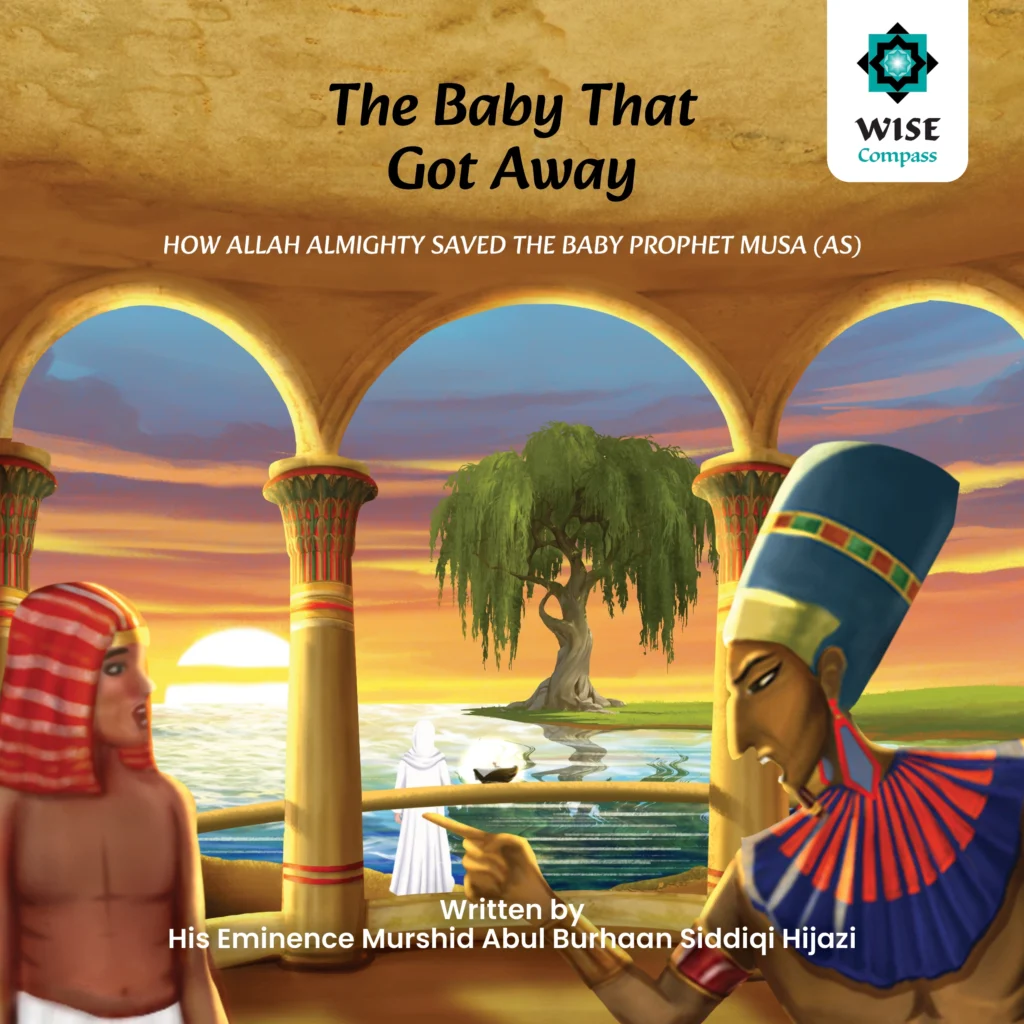
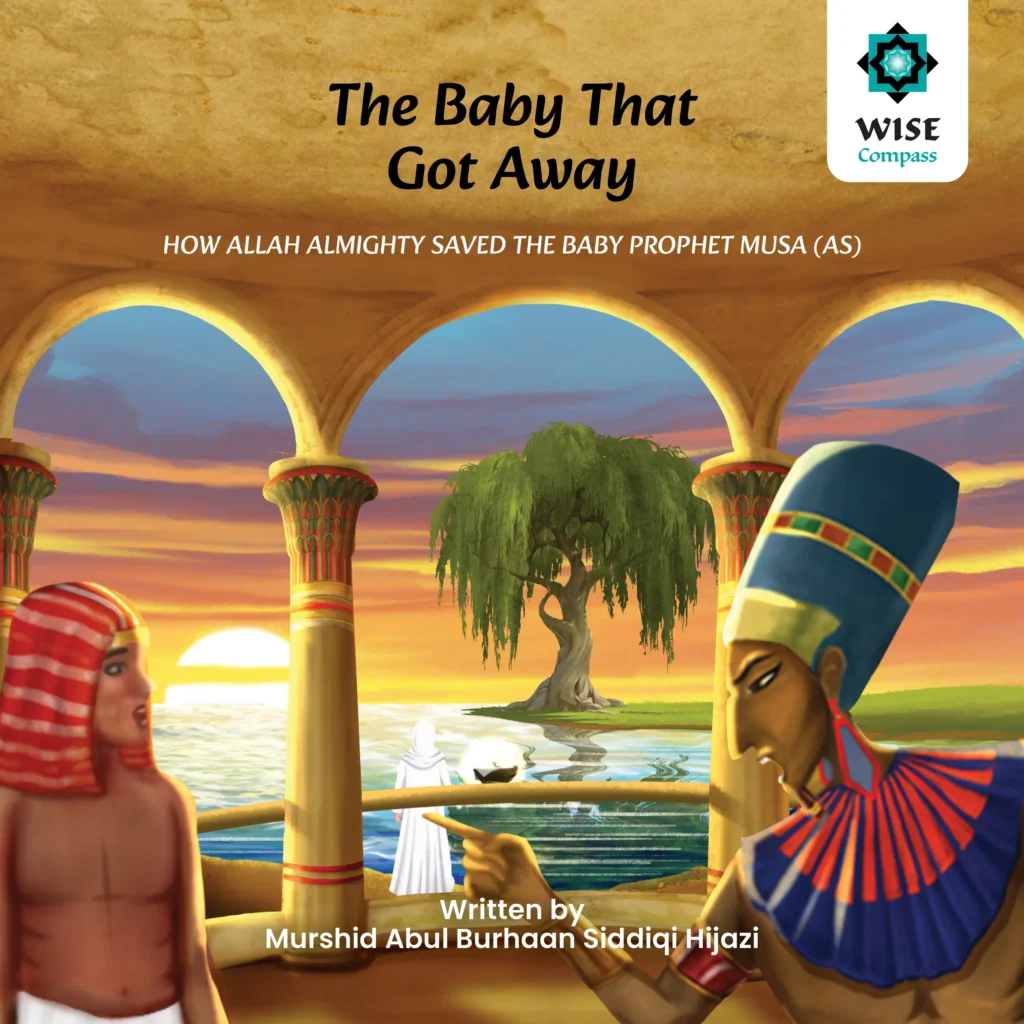
The Baby That Got Away shows a mother’s complete Tawakkul and trust answered with a miracle.
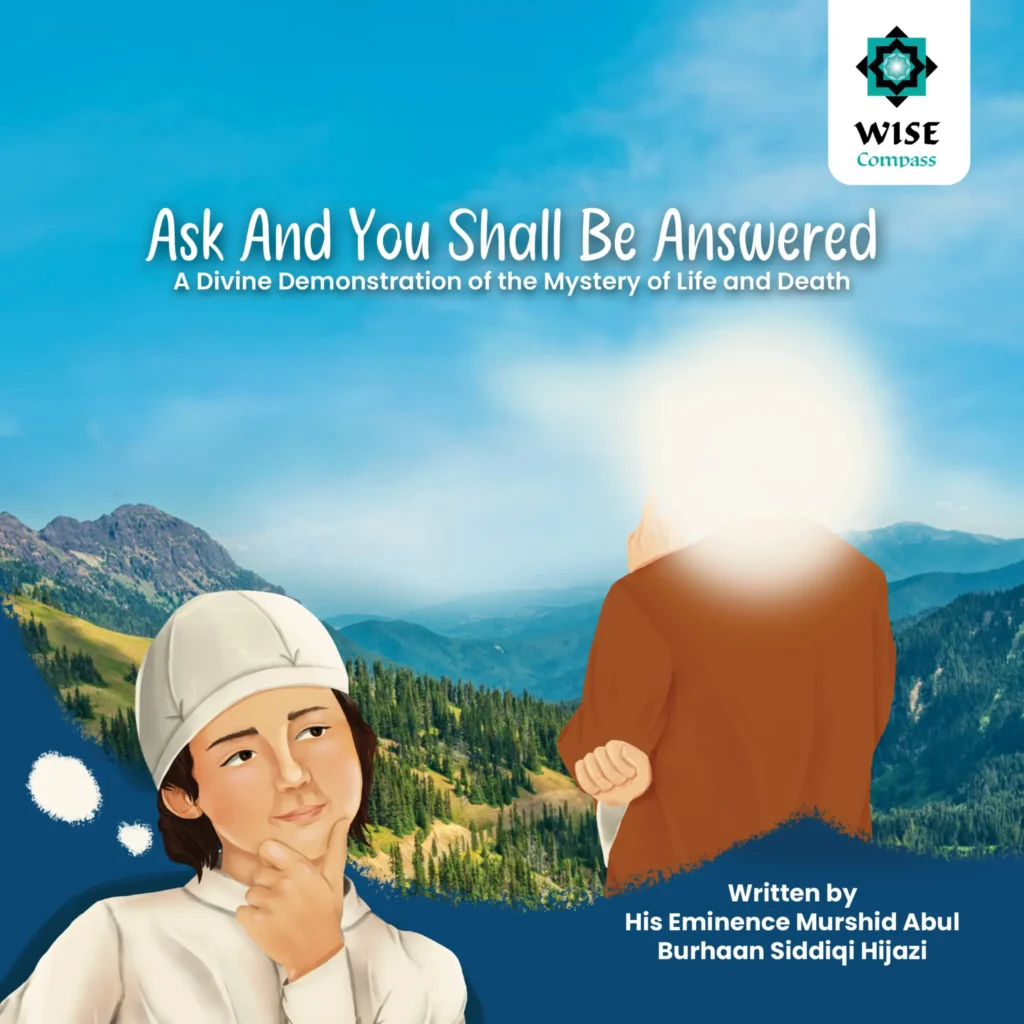
Ask And You Shall Be Answered directly explores what it means to ask Allah Almighty something sincerely and receive an answer.

After reading any of these stories, a simple question can help open your child’s mind to the power of Dua; you can ask:
Explore the full Wise Compass library
| Dua | Age group | When to Recite |
| Bismillah | 2+ | Before any action or meal |
| Alhamdulillah | 2+ | After receiving good |
| SubhaanAllah | 2+ | On seeing something amazing |
| Allahu Akbar | 2+ | Declaring the greatness of Allah Almighty |
| Dua before sleep | 4+ | At bedtime |
| Dua on waking | 4+ | First thing in the morning |
| Dua before eating | 4+ | Before every meal |
| Dua after eating | 4+ | After every meal |
| Dua when leaving the house | 4+ | Every morning before leaving home |
| Dua when entering the house | 4+ | On returning home |
| Dua when frightened | 4+ | During moments of fear |
| Dua for help (Dua of Prophet Musa (AS)) | 7+ | Before tests, presentations or big jobs |
| Dua when something is difficult | 7+ | During challenges |
| Dua when sad or worried | 7+ | During anxious moments |
| Astaghfirullah | 7+ | After making a mistake |
| Dua for knowledge | 7+ | Before study |
| Dua of Prophet Yunus (AS) | 9+ | In deep difficulty |
| Dua of Prophet Ibraheem (AS) for pious descendants | 9+ | To remind yourself to be prayerful and show gratitude |
| Dua of Prophet Ayyub (AS) | 9+ | During any suffering |
| Dua for parents | 9+ | Daily habit to honour parents |
It is reported in Sahih Muslim, Hadith 1631 that holy Prophet Muhammad ﷺ said:
‘When a person dies, their deeds come to an end except for three: an ongoing charity, beneficial knowledge, or a righteous child who prays for them.’
Teaching your child to make Dua is not only one of the greatest gifts you can give them; it is one of the most enduring investments available to a parent. A child who has learned to turn to Allah Almighty in gratitude, in fear, in difficulty, in wonder, and in love has been given something that will sustain them through every stage of their life: a direct, open, personal connection to the One Who made them and Who loves them more than anyone else ever will.
Begin today. Begin with ‘Bismillah’ before their next meal. Begin with ‘Alhamdulillah’ the next time something good happens. Begin with ‘Astaghfirullah’ the next time they make a mistake and feel the weight of it. Begin anywhere, and trust that Allah Almighty, Al Mujeeb, the One Who responds, will do the rest.
Also read: 5 Pillars of Islam for Kids
Also read: The 99 Beautiful Names of Allah Almighty for Kids
Also read: How to Raise Muslim Children in the West
Also read: Istikhara Dua: Meaning, When to Say It