

Every Muslim parent wants their child to grow up knowing their faith from the inside out, not just as a set of rules to memorise but as a living framework that shapes how they see themselves and the world around them, how they treat others, and how they relate to Allah Almighty throughout their daily lives.
The 5 Pillars of Islam are where that journey begins. These 5 Pillars are the five fundamental acts of worship that every Muslim is called to fulfil, and they have guided Muslim life for over fourteen centuries. But knowing what the 5 Pillars are and how to make them real and meaningful for a child are two completely unique things.
This guide is written for Muslim parents who want to do the second: not just explain the pillars but help their children understand them.
It includes:
The 5 pillars of Islam are the five core acts of worship that form the foundation of a Muslim’s life. The Holy Prophet Muhammad ﷺ mentioned them in a famous Hadith.
It is reported in Sahih Bukhari, Hadith 8, that holy Prophet Muhammad ﷺ said:
‘Islam is built upon five things.’
These five things are:
The word ‘pillar’ is more than just a figurative metaphor; it is a deeply meaningful idea when referring to the five aspects of Islamic practice. Just as a building needs its pillars to stand, a Muslim’s faith needs these five practices to hold its shape. Remove any one of them. and the structure weakens. Together, they create a life with a built-in rhythm of worship. gratitude, generosity, discipline, and community that is unlike any other religious framework in the world.
For children, the pillars are best introduced as gifts to be explored and personal targets to achieve, rather than as obligations to be fulfilled. Each one should be viewed as a different way of coming close to Allah Almighty, with its own story, meaning, and its own particular beauty.
The Shahadah is the Declaration of Faith, the statement at the very heart of what it means to be a Muslim. It is a sentence that states the key belief a person must have in order to be a Muslim. Any person can say it with conviction and enter into Islam and be considered a Muslim. It is one sentence with two halves:
أَشْهَدُ أَنْ لَا إِلَٰهَ إِلَّا ٱللَّٰهُ وَأَشْهَدُ أَنَّ مُحَمَّدًا رَسُولُ ٱللَّٰهِ
Ashahud An La ilaha illa Allah Wa Ashahadu An Muhammad Al Rasool Allah
I bear witness that there is no being worthy of worship except Allah Almighty
and I bear witness that Muhammad is the Messenger of Allah Almighty.
These are not merely words. The Shahadah is the entry point into Islam; it is whispered into the ear of a newborn Muslim baby, stated out loud by a person embracing Islam, and it is often the last thing a dying Muslim says. It is the beginning and the end of every Muslim life, and everything in between flows from its meaning.
The first part of the Shahadah declares Tawheed, the absolute Oneness of Allah Almighty. Not just that there is one Deity, but that nothing else is worthy of worship, nothing else deserves ultimate loyalty, and nothing else has the power or the right to be placed above Allah Almighty, the Creator. This is the most fundamental concept in all of Islam, and it is the one that everything else in a child’s Islamic education eventually comes back to.
The second part declares the Prophethood of holy Prophet Muhammad ﷺ, stating that Allah Almighty did not leave humanity to find their way alone but sent His chosen Messenger to show them how to live in the best manner. This ‘Messengership’ is referred to as Risalah, and it is essential for a Muslim to learn about holy Prophet Muhammad ﷺ, his blessed character, his Sunnah (Prophetic practice), and why his example is fundamental to Islamic faith and every Muslim today.
For younger children (ages 3-6 years): The Shahadah is best introduced as the most important thing a Muslim says and as a statement of love as much as belief.
You can explain this to your child in this way:
We say ‘La ilaha illa Allah’ because we love Allah Almighty more than anything, and we want everyone to know it. It means only Allah Almighty is our Creator and worthy of our prayers and love, not our toys, not our phones, not anything else. Just Allah Almighty.
Keep it simple, keep it warm, and let them hear it often.
For older children (ages 7-11): You can go deeper into Tawheed.
You can explain this to your child in this way:
The Shahadah means we believe that only Allah Almighty has real power, no one else. When something good happens, it comes from Allah Almighty. When we need help, we ask only Allah Almighty. When we feel scared, we know only Allah Almighty can truly protect us. That’s what ‘no god but Allah Almighty’ really means; it means nothing has power over you except the One who made you.
Say the Shahadah together every morning as a family, before school, after Fajr, or at any moment that feels right. Children who grow up hearing and saying it daily will find that it becomes a genuine part of their inner life, not just a formula they recite.
Write it beautifully on a card or artwork for their bedroom wall. When your child asks about something that worries them, bring them back to the Shahadah: ‘Remember, only Allah Almighty has real power. That’s what we believe.’
Salah refers to the five prescribed daily prayers that every adult Muslim is required to perform. These 5 are:
Together, they punctuate every single day of a Muslim’s life with moments of direct connection to Allah Almighty, regardless of what else is happening in the world around them.
The five prayers were made obligatory on the miraculous Night Journey and Ascension (Israa wal Me’raaj) of holy Prophet Muhammad ﷺ, when he was called into the presence of Allah Almighty and received this gift directly without an intermediary.
This origin story matters: Salah is not a rule that was written down and passed through layers of human transmission. It came directly from Allah Almighty, The Most Benevolent, as an act of mercy and connection, and that is precisely what it is designed to provide.
Salah is an expression of Ibaadah (Worship) at its most direct and personal. It is also deeply connected to Zikr (Remembrance of Allah Almighty), because every movement, every position, and every word of the prayer are intentional. In every action the person remembers that Allah Almighty is present, aware, and completely deserving of all praise and gratitude.
Holy Prophet Muhammad ﷺ described Salah as ‘the coolness of my eyes’, not an obligation but a privilege, not a burden but a refuge. For children, this understanding is more important than the mechanics. A child who learns that prayer is a conversation with Allah Almighty, a moment to say ‘I remember You, I love You, I need You’, will carry a very different relationship with Salah into adulthood than a child who learns it as a series of movements to be completed before getting back to their day.
For younger children (ages 4-7), you can explain it in this way:
‘Salah is when we talk to Allah Almighty five times every day. Allah Almighty loves it when we stop what we are doing and talk to Him, because He always wants what is best for us. Think of it like calling someone you love on the phone, but better, because Allah Almighty is always there and always listening.’
For younger children (ages 8-11), you can explain it in this way:
‘Salah is the one time in your day when the whole world stops and nothing else matters. Your homework, your friends, your worries – all of that pauses for a few minutes while you stand in front of Allah Almighty and tell Him you remember Him. That’s what every rakat is: a reminder that you know who made you and who you belong to.”
The most powerful thing a parent can do for a child’s Salah is simply to pray in front of them as early as possible in their life. Children absorb by watching, and a parent who prays consistently, visibly, and without fuss gives their child the most important Salah lesson that exists: leading by example. Make space for your child to join you on the prayer mat even before they know the words or movements so they feel invited and have an open approach towards learning about Salah. The feeling of standing beside a parent in prayer is something children carry with them for life.
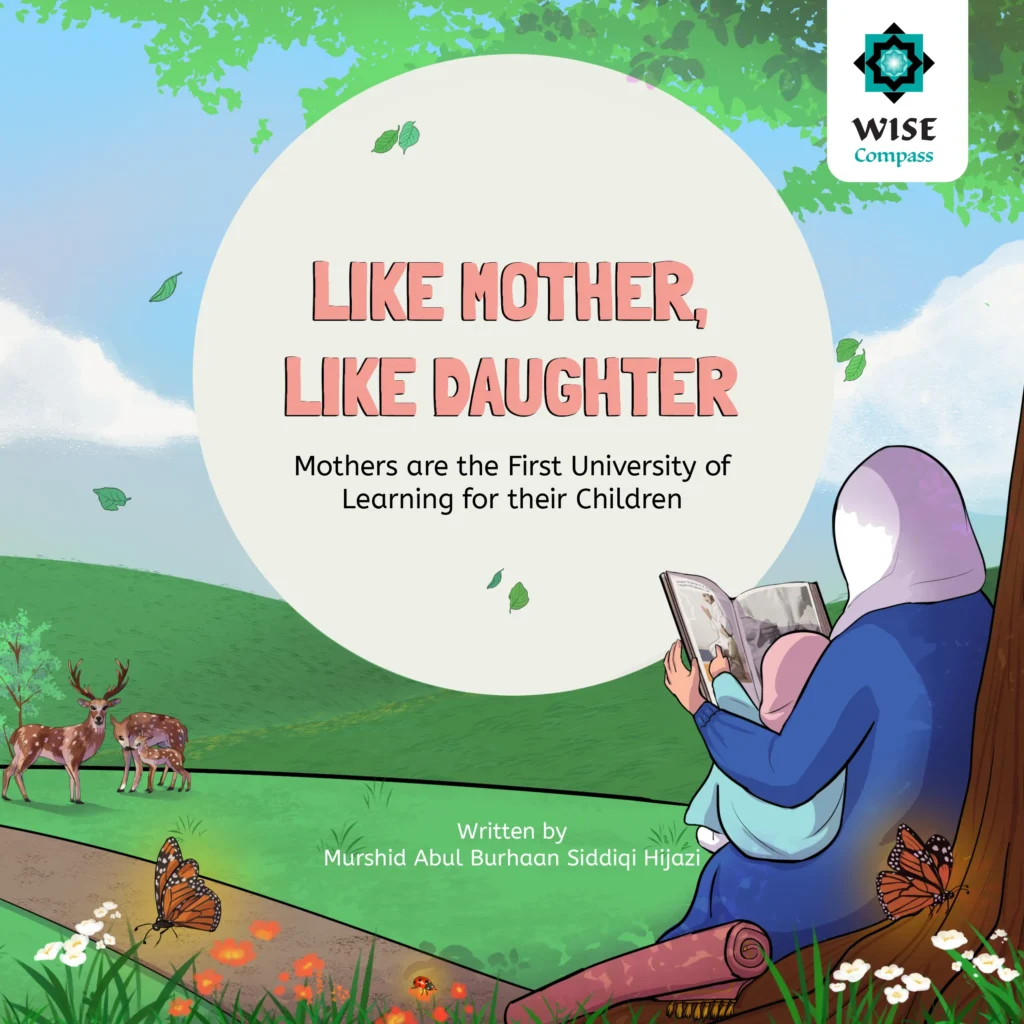
✅ Wise Compass Connection:
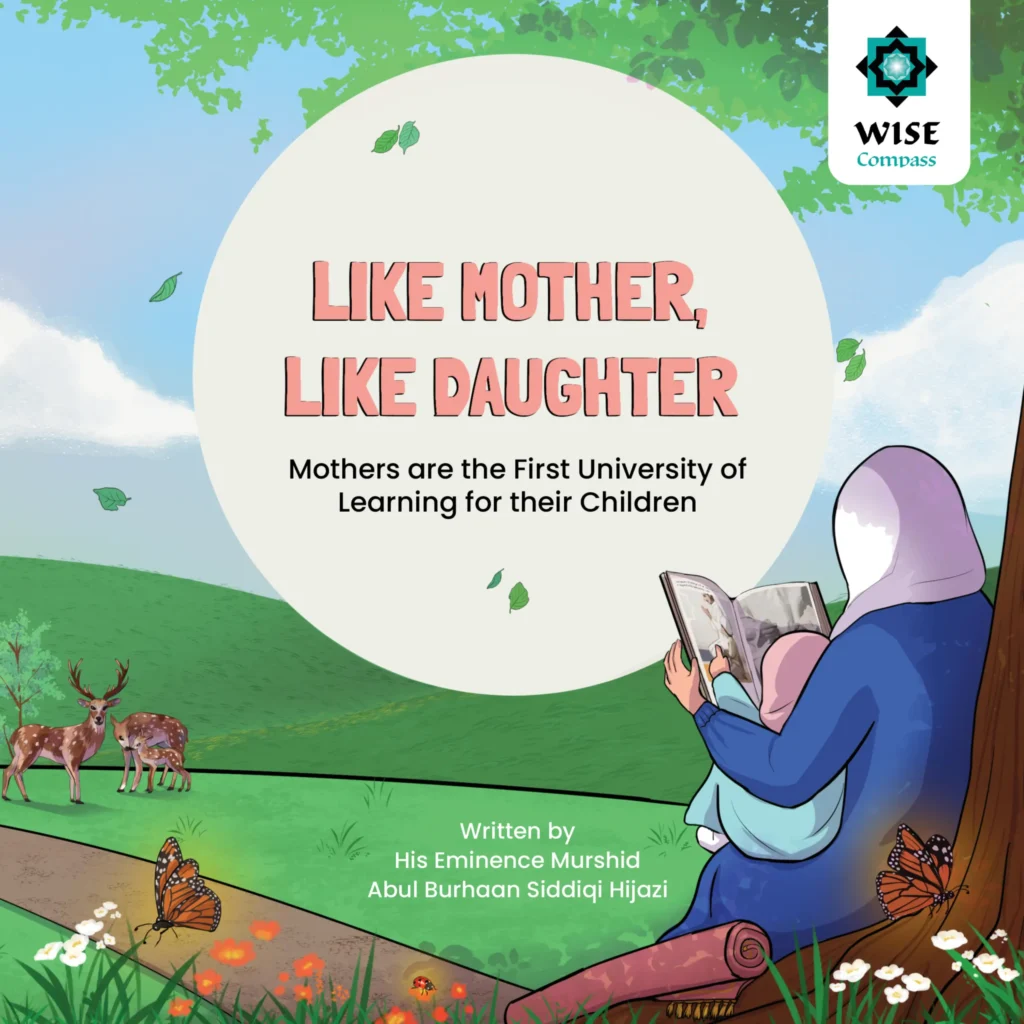
Like Mother, Like Daughter is a heartwarming story for younger children about exactly this; a little girl watches her mother pray and asks ‘why’ about every action. It models the most natural, gentle way to introduce Salah to a child aged 3-7 years and is an ideal read-together book before or after prayer time.
Zakat is the annual obligation for eligible Muslims to give 2.5% of their qualifying wealth in charity to those in need. The word itself comes from the Arabic root meaning both ‘purification’ and ‘growth’, capturing the Islamic understanding that giving wealth does not diminish it but purifies and blesses what remains.
As one of the 5 Pillars of Islam, the obligatory charity of Zakat is an act of worship for every Muslim who meets the ‘Nisaab’ or minimum level of taxable wealth. It is distributed to eight specific categories of recipients identified in the noble Quran at Surah Al Tawbah (9), Verse 60:
إِنَّمَا ٱلصَّدَقَـٰتُ لِلْفُقَرَآءِ وَٱلْمَسَـٰكِينِ وَٱلْعَـٰمِلِينَ عَلَيْهَا وَٱلْمُؤَلَّفَةِ قُلُوبُهُمْ وَفِى ٱلرِّقَابِ وَٱلْغَـٰرِمِينَ وَفِى سَبِيلِ ٱللَّهِ وَٱبْنِ ٱلسَّبِيلِ ۖ فَرِيضَةًۭ مِّنَ ٱللَّهِ ۗ وَٱللَّهُ عَلِيمٌ حَكِيمٌۭ ٦٠
Zakat (alms-tax) is only for the poor and the needy, for those employed to administer it, for those whose hearts are attracted to the faith, for freeing slaves, for those in debt, for Allah Almighty’s cause, and for needy travellers. This is an obligation from Allah Almighty. And Allah Almighty is All Knowing, All Wise.
It represents one of the most practical expressions of the Islamic principle that wealth ultimately belongs to Allah Almighty and that those who hold it are trustees rather than owners.
Zakat is rooted in Tawakkal (Trust in the decisions of Allah Almighty) and Rahma (Compassion) simultaneously. It teaches the giver to trust that what they give for the sake of Allah Almighty will be replaced by His generosity, and it teaches them to extend mercy to others in the same way that they hope Allah Almighty will extend mercy to them.
For children, the deepest lesson of Zakat is not the percentage or the calculation; it is the understanding that having more than you need creates a responsibility toward those who have less. And that acting on that responsibility is not generosity in the ordinary sense but an act of worship that brings you closer to Allah Almighty.
Explaining it to children
For younger children (ages 4-7), you can explain it in this way:
‘Some people don’t have enough food or warm clothes. Zakat is how we help them; we give a little bit of what we have because Allah Almighty wants us to share our blessings with people who need them. When we give Zakat, it’s like saying thank you to Allah Almighty for everything He’s given us.’
For younger children (ages 8-11), you can explain it in this way:
‘Our wealth isn’t really ours; it belongs to Allah Almighty, and He has let us look after it. Zakat is the part He has set aside for people who are struggling. When we give it, we’re not being generous; we’re being honest. We’re giving back what was always meant for someone else. And Allah Almighty says that the more you give for His sake, the more He gives back to you.’
Give children a small money box specifically to save up for voluntary charity called Sadaqah (which is separate from Zakat calculated only on an adult’s wealth), and let them choose where to donate from it. The act of physically choosing to give, even a very small amount, builds the habit and emotional understanding of Zakat more effectively than any explanation. Talk about Zakat openly at home: when you give your annual Zakat, tell your children what you are doing and why and let them watch or participate where possible.
Sawm is fasting throughout the ninth Islamic month, Ramadan. It is an obligation for every adult Muslim to fast these 30 days by abstaining from food, drink, and other invalidating acts. The fast lasts from the start of Fajr (Pre-dawn prayer) until the call of Maghrib (Sunset prayer). Ramadan is the month in which the noble Quran was revealed, and it is the most spiritually significant month in the Islamic year. The fast is not merely physical.
It is reported in Sahih Bukhari, Hadith 6057, that holy Prophet Muhammad ﷺ said:
‘Whoever does not give up false speech and acting upon it, Allah Almighty has no need of his giving up his food and drink.’
Sawm is a fast for the entire self: the tongue, the eyes, the ears, the thoughts, and the heart, not just the stomach.
Sawm is the pillar most directly associated with Taqwa (God-consciousness), the awareness of Allah Almighty that shapes every choice and every moment. Allah Almighty tells us the purpose of fasting directly in the noble Quran at Surah Al Baqarah (2), Verse 183:
يَـٰٓأَيُّهَا ٱلَّذِينَ ءَامَنُوا۟ كُتِبَ عَلَيْكُمُ ٱلصِّيَامُ كَمَا كُتِبَ عَلَى ٱلَّذِينَ مِن قَبْلِكُمْ لَعَلَّكُمْ تَتَّقُونَ
O you who believe, fasting has been prescribed for you as it was prescribed for those before you, that you may attain Taqwa.
This is the goal, not the hunger, not the discipline, not even the spiritual benefits, but the living, felt awareness of Allah Almighty that the hunger and discipline are designed to produce.
For children, Sawm teaches something that cannot be taught any other way: that the body is not the master. While children are not obligated to fast, they can learn from the example they see from fasting adults. They learn that hunger and thirst are manageable when the intention is right and the feeling of doing something genuinely difficult for the sake of Allah Almighty. This is one of the most powerful spiritual experiences available to a human being at any age.
For younger children (ages 4-7), you can explain it in this way:
‘In Ramadan, grown-up Muslims don’t eat or drink in the daytime; it’s our special month of saying thank you to Allah Almighty. We feel a little bit of what it’s like to be hungry, so we understand how other people feel, and we’re grateful for all the food we have. And Allah Almighty gives extra rewards in Ramadan for everything good we do.’
For younger children (ages 8-11), you can explain it in this way:
‘When you fast, you retrain your body to not let your hunger decide what you do. And something interesting happens: you realise that you don’t actually need as much as you thought you did. That feeling of hunger you push through teaches you something about yourself: that you’re stronger than your cravings. Without the distraction of bodily desire, you can focus on remembering and being even more aware of Allah Almighty. That’s Taqwa, being so aware of Allah Almighty that it is greater than anything else. Fasting for His sake also becomes easier for this reason, and that’s something Ramadan is training you to feel.’
Introduce children to the rhythm of Ramadan long before they are old enough to fast the full day. Let them:
If children sincerely express any desire to do these actions, you should encourage them gently and support them in achieving them. Remember to always frame it as a gift they are giving to please Allah Almighty rather than a test they must pass.
Hajj is the annual pilgrimage to Makkah, the fifth and final pillar of Islam, obligatory once in a lifetime for every Muslim who is physically and financially able to perform it. It takes place during the first thirteen days of Dhul Hijjah, the twelfth month of the Islamic lunar calendar, with the core rituals performed between the 8th and 13th. At its peak, Hajj is the largest annual gathering of human beings anywhere on Earth, millions of people from every country, every background, and every language, dressed identically in white, performing the same acts of worship at the same times.
The rituals of Hajj trace the footsteps of Prophet Ibraheem (AS), his wife Murshidah Sayyidah Haajrah (RA), and their son Prophet Ismaeel (AS). It includes standing on the plain of Arafat, walking between the hills of Safa and Marwah as Murshidah Sayyidah Haajrah (RA) did in her desperate search for water, circling the Ka’bah as believers have done since the time of Prophet Ibraheem (AS), as well as stoning pillars of rock to represent the way Prophet Ismaeel (AS) rejected Satan. Every single ritual connects the person performing Hajj to this ancient, unbroken chain of faith.
Hajj is the most complete expression of Tawheed in action; the physical, total, communal submission to Allah Almighty in which every difference of rank, wealth, nationality, and status is stripped away and every pilgrim stands as equal before their Creator. The white Ihraam garments are not incidental; they are a deliberate erasure of all the markers by which the world categorises human beings. In Hajj, there are no first-class passengers or low-class rejects – only human souls presenting themselves before Allah Almighty.
It is also deeply connected to the Islamic concept of Ummah, the global community of believers, because Hajj is the one moment every year when the largest gathering of that community is physically assembled in one place. Together they witness how the faith they each carry individually is, in fact, shared by millions.
For younger children (ages 4-7), you can explain it in this way:
‘Hajj is a very special journey that Muslims make to a beautiful city called Makkah, where the Ka’bah is. This is the first house of worship ever built for Allah Almighty. Millions of Muslims go together, all wearing white, to say how much they love Allah Almighty. It’s like the biggest gathering of Muslims in the whole world, all in one place, all thanking Allah Almighty together.”
For younger children (ages 8-11), you can explain it in this way:
‘When you do Hajj, you follow the exact same steps that Prophet Ibraheem (AS), Murshidah Sayyidah Haajrah (RA), and Prophet Ismaeel (AS) did thousands of years ago. You walk where they walked. You stand where they stood. And you try to emulate the complete reliance, trust and spirit of sacrifice they showed for the sake of Allah Almighty. That is one of the reasons why Muslims have done Hajj the same way for fourteen centuries. It is a life-changing experience, and one of the final acts of Hajj is especially impactful. Standing in the plains of Arafat and asking Allah Almighty for forgiveness is one of the most powerful things a human being can do.’
Even very young children can learn about Hajj through its visual distinctiveness: the Ka’bah, the white clothes of Ihraam, the enormous crowds, and the Islamic rituals. Show them pictures and videos of Hajj if you have not performed it yet, or share memories and photographs if you have. Make it something aspirational: ‘One day, insha’Allah, we will go together.’ That single sentence, repeated across a childhood, plants a longing for Hajj that often becomes the most sincere motivation a person can have.
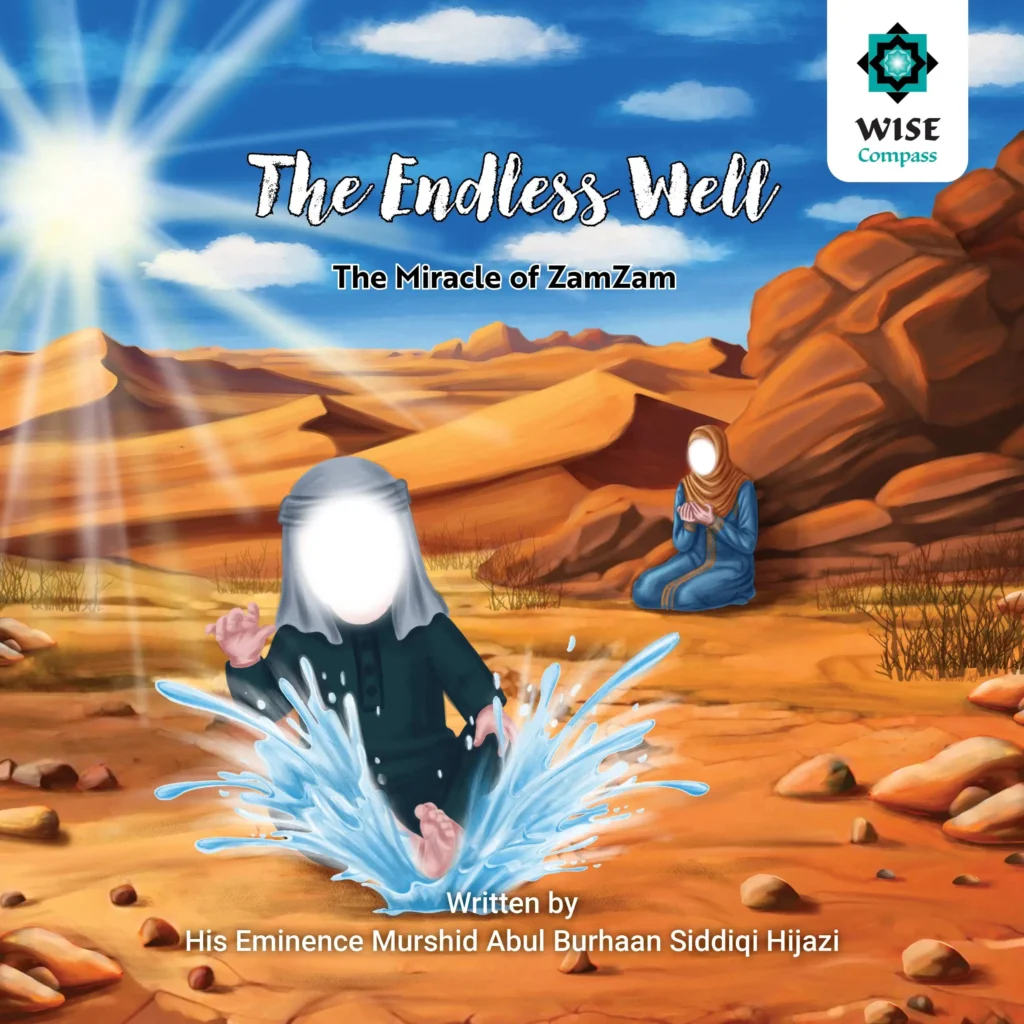
✅ Wise Compass Connection:
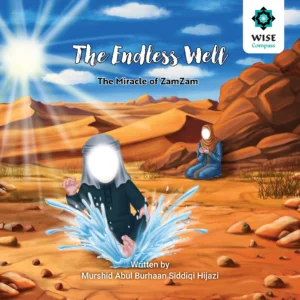
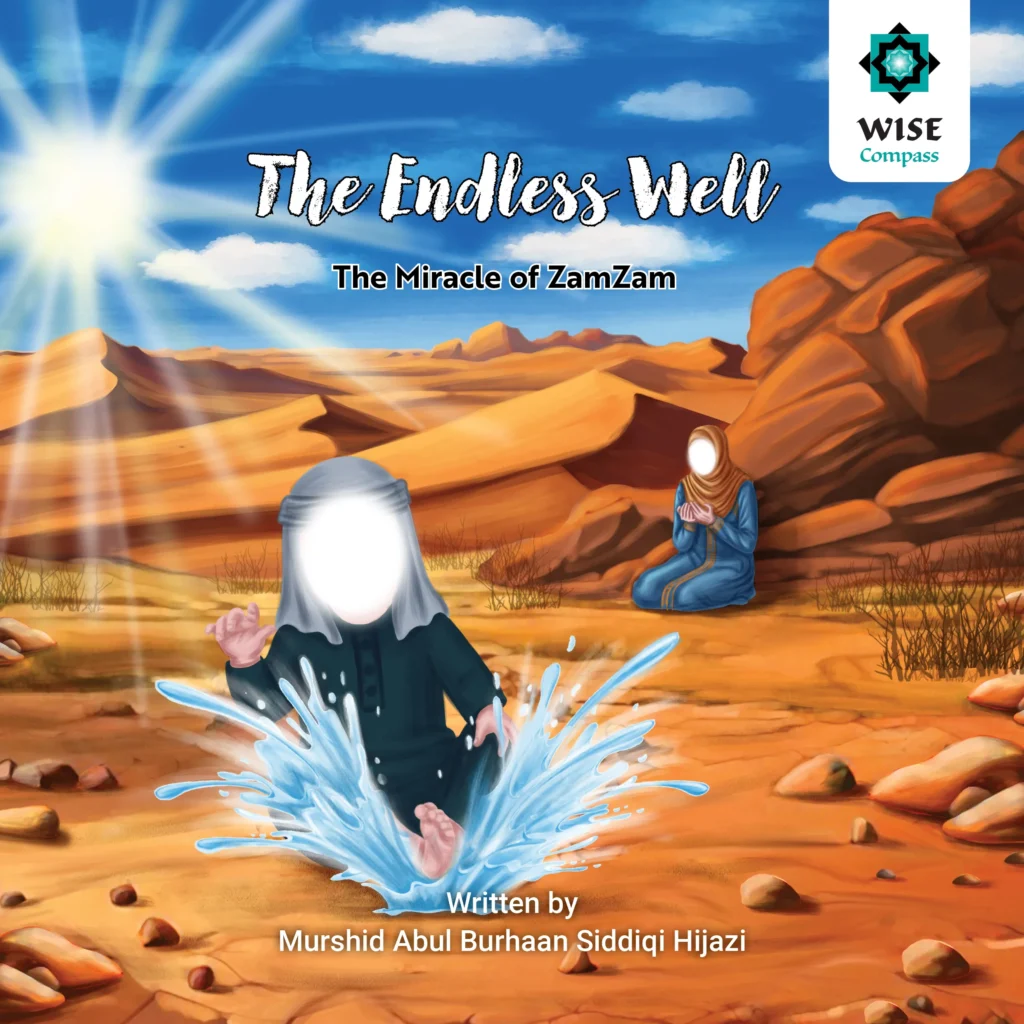
The Endless Well tells the story of Murshidah Sayyidah Haajrah (RA) and the miracle of ZamZam, the event that lies at the very origin of the Hajj ritual of Sa’ee (walking between Safa and Marwah). For children aged 8-11 years who are learning about Hajj, this story makes the rituals feel real, connected, and emotionally alive in a way that no simple explanation can match.
The 5 Pillars of Islam are not a curriculum to be delivered in sequence and then considered done. They are a lifelong practice, and a parent’s job is to introduce each one at the right depth for the right age and then deepen that understanding continuously as the child grows.
Here is a simple framework for approaching the 5 Pillars across different stages:
Focus on atmosphere and habit rather than explanation. Let children see, hear, and feel the pillars in daily life: the Adhaan (Call to prayer) playing at prayer times; the Musallah (Prayer mat) being laid out; the charity box by the door; and the Ramadan decorations in the house. Children at this age absorb faith through their senses and through the emotional warmth of their home. The goal is not understanding but familiarity and love.
Introduce each pillar with a single sentence they can remember and understand. Let them participate where they can, standing beside you at prayer, dropping a coin in the Sadaqah box, and waking up for Suhoor in Ramadan. Stories are the most powerful tool at this age. Each Wise Compass story listed in this guide is particularly suited to this age group.
Now children can begin to understand the Islamic concepts behind each pillar: Tawheed, Taqwa, Tawakkal, and Ummah. They can ask real questions and deserve real answers. Begin connecting the 5 Pillars to the noble Quran; show them where each pillar is mentioned, even briefly. The goal is that each pillar starts to feel personally meaningful, not just religiously required.
At this stage, the goal is for children to begin taking genuine ownership of their practice, not because they are told to, but because they understand what each pillar is for and want to do it. Ask them: ‘What does Salah mean to you?’ and ‘What do you think Allah Almighty wants from you when you fast?’ These questions, asked consistently and without judgement, build the internal relationship with faith that will sustain them through adolescence and beyond.
Children do not build faith through information. They build it through experience, emotion, and imagination, through stories that let them feel the weight of the choices people face, the relief of trusting Allah Almighty, and the beauty of a life shaped by worship.
The 5 Pillars are not abstract concepts. Every single one of them is a Divine command that has been followed by the most perfect example in human history, holy Prophet Muhammad ﷺ, and should be a lived experience that we connect to when we practice them, here and now.
Each of the pillars has been followed and upheld throughout Islamic history and has a deep story and message behind it, where each act of worship has been lived in the most vivid, human, and emotionally compelling way possible.
The Shahadah was declared by people who risked everything to say it. Salah was gifted on the night that holy Prophet Muhammad ﷺ stood in the presence of Allah Almighty. Zakat was practised by the Blessed Companions who gave everything they had. Sawm was observed through months of Ramadan with holy Prophet Muhammad ﷺ in the community, in the first Muslim city. Hajj traces the footsteps of a family whose faith split the Earth and made water burst from desert sand.
When children encounter the pillars through these stories, really encounter them, not just hear the names, they find that the pillars make sense in a way that no explanation alone could.
Parent Tip: After teaching any pillar, ask your child three questions:
The third question is the most powerful; it helps children understand not just what each pillar is but what it is for.
Explore the full Wise Compass library of Islamic stories for Children
Also read: Islamic Stories That Strengthen Faith and Imaan in Children
Also read: Prophet Stories for Kids
At what age should I start teaching the 5 Pillars of Islam to my child?
Start from birth, not with formal teaching but with the atmosphere of faith in action within your own home. Children absorb the rhythm of Adhaan, Salah, Dua and Ramadan long before they can understand it. Formal introduction of each pillar can begin around age 4-5, with increasingly deep explanation as the child grows.
Do children have to perform all 5 Pillars of Islam?
The obligations become fully binding at the age of puberty (Bulugh). Before that age, children are not obligated to pray, fast or give annual charity. However, introducing the pillars early and encouraging voluntary practice, with joy rather than pressure, is how the habit and love for each pillar are built.
What is the best order to teach the 5 Pillars of Islam?
The best order for teaching the 5 Pillars of Islam is the order in which they are named:
This order makes the most sense for a person’s practical learning too. Shahadah is the foundation every other action and belief are built upon. Then Salah is the most regular and frequent act of worship, and therefore it is the most important practice to establish early. Zakat and Sawm are annual actions that a person only needs to perform once they have reached puberty and are eligible to, but they are actions that a child can learn about in their pre-adolescent years to prepare themselves for the future. Likewise, Hajj can be introduced gradually with increasing depth over the childhood years.
How do I make the 5 Pillars of Islam feel exciting rather than burdensome for my child?
Lead by example; children who see their parents pray, fast, and give charitably with genuine joy and peace will associate the pillars with those feelings. Use stories rather than lectures to educate children about them. Connect each pillar to something the child already loves or understands.
And never use the pillars as punishments or threats; a child who learns to dread these gifts will spend their adult life finding reasons to avoid them. For example, if Salah is associated with force or disapproval, then the child may resent it, or if Zakat is used as punishment, they may resent giving to others.