











There is a Hadith that every Muslim is aware of. One that every Muslim parent should especially pay attention to:
It is reported in Sahih Al Bukhari, Hadith 2736, that the holy Prophet Muhammad ﷺ said:
‘Allah Almighty has ninety-nine Names, one hundred minus one.’ Whoever preserves them will enter Paradise.
Most parents hear this and feel two things almost simultaneously: a deep desire to teach their children these Divine Names and a quiet uncertainty about how to go about this.
Ninety-nine Names. Complex Arabic. Abstract theological concepts. A child who wants to play. Where do you even begin?
The answer is not what most people expect it to be. It is not immediately memorisation. It does not mean flashcards or a poster on the bedroom wall today. It begins with a much simpler and much more important question: Who is Allah Almighty to your child right now, and which of His Names will help them know Him better today?
This guide offers Muslim parents a genuine framework for teaching the 99 Beautiful Names of Allah Almighty, known in Arabic as ‘Asma Al Husna’ (the Most Beautiful Names), at every age and stage. It covers:
Collectively the 99 Beautiful Names of Allah Almighty are known as ‘Asma Al Husna’, from the Arabic ‘Asma’ (Names) and ‘Husna’ (Most beautiful). These Names are not superficial titles or labels.
They are descriptions of Allah Almighty’s attributes, the qualities He Himself has revealed in the noble Quran and that have been confirmed in the Sunnah of holy Prophet Muhammad ﷺ. Each Name offers a glimpse of the different aspects of Allah Almighty, making it a little easier for us to understand these absolute attributes: His Mercy, Power, Knowledge, Generosity, Justice, Closeness, and Forgiveness.
Believers are directly instructed to remember and call out to Allah Almighty using these beautiful Names.
Allah Almighty tells us in the Noble Quran, at Surah Al Aa’raaf (7), Verse 180:
وَلِلَّهِ ٱلْأَسْمَآءُ ٱلْحُسْنَىٰ فَٱدْعُوهُ بِهَا ۖۦ
Wa lillaahil asmaa’ul husnaa fad’oohu bihaa
Allah Almighty has the Most Beautiful Names. So call upon Him by them.
It is important to understand, especially for parents, that the Divine Names are not primarily for memorisation. They are for invocation. They are to be spoken aloud with purpose and intention. They are for use in Dua, in conversation, and in the moments of a child’s daily life when knowing exactly Who Allah Almighty is makes all the difference.
No words can even begin to encompass every dimension of describing Allah Almighty, however the 99 Beautiful Names do allow us some human understanding of the relationship Allah Almighty has with all of His creation; He is Al Rahman (The Most Beneficent), Al Adal (The Absolutely Just), Al Qareeb (The Near One), Al Azeem (The Magnificent), Al Ghaffar (The Infinitely Forgiving), Al Muntaqim (The Ultimate Vindicator), Al Wadood (The Most Affectionate), Al Hakam (The Greatest Arbitrator) to name but a few of His Attributes.
When we say ‘merciful’, it means to show mercy and perhaps kindness; when we say ‘just’, it means to be fair and uphold justice; when we say ‘wadood’, we refer to being loving – but when Allah Almighty refers to Himself as Al Rahman, Al Adal, or Al Wadood, it means the One Who is completely merciful and beneficent, perfectly and absolutely just, the completely and most loving and affectionate, in every capacity that any of these words can mean.
Each Divine Name is true. Each one is absolute. Whatever we understand the term to mean is only in human terms, but the Divine reality of that attribute is in its complete and absolute sense.
Together they reveal a Creator of breathtaking Complexity, Compassion, and Majesty, and none of these Names are beyond the understanding of a child who is introduced to them with care.
Before talking about how to teach the 99 Beautiful Names, it is worth being clear about why we might learn them, because the reason matters enormously for how it is done.
The goal of teaching a child the many Beautiful Names of Allah Almighty is not to produce a child who can just recite all 99 Beautiful Names in sequence. It is to produce a child who has their own close personal relationship of reliance and remembrance of Allah Almighty, A child who, when they feel frightened, reaches for Al Hafeed (The Absolute Custodian).
When they have done something wrong and feel ashamed, reaches for Al Ghaffar (The Infinitely Forgiving). When they receive something wonderful and unexpected, reaches for Al Razzaaq (The Ultimate Provider). When they face something that seems impossible, reaches for Al Qadir (The Supreme Commander).
A child who knows the Divine Names of Allah Almighty in this way, has a way to call upon Him in every emotional and spiritual moment of their life. This is something that no amount of rote memorisation can provide: a living, working relationship with Allah Almighty that they can draw on from the inside.
This is what ‘preserving’ the Divine Names means for us as people; to keep them alive in our life. Not clinging to them in memory only, but holding them in our heart and using them in our lives by calling on Allah Almighty by the Name that speaks directly to what we may need from Him right now.
With 99 Beautiful Names to teach, the question of where to start is very real. The answer is to begin with the Divine Names that speak directly to what children need most in their emotional and spiritual lives: safety, love, forgiveness, provision, and understanding that Allah Almighty sees and knows them completely.
Here are the most important Divine Names to introduce first, grouped by how a child typically relates to them.
This is the Divine Name that appears at the opening of almost every Surah in the noble Quran and before virtually every act a Muslim performs when we recite ‘Bismillah Ar Rahman Ar Raheem’. Children hear it dozens of times every day before they understand what it means, and when they finally do, it transforms the familiar phrase into something profound.
Al Rahman describes Allah Almighty’s Absolute Mercy that encompasses every single thing in creation: believers and non-believers, humans and animals, the seen and the unseen. It is a mercy so vast that
It is reported in Ṣaḥīḥ al-Bukhārī, Kitāb al-Adab, Hadith No. 6469, that the holy Prophet Muhammad ﷺ said:
Allah Almighty has divided mercy into one hundred parts and sent only one part to the earth, and from that single part, all creatures show compassion toward each other, including a mother lifting her hoof so she does not step on her foal.
You can explain this to your child in this way:
‘Al Rahman’ means Allah Almighty’s love and care reach everything. He made every person, every animal, and every tiny creature. When you say ‘Bismillah‘ before eating or before you start anything, you’re saying: ‘I begin with the Name of the One Whose mercy is everywhere.’
While Al Rahman describes Allah Almighty’s mercy toward all creation, Al Wadood describes His love, a pure, complete, unconditional love for His believing servants. Holy Prophet Muhammad ﷺ taught us to call on Allah Almighty by this Name specifically when asking to increase love in our hearts and in our relationships.
You can explain this to your child in this way:
‘Al Wadood‘ means Allah Almighty loves you. Not because you did everything right, not because you’re perfect, but because He made you with a purpose and He wants you to do well in your life and be the best person you can be. That love doesn’t go away when you make mistakes. It’s always there.
Perhaps one of the most important Divine Names for a child who is just beginning to understand prayer and Dua to learn is ‘Al Qareeb’.
Allah Almighty tells us in the Noble Quran, at Surah Al Baqarah (2), Verse 186:
Arabic:
وَإِذَا سَأَلَكَ عِبَادِي عَنِّي فَإِنِّي قَرِيبٌ
Transliteration: Wa idhā sa’alaka ‘ibādī ‘annī fa-innī qarīb.
Translation: “And when My servants ask you concerning Me, indeed I am near.
‘Al Qareeb’ means Allah Almighty is not distant or unreachable or unaware of what state we are in. He is near to every person who calls upon Him.
You can explain this to your child in this way:
‘Al Qareeb’ means Allah Almighty is close to you; closer than you think. When you make Dua, you’re not sending a message far away hoping someone might hear it. You are talking directly to Allah Almighty, and He is right there, listening to every word.
This is the Divine Name a child needs to know most when they feel scared, whether it is at nighttime, before a difficult day at school, or when they are worried about someone they love. Al Hafeed means Allah Almighty preserves and protects everything in His care. Nothing is lost, overlooked, or forgotten – everything is always in His perfect care.
You can explain this to your child in this way:
‘Al Hafeed’ means Allah Almighty is keeping you safe. He watches over you every moment; when you’re asleep, when you’re at school, and when you’re away from Mummy and Daddy. You are always in His care.
This Divine Name is transformative for children who are beginning to make Dua because it addresses the question every child eventually asks: ‘Does Allah Almighty actually hear me?’ ‘Al Mujeeb’ means that Allah Almighty not only hears Dua but that He responds to it. Every sincerely made Dua is answered, though not always in the form or the timing the person expected.
You can explain this to your child in this way:
‘Al Mujeeb’ means Allah Almighty answers every Dua. He hears you. He might answer in exactly the way you asked, or He might give you something even better, or He might be saving the answer for when you really need it, but He always responds. Your Dua is never ignored.
‘Al Wakeel’ means Allah Almighty is the perfect One to put your trust in, not because nothing difficult will happen, but because He manages everything with complete knowledge and complete care.
The noble Quran records both Prophet Ibraheem (AS) and holy Prophet Muhammad ﷺ calling reminding us to call upon Allah Almighty by using this Divine Name, when they said, ‘Hasbun Allah wa ni’mal Wakeel’, which means ‘Allah Almighty is sufficient for us, and He is the best of trustees’.
You can explain this to your child in this way:
‘Al Wakeel’ means you can trust Allah Almighty completely. When something feels too big or too scary or too hard, you can say, ‘Hasbun Allah wa ni’mal Wakeel’; it means ‘Allah Almighty is enough for me, and I trust Him. And He will take care of it.’
Children need to know that forgiveness in Islam is not a rare event requiring extraordinary circumstances. Al Ghaffar, from the same root as the Arabic word ‘Maghfirah’ (Forgiveness), describes Allah Almighty as the One Who forgives constantly, repeatedly, and without exhaustion.
This Divine Name also includes the sense of covering or concealing, as part of Allah Almighty’s forgiveness of sins is to conceal the sins of those who turn to Him, wrapping them in such complete forgiveness that it is as if the sin had never existed.
You can explain this to your child in this way:
‘Al Ghaffar’ means Allah Almighty forgives over and over again. When you make a mistake and you’re really sorry, you can ask Allah Almighty to forgive you, and He will. He never gets tired of forgiving. He covers your mistakes like a blanket, so they don’t define you.
While Al Ghaffar describes Allah Almighty’s constant forgiveness, Al Tawwab describes His active, eager acceptance of Tawbah (Repentance), the turning back to Him. The Arabic root ‘Taba’ means ‘To turn’, and Al Tawwab turns toward His servant when His servant turns toward Him in repentance.
It is reported in Ṣaḥīḥ Muslim, Kitāb al-Tawbah, Hadith No. 2747, that holy Prophet Muhammad ﷺ said:
Allah Almighty is more pleased by the repentance of His servant than a man who finds his lost camel in the desert, an image that children immediately understand and find genuinely comforting.
You can explain this to your child in this way:
‘Al Tawwab’ means when you turn back to Allah Almighty after making a mistake, He turns to you too, with forgiveness. He’s not waiting with disappointment; He’s waiting with openness, ready to forgive you. The moment you say you’re sorry and mean it, He accepts it.
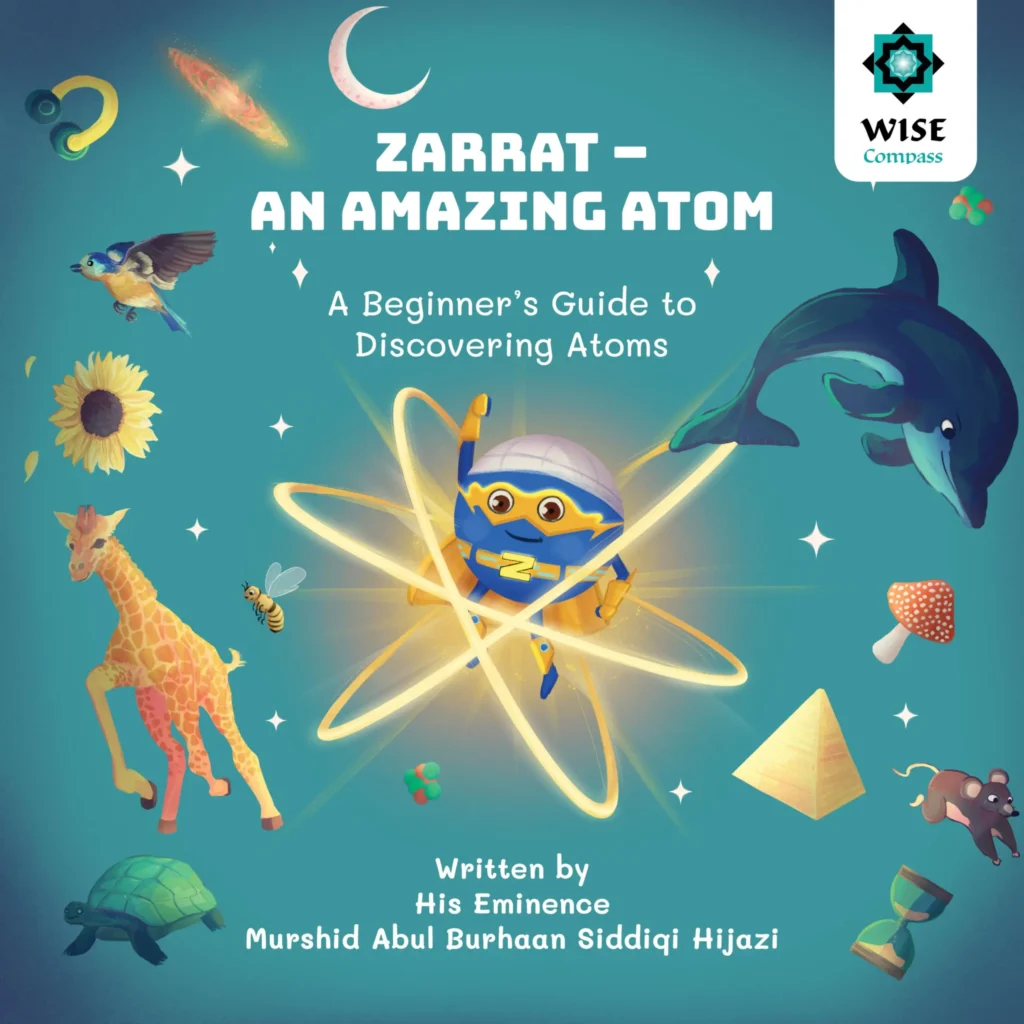
This Divine Name reminds us of how Allah Almighty is the Creator, Who has made everything. It connects directly to every moment of contemplation we may have when looking at the natural world around us and remembering its Creator. Al Khaliq describes Allah Almighty as the One Who creates from nothing, Who designed every creature, every law of physics, and every system of sustenance. It is also one of the Divine Names addressed in the Wise Compass science stories, that help children recognise Al Khaliq through His creation.
You can explain this to your child in this way:
‘Al Khaliq’ means Allah Almighty made everything, from the biggest stars to the tiniest atoms. Every time you see something amazing in nature, a bee making honey, rain filling a river, or a flower growing from a seed – that’s the design and command of Al Khaliq, the One who created all of it.
Al Aleem means Allah Almighty knows everything: every thought, every intention, every secret, and every moment that has not yet happened. For children, this Divine Name helps them realise two things:
You can explain this to your child in this way:
‘Al Aleem’ means Allah Almighty knows everything. He knows what you’re thinking right now. He knows what happened and what will happen. He knows the things you’re embarrassed about and the things you’re proud of. And He loves you regardless of any of these things, because He’s known you completely since before you were even born.
This is one of the lesser-taught Divine Names but one of the most powerful for children to learn about.
It is reported in Ṣaḥīḥ Muslim, Kitāb al-Īmān, Hadith No. 91, that holy Prophet Muhammad ﷺ said:
‘Allah Almighty is beautiful, and He loves beauty.’
This Name teaches children that beauty, in nature, in art, in music, in a kind face, and in a well-made thing, is a reflection of one of Allah Almighty’s attributes and that appreciating beauty is a form of showing respect for Allah Almighty.
You can explain this to your child in this way:
‘Al Jameel’ means Allah Almighty is beautiful, and everything beautiful in the world is a tiny reflection of His beauty. When you see a sunset or a flower, or hear something that makes your heart feel full, that feeling is you recognising a little piece of Al Jameel.
Every child, at some point, faces an injustice they cannot resolve, something unfair that the adults around them cannot fix. Al Adal is the best Divine Name for them to remember at that moment. It means Allah Almighty is perfectly, completely just; that no injustice, however invisible and unaddressed in this world, escapes His knowledge or His judgement. Every wrong committed by anyone will be answered by Divine justice. Every right action will be recognised. This is not wishful thinking; it is one of Allah Almighty’s guaranteed attributes.
You can explain this to your child in this way:
‘Al Adal’ means Allah Almighty is perfectly fair. If something unfair happens and nobody seems to care, Allah Almighty sees it, and He will make it right, maybe in this life, maybe later, but always. Nothing wrong is ever truly forgotten in His court of justice.
This is one of the most theologically profound Divine Names and yet one of the most accessible for children who begin asking about death, the afterlife, and what happens to people we lose. ‘Al Hayy’ means Allah Almighty is the Infinite Existence, the One Who existed before everything and will continue to exist after everything else ends. Everything in creation lives and dies; it is only Allah Almighty Who is Al Hayy.
You can explain this to your child in this way:
‘Al Hayy’ means Allah Almighty never dies. Everything else, people, animals, and the whole world, has a beginning and an end. But Allah Almighty is always there. Before everything existed and after everything ends, Allah Almighty is Al Hayy. He is always alive, always present, and always the same.
At this age, children cannot hold abstract concepts, but they can hold feelings. The most effective approach is to introduce a single Divine Name when a relevant moment arises naturally in the child’s life and let the feeling of that moment anchor the meaning.
When your child is frightened at any time, you can say:
When your child receives something they wanted, you can say:
When your child makes a mistake and feels bad, you can say:
When your child sees something beautiful in nature, you can say:
Do not aim for memorisation at this age. Aim for association, the feeling of safety with Al Hafeed, the feeling of love and forgiveness with Al Rahman and Al Ghaffar, and the feeling of awe with Al Khaliq.
These emotional associations, built quietly across a childhood, can become the deep roots of genuine faith.
At this stage children can hold a concept across a week and begin to make connections. Choose one Divine Name per week from the groups above, or let your child choose from a list, and spend the week ‘living’ with it.
You can structure your week as follows:
Monday: Say the Divine Name and its meaning together
Tuesday: Find one thing in nature or in your day that shows this attribute
Wednesday: Make Dua using the Name
Thursday: Ask, ‘Did you see the Name in action today? What did it make you think?’
Friday: Review and celebrate what was learned. Give your child a notebook
where they can write their own notes on the Divine Name they are learning. Each Divine Name gets its own page: with the Arabic, the meaning, and whatever the child noticed that week about that attribute in their life.
Saturday & Sunday:
Make more Dua using the Name and spend some time thinking about its meaning.
At this age, children can understand relationships between concepts. Group the Divine Names thematically and explore each cluster together. Here are some to get you started:
The Mercy cluster:
The Power cluster:
The Knowledge cluster:
The Forgiveness cluster:
The Provision cluster:
When children see how the Divine Names relate to each other, they begin to understand Allah Almighty’s characteristics as a whole rather than as 99 separate facts.
At this stage, children are ready for the most powerful use of the Divine Names: making personal Dua using them.
Holy Prophet Muhammad ﷺ taught that invoking Allah Almighty by the Divine Name most relevant to your need is one of the most powerful forms of supplication.
Teach your child to make Dua by identifying which Divine Name they need. You can teach them to say:
This transforms Dua from a routine recitation into a genuine conversation with a known, specific aspect of Allah Almighty, and it makes each Divine Name feel personal and genuinely alive rather than an item on a list.
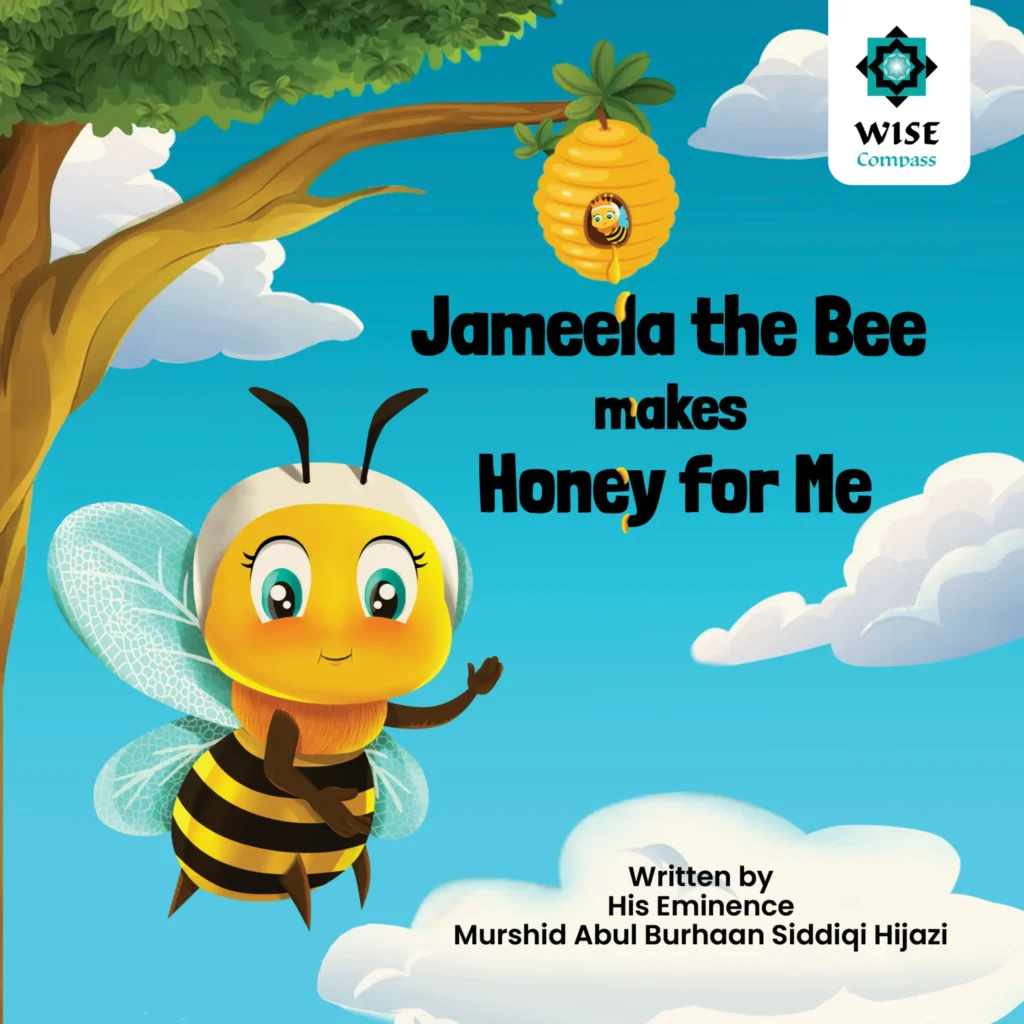
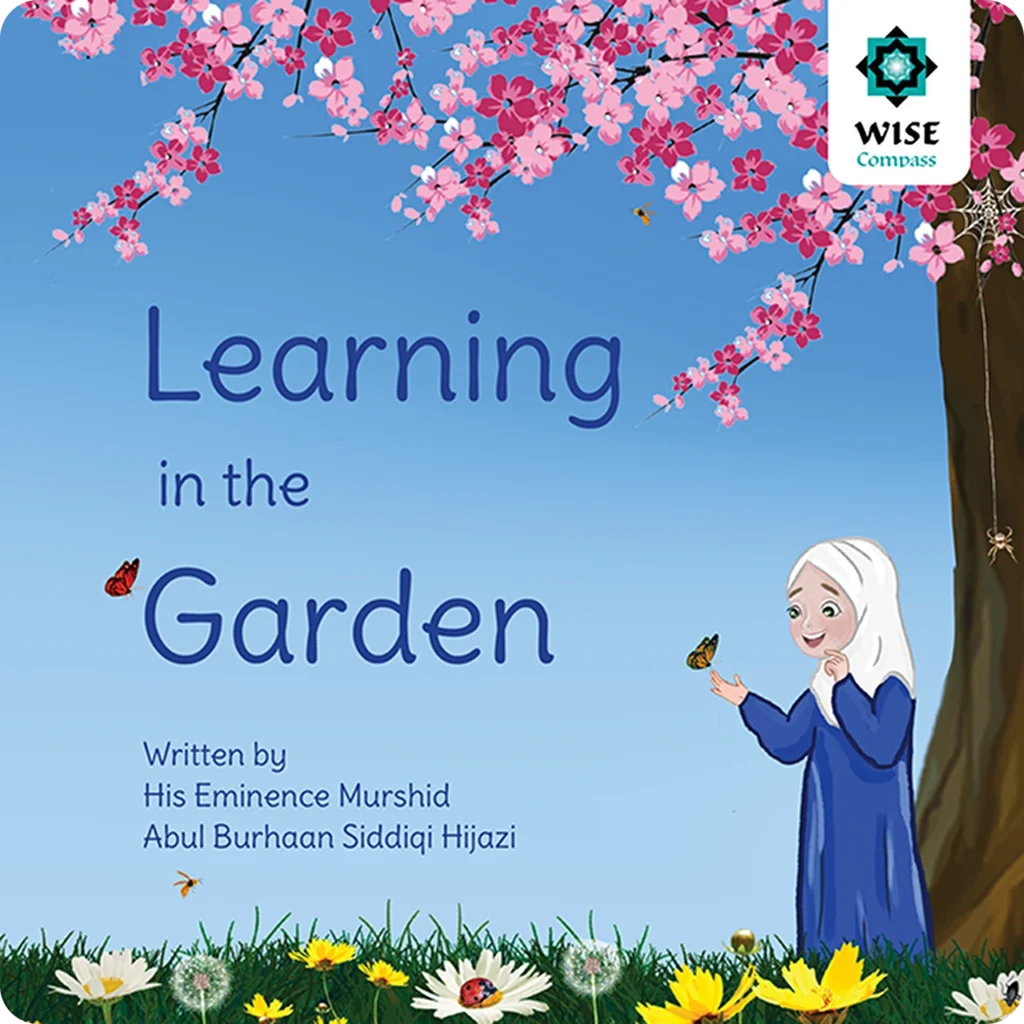
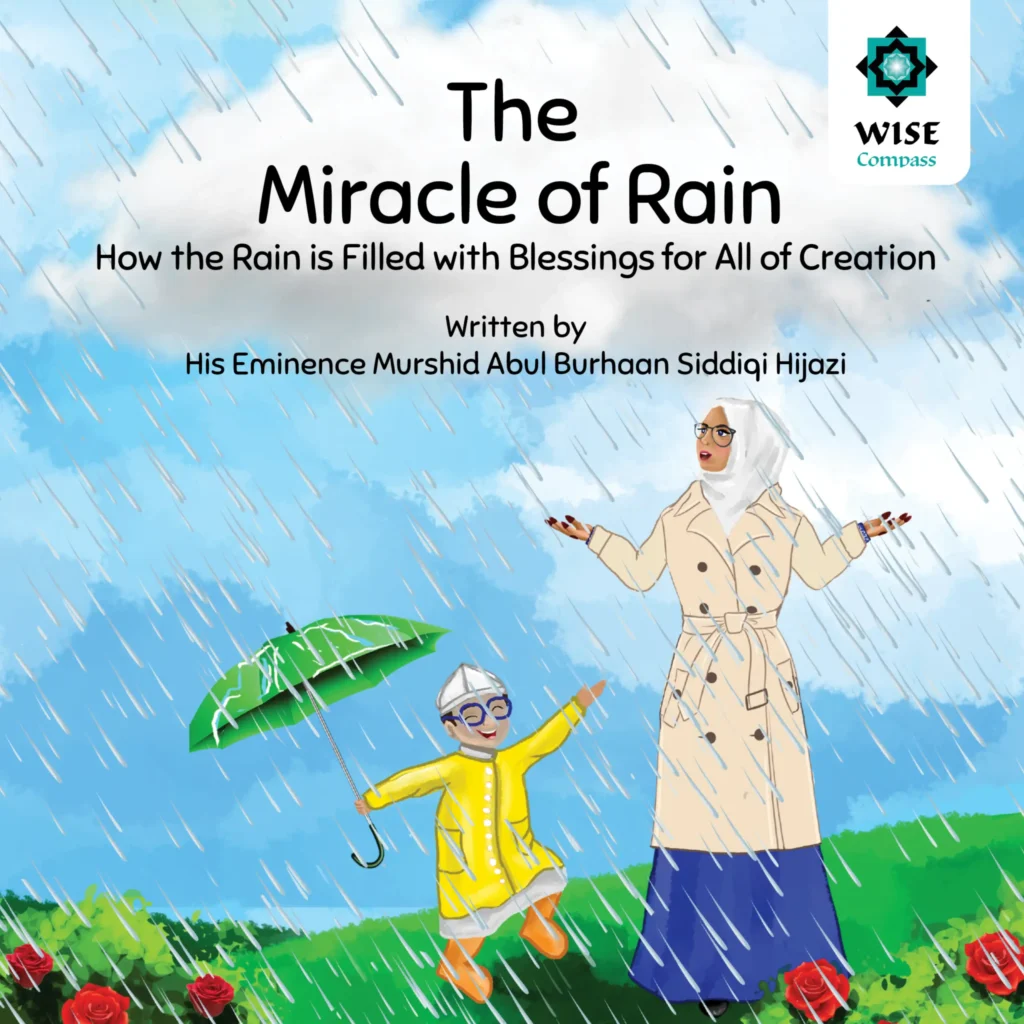
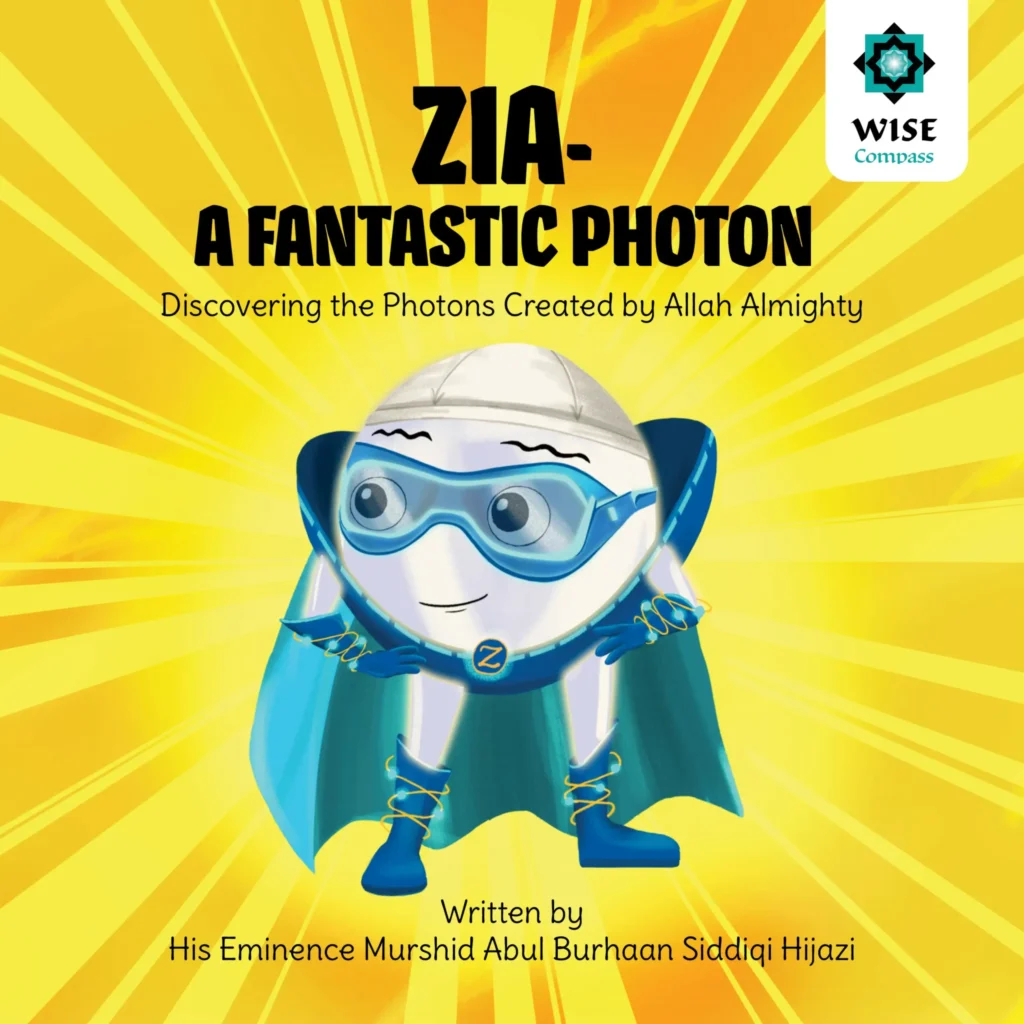
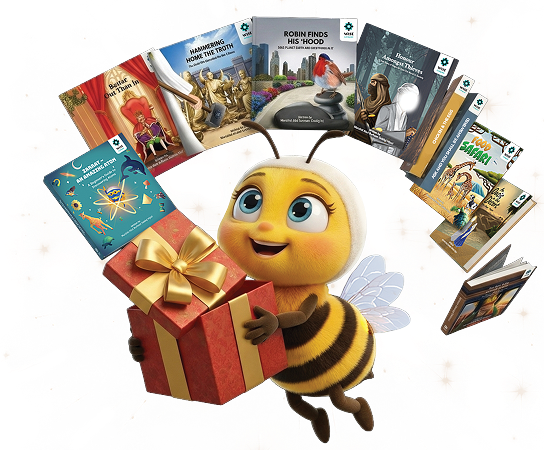
Many of the stories in the Wise Compass collection are based on remembrance and exploration of specific attributes of Allah Almighty: a child discovering Al Khaliq through science, a character experiencing Al Ghaffar through forgiveness, and a Prophet trusting Al Wakeel in a difficult moment.
SOME TITLES AND THE DIVINE NAME THAT INSPIRED IT



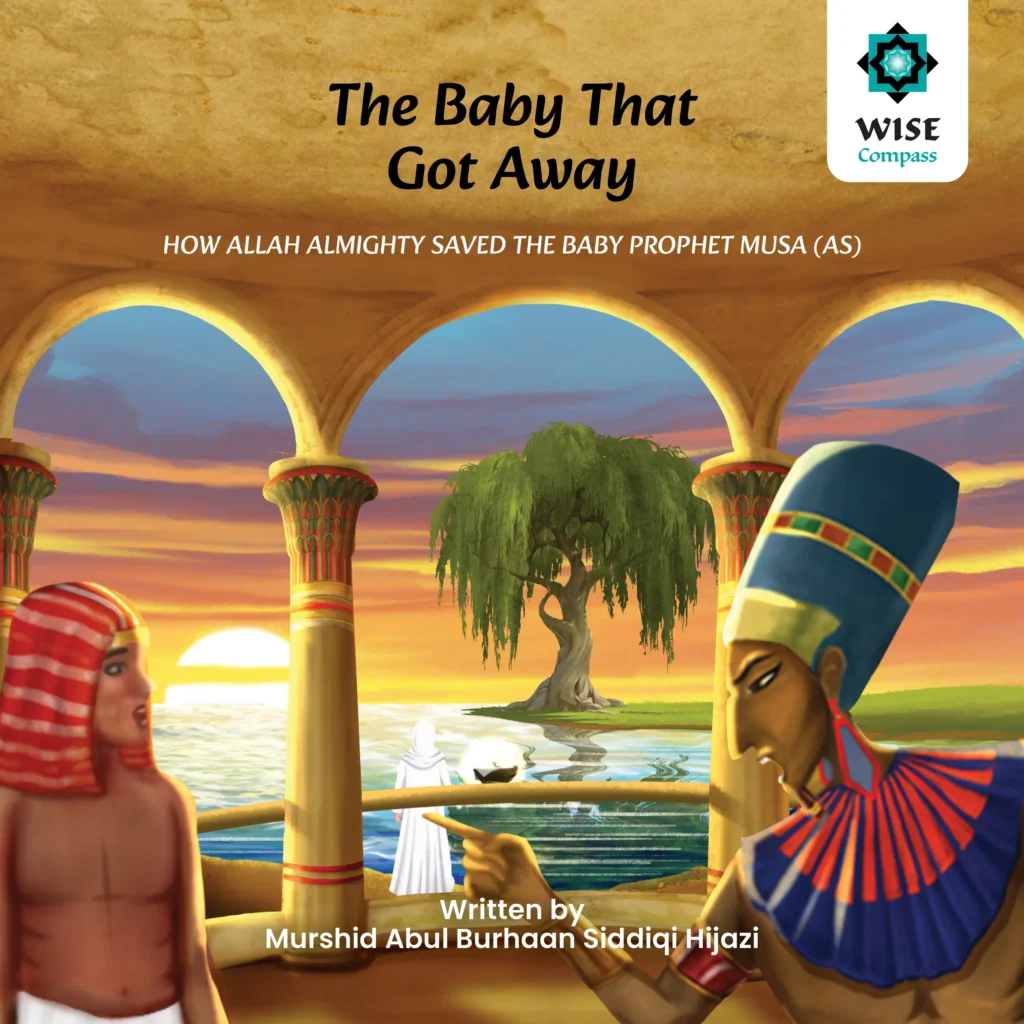
After reading any Wise Compass story with your child, a simple question can help unlock their thinking and strengthen their connection with each Divine Name. You might ask your child: ‘Which Divine Name of Allah Almighty did you see in this story?’ Regularly asking this question without pressure, after reading each book, and making it a genuine conversation rather than a test, is one of the most powerful Islamic education tools available to any parent.
Explore the full Wise Compass library
The Name Jar: Write each of the Divine Names on a small piece of card. You can use the Names in this guide as a starter. Each morning, a child draws one Divine Name from the jar, and that is the Name the family looks for throughout the day.
At dinner: ‘Where did you see Al Razzaaq today? What did He provide for you?’
Names on the Wall: Place a beautiful poster or handwritten list of the Divine Names, where The family gathers. This is not just decoration; it is a daily invitation. Even children who cannot read yet absorb the presence of the Divine Names and begin to ask about them.
Dua Practice: Whenever your child makes a Dua, ask them, ‘Which Name of Allah Almighty feels right for this Dua?’ and help them begin their supplication with it. For example: ‘Ya Mujeeb, please answer my Dua,’ or ‘Ya Hafeed, please keep my Grandma safe.’
Names in Ramadan: During Ramadan, assign one Divine Name to learn on each of the 30 days. Explore it through conversation, through looking for evidence of it in the world, and through making a Dua using it at Iftar.
No. The Hadith uses the word ‘Ahsaha’, which scholars have translated variously as ‘memorised’, ‘counted’, ‘preserved’, or ‘acted upon’. The most common scholarly opinion is that the Hadith is calling for understanding, reflection, and use of the Divine Names, not rote memorisation of a list. A child who genuinely knows and uses 15 Divine Names deeply has preserved them far better than a child who can recite all 99 in sequence but uses none of them in daily life.
From as early as possible. It is best to start introducing Divine Names to children through conversation and association rather than formal teaching. Even a 2-year-old who hears ‘Allah Almighty is Al Hafeed, He’s keeping you safe’ every night before sleep will begin to know that Name in the most important way: as a felt truth.
Not all of the 99 Beautiful Names of Allah Almighty appear explicitly in the noble Quran. The list of 99 has been compiled from scholars of the noble Quran and Hadith. There is some scholarly variation in which Divine Names are included in this list but the most commonly used one is compiled by Shaykh Ibn Uthaymeen (RA). It is compiled using explicit Quranic and Hadith references and is one of the most widely used and carefully verified.
Divine Names that refer to the more disciplinarian or stern-seeming aspects to describe Allah Almighty become easy for children to understand when their purpose and connection to human betterment is explained. For example, ‘Al Muntaqim’ is the Divine Name that means the Ultimate Vindicator. Allah Almighty vindicates injustice; He does not allow the oppressor to escape accountability forever.
For a child, this Divine Name answers a question that every person asks at some point in life: ‘What about bad people who don’t get punished? Isn’t that unfair?’ ‘Al Muntaqim’ is the answer: no worldly injustice is the final outcome. Allah Almighty will vindicate every wrong that was never righted in this world.
Teaching children the 99 Beautiful Names of Allah Almighty is not a tickbox task to just complete. It is a relationship to build across a lifetime, starting from childhood, one Divine Name at a time. You can help your child build this relationship in the small quiet moments of their life and the big difficult ones; through stories and Dua; and conversation; and the simple act of pointing at the world and saying, ‘See that? That is a sign of Al Khaliq, Al Razzaaq; Al Jameel.’
Holy Prophet Muhammad ﷺ promised that whoever preserves these Divine Names will enter Jannah (Heaven). May Allah Almighty make us and our children among those who not only know His Names but also live by them, calling on Him in every need, finding Him in every moment, and loving Him more with every Divine Name we come to understand.
Also read: Islamic Stories That Strengthen Faith and Imaan