



Eid Al Adha is one of the most significant celebrations in the Islamic calendar, yet for many people, including Muslim children asking questions for the first time and non-Muslim friends and family trying to understand, it can feel unfamiliar or hard to explain simply.
This guide is written for everyone: Muslim parents looking for a clear, child-friendly explanation to share at home; teachers wanting to explain Eid to a classroom; and anyone curious about what Eid Al Adha is. If you have questions about what this Islamic celebration actually means, why Muslims celebrate it, and what the sacrifice involved is really about, we have answers for you.
The short answer is this: Eid Al Adha is a celebration of faith, obedience, and generosity, rooted in one of the most powerful events in Islamic history. It is expressed through prayer and remembrance of Allah Almighty, sharing food with the community, caring for those in need, and spending time with family. Everything in this guide explains the various aspects of this blessed occasion in more detail.
Eid Al Adha (pronounced Eed Al Ad Ha) translates directly as ‘Festival of Sacrifice’. It is one of the two formal ‘Eids’ in Islam, the other being Eid Al Fitr, which marks the end of Ramadan. Eid Al Adha is often described as the greater of the two Eids, and it holds a unique place in the Islamic calendar because it marks the end of Hajj each year, the pilgrimage to Makkah that is one of the Five Pillars of Islam. This is why it is sometimes called ‘The Eid of Hajj’.
At its heart, Eid Al Adha honours three values that Islam places at the centre of a believer’s life:
Eid Al Adha begins on the 10th of Dhul Hijjah, the 12th and final month of the Islamic lunar calendar, and is celebrated for up to 3 to 4 days. As the Islamic calendar is lunar, the date shifts each year in the Gregorian calendar by approximately 10 days. Muslim communities across the world follow confirmed moon sighting announcements for the exact date each year.
To truly understand Eid Al Adha, you need to know the event at its heart, one of the most profound stories in human history and the Islamic tradition and one that resonates with children and adults alike.
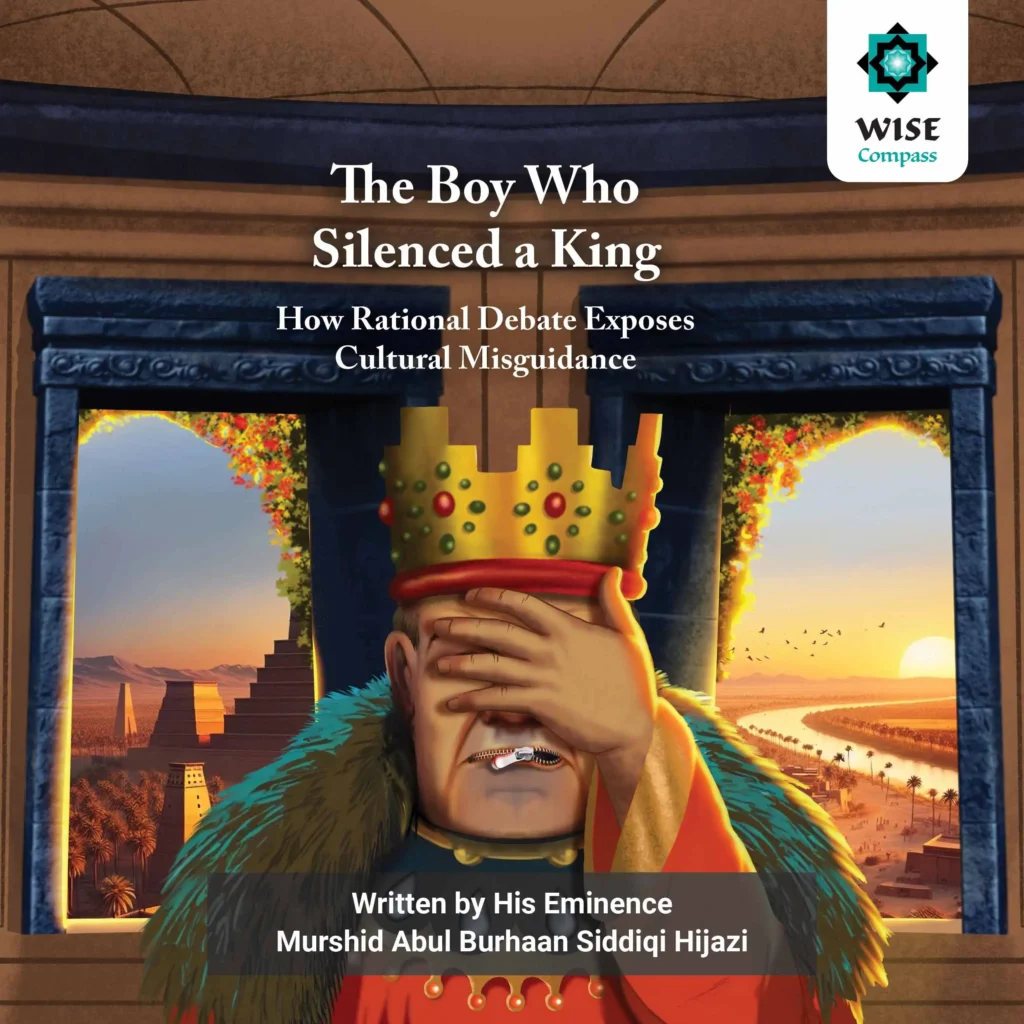
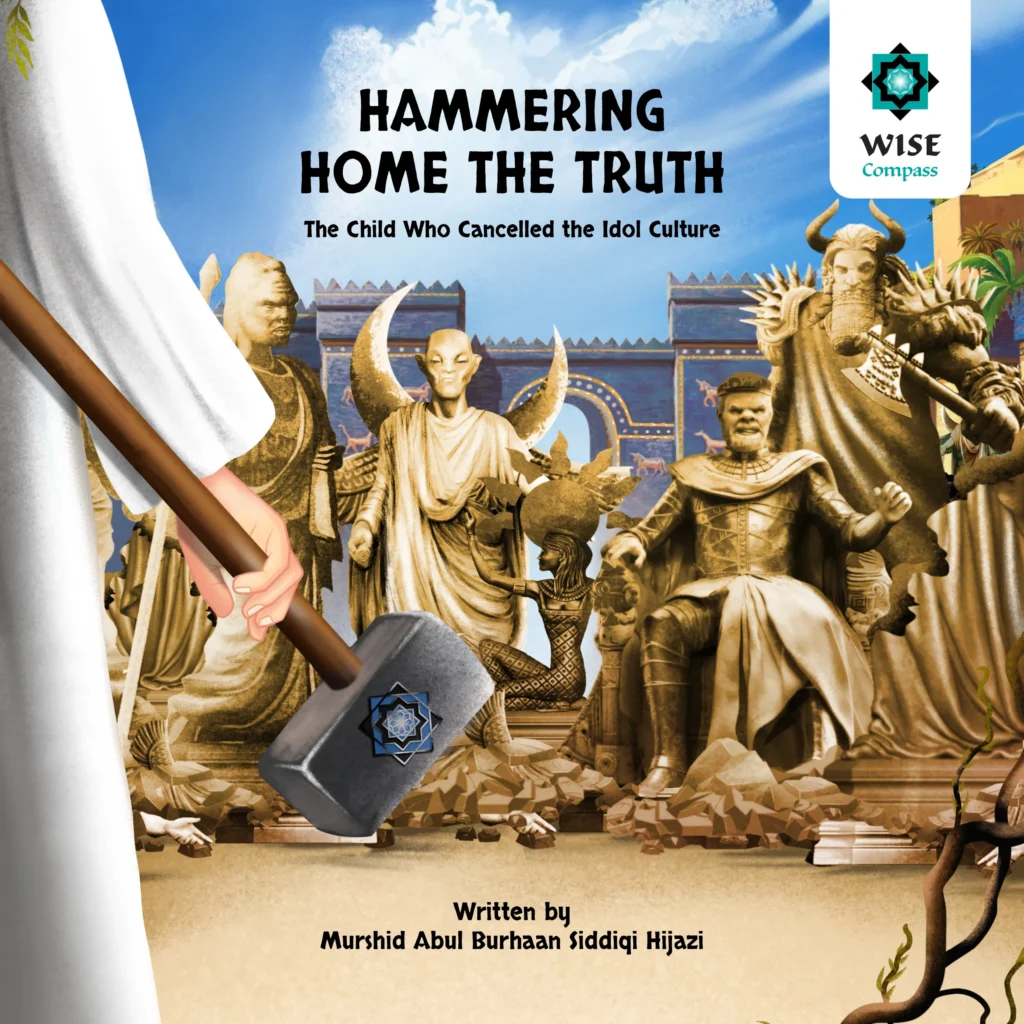
Prophet Ibraheem (AS), known as ‘Abraham’ in other key monotheistic faiths such as Christianity and Judaism, is one of the greatest Prophets in Islamic history. He was a man of unshakeable faith who passed extraordinary tests of faith throughout his life: as a child, he questioned his community about their irrational practices and beliefs and was attacked for his convictions; he challenged and defeated corrupt rulers with pure reasoning and was punished; he was thrown into a fire for refusing idol worship, and throughout it all, he testified to the Oneness of Allah Almighty.
In his adulthood, he was Divinely commanded to leave his spouse and child in a barren land, and he submitted completely to the commands of Allah Almighty again and again throughout his whole life.
Then came the most difficult test of all. Something unimaginable for any parent. Allah Almighty commanded Prophet Ibraheem (AS) in a vision to sacrifice his beloved son, Prophet Ismaeel (AS), for the sake of Allah Almighty. For a parent, there can be no harder command imaginable.
Prophet Ibraheem (AS) told his son what he had seen, and Prophet Ismaeel (AS), showing his own remarkable courage and faith, agreed with his father that he should do what Allah Almighty had commanded. Prophet Ismaeel (AS) also reassured his father that he accepted this decision from Allah Almighty and would show patience.
As Prophet Ibraheem (AS) committed to the task and went to carry out the command, Allah Almighty intervened, replacing Prophet Ismaeel (AS) with an animal sacrifice. It was never about the act itself. It was always about the willingness of the believer: the complete, trusting surrender to Allah Almighty even in the face of the most unimaginable human cost.
Allah Almighty states this moment in the noble Quran at Surah Al Saffa’at (37), Verses:102-107, and every year at Eid Al Adha, Muslims around the world remember it, not as a historical curiosity but as a living reminder of what complete faith means for a person and what the unending mercy of Allah Almighty looks like in response.
The life stories of Prophet Ibraheem (AS) are some of the most important ones from Islamic history for any Muslim to know and understand deeply – especially children.
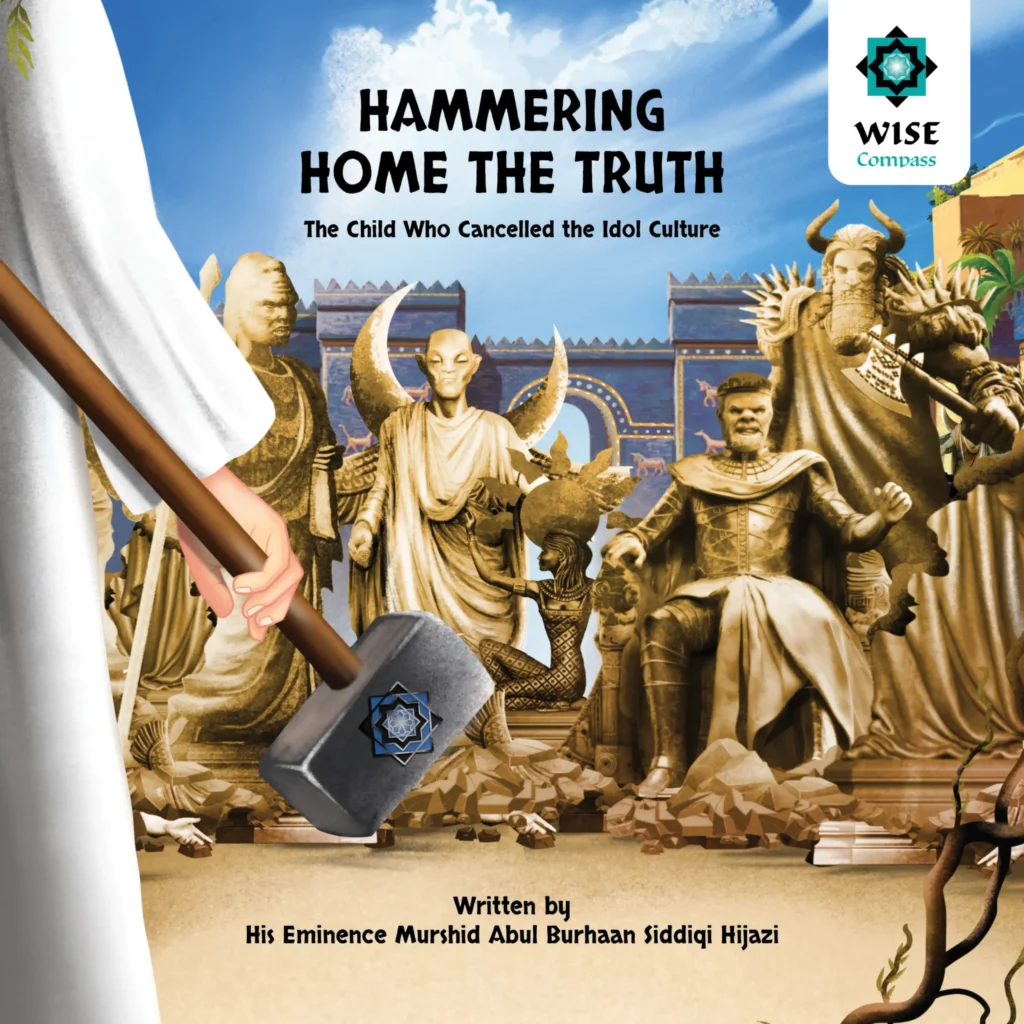
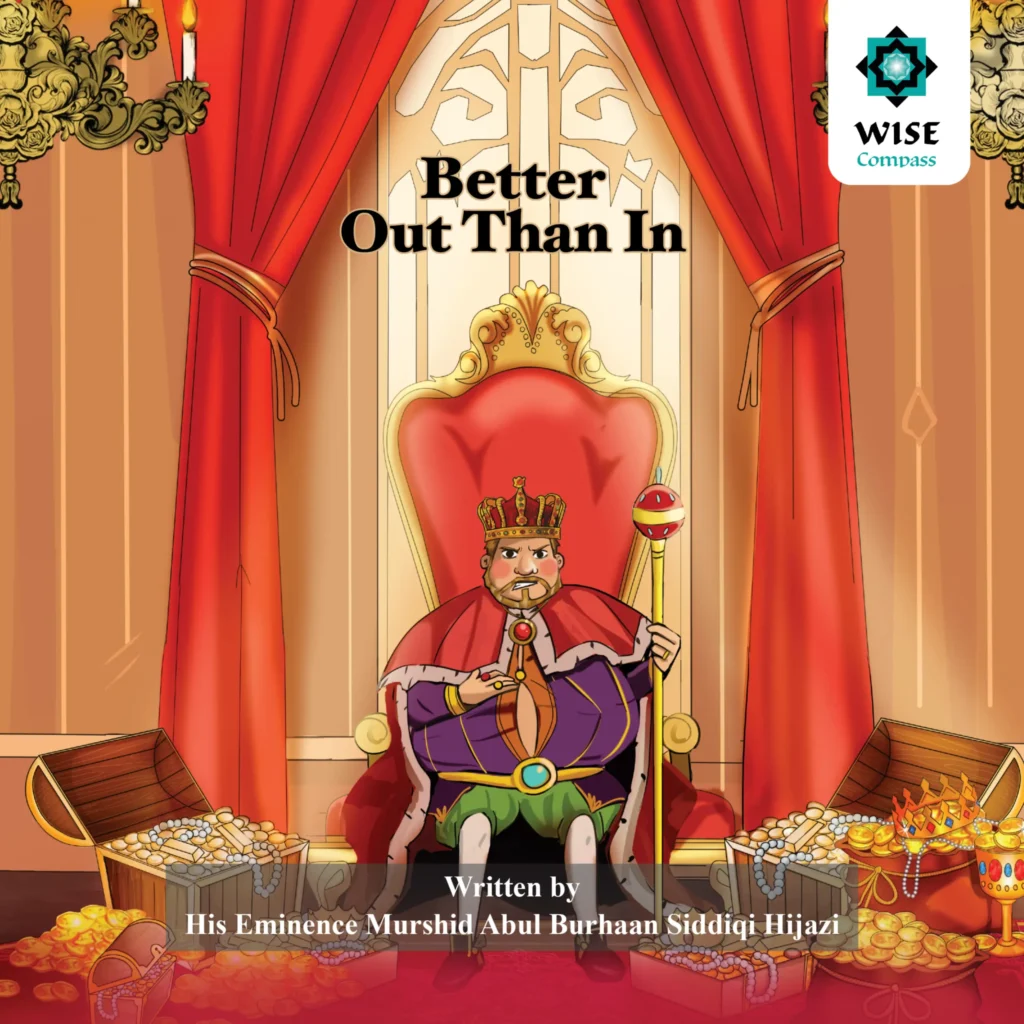
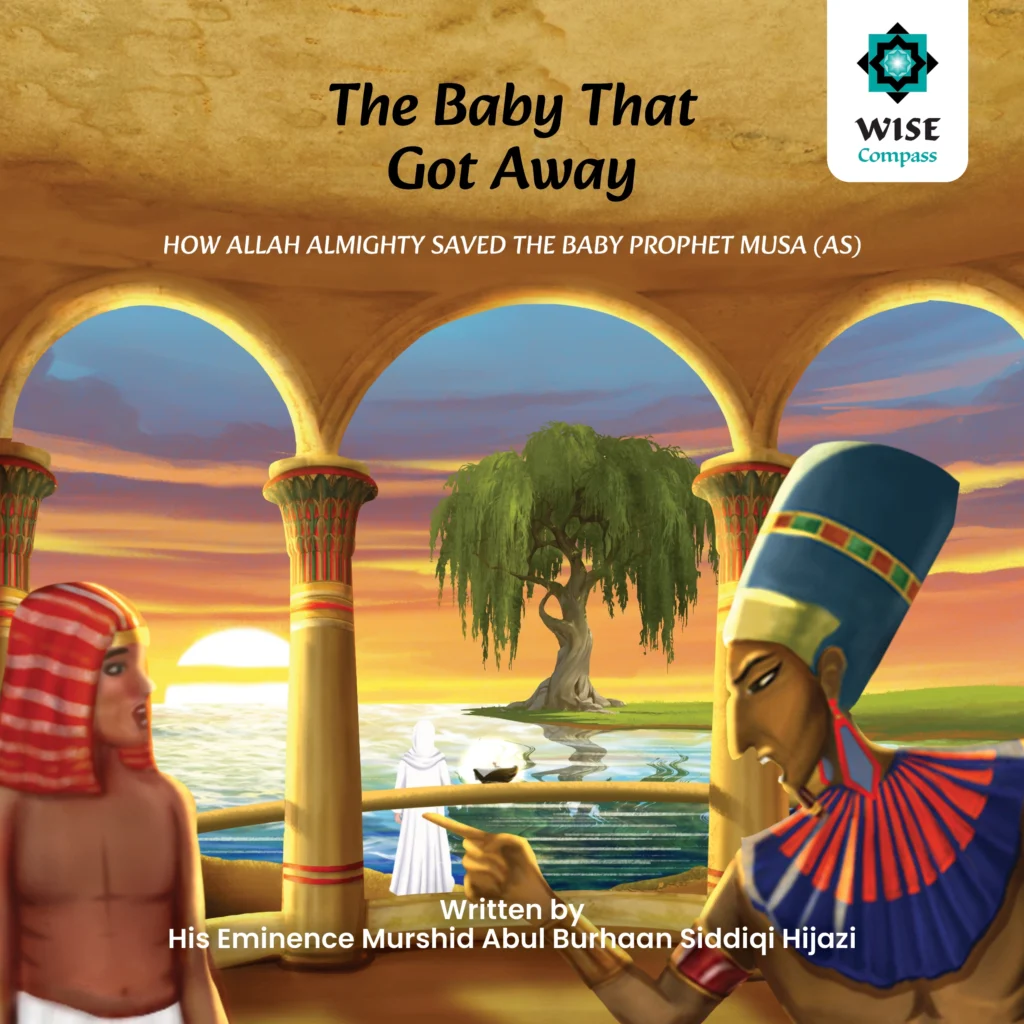
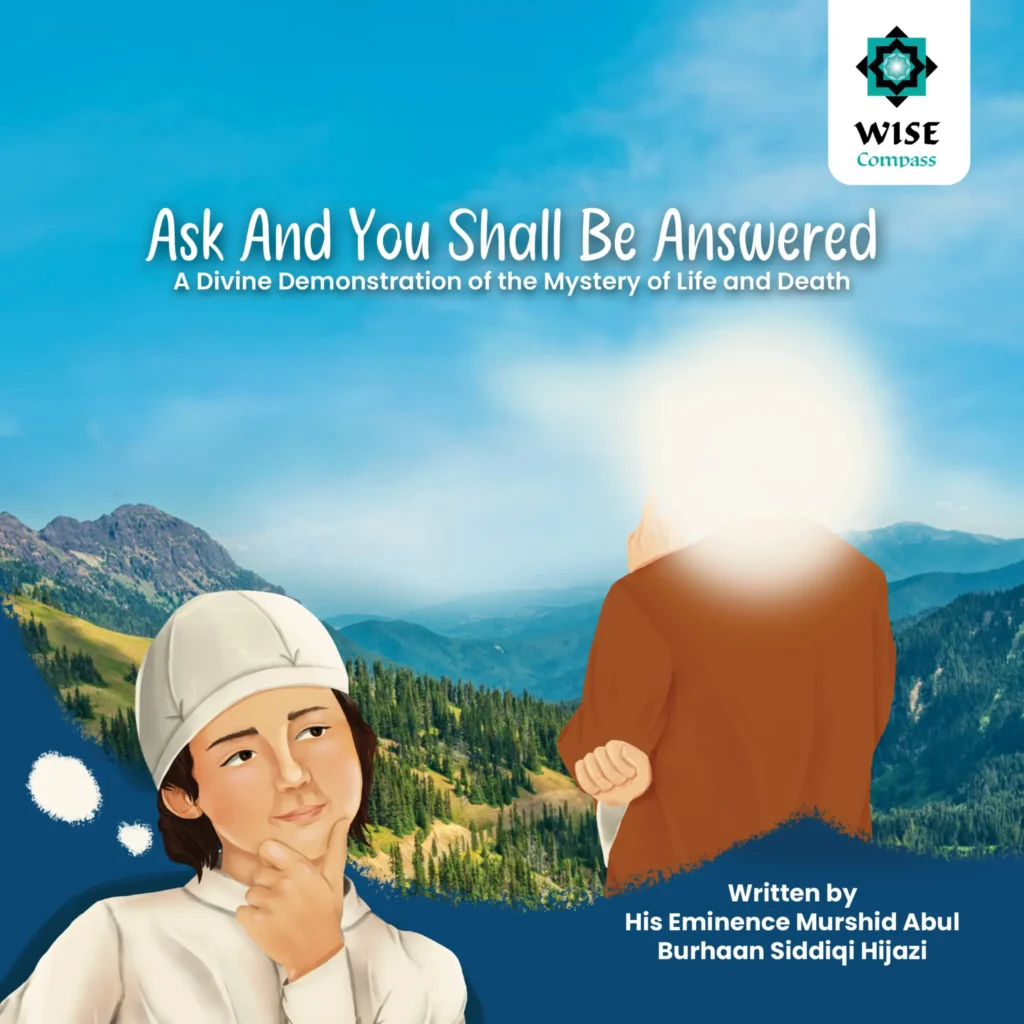
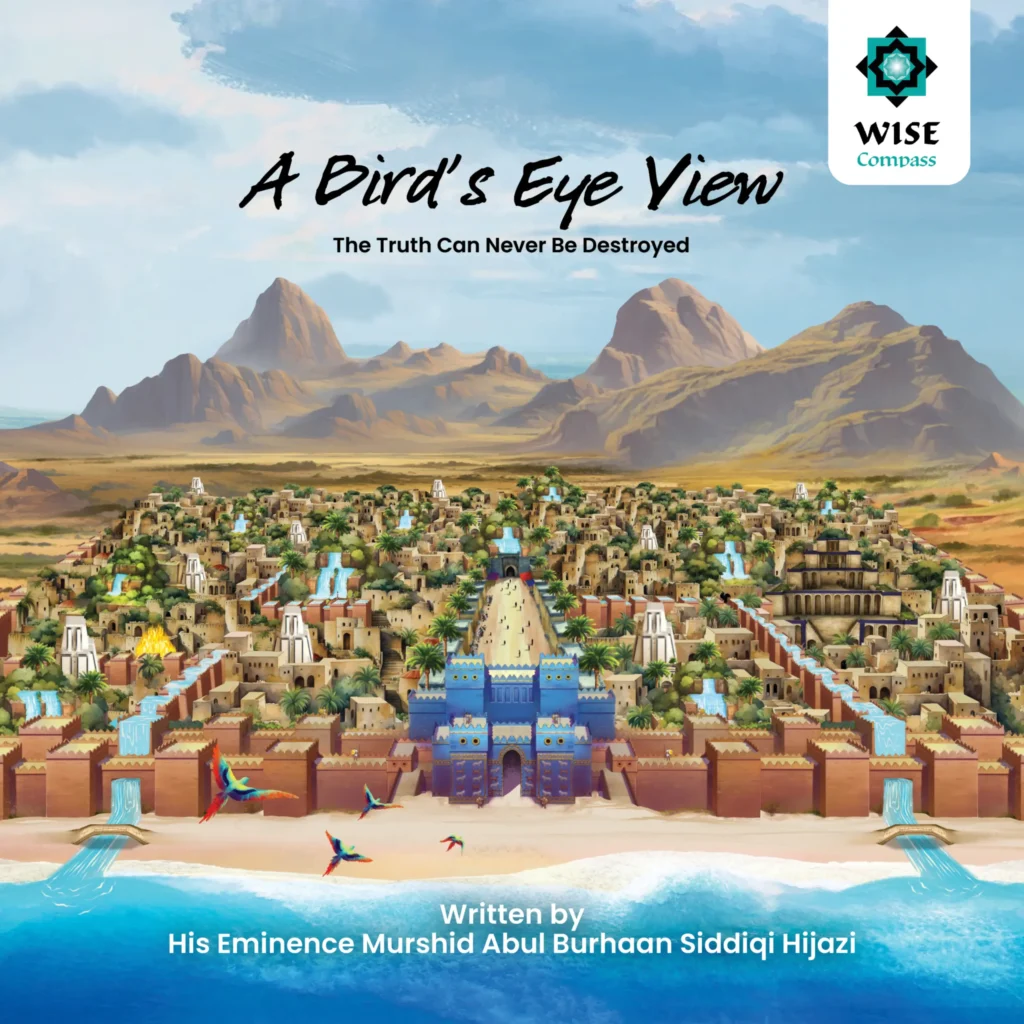
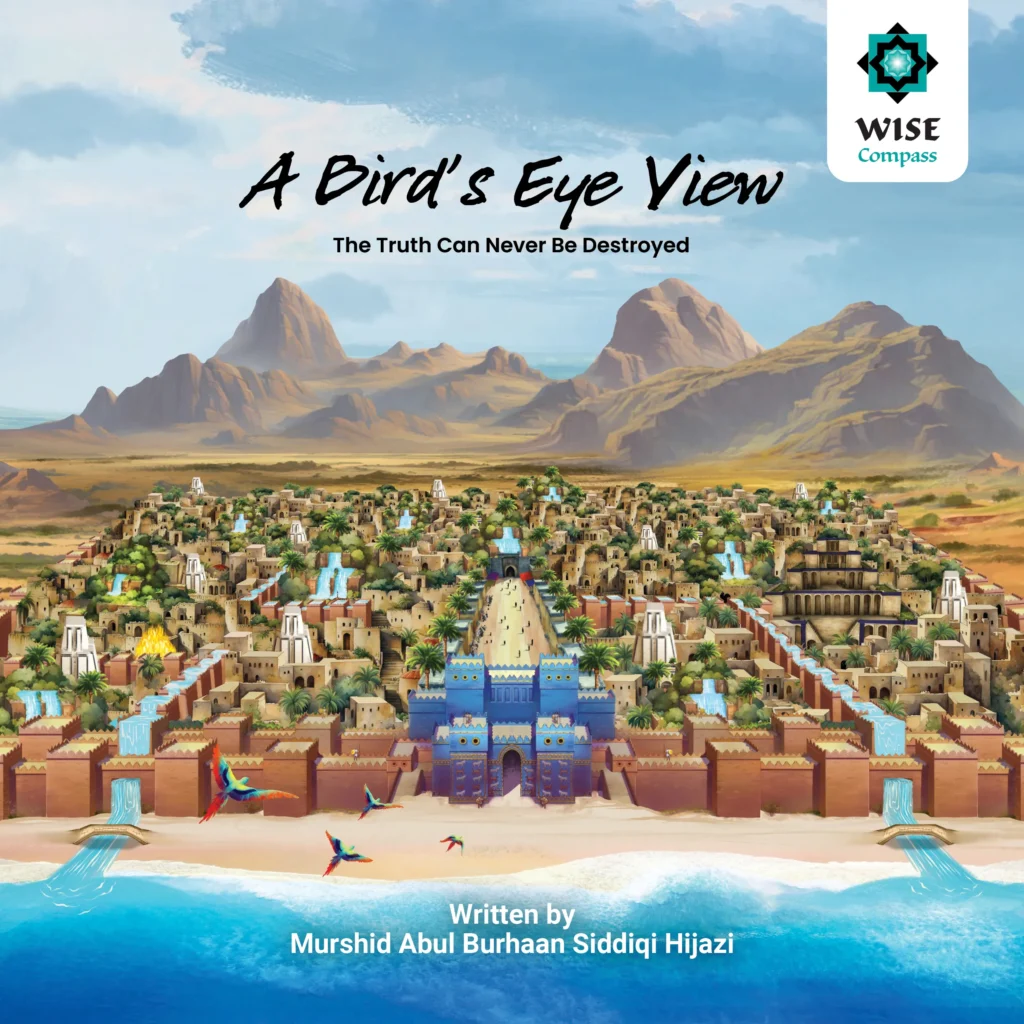
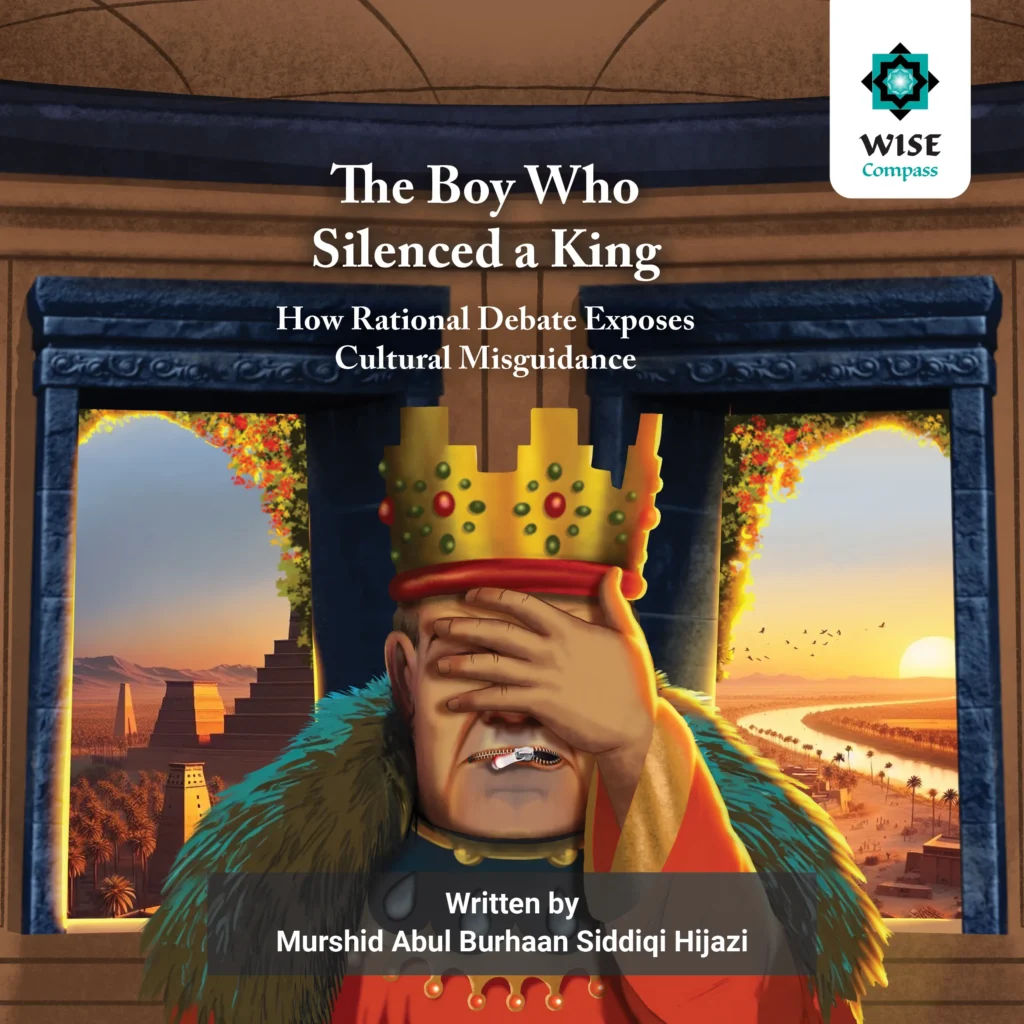
Wise Compass has several books that teach about the life of Prophet Ibraheem (AS) and bring key instances to life for young readers, including Hammering Home the Truth, A Bird’s Eye View and The Boy Who Silenced a King, to name a few.
✅ Wise Compass Parental Tip:
Check out the full Prophetic Stories series on Prophet Ibraheem (AS) at wisecompass.com, and let your children learn independently or read the stories together as online e-books, video books or audiobooks.
The Eid sacrifice, known as ‘Qurbani’ or ‘Udhiya’, is the act of sacrificing a suitable animal (sheep, goat, cow, or camel) during the days of Eid Al Adha in remembrance of Prophet Ibraheem’s (AS) act of obedience.
It is important to understand what Qurbani is and what it is not.
It is a religious ritual with purpose and clear intention, not simply a means of obtaining meat for consumption. Allah Almighty tells us in the noble Quran that He does not look at the flesh or the blood of the sacrifice but, in fact, looks at the Taqwa (God-consciousness) of the believer who is fulfilling His command. Holy Prophet Muhammad ﷺ has taught us that the act is an expression of gratitude, obedience, and generosity from the believer towards his Creator.
The meat from Qurbani is divided into three portions: one for the family, one for relatives and neighbours, and one for people in need. This distribution is fundamental; Eid Al Adha is explicitly designed to ensure that even those who cannot afford to celebrate still have food on their table during the celebration. Many Muslim families and organisations arrange Qurbani donations specifically to reach communities in need around the world.
Families who are unable to perform Qurbani themselves, due to financial circumstances or local context, can donate to trusted organisations that will carry it out on their behalf.
While specific customs vary across cultures and communities, most Muslim families observe Eid Al Adha through some combination of the following:
The day begins with a very blessed, compulsory congregational prayer, held at a Masjid or large outdoor gathering space. This special Salah is attended by the whole community, including children, so that everyone may benefit from its spiritual blessings. This prayer is also one of the most visible expressions of Islamic community life.
Muslims greet each other with:
Arabic:
عِيدٌ مُبَارَك
Transliteration:
Eid Mubarak
Meaning (English)
Blessed Eid (to you)
And often also:
Arabic:
تَقَبَّلَ اللَّهُ مِنَّا وَمِنْكُمْ
Transliteration:
Taqabbal Allahu minna wa minkum
Meaning (English)
May Allah Almighty accept (this) from us and from you
The Qurbani:
Eligible families arrange the sacrifice and ensure the meat is distributed, especially to those in need.
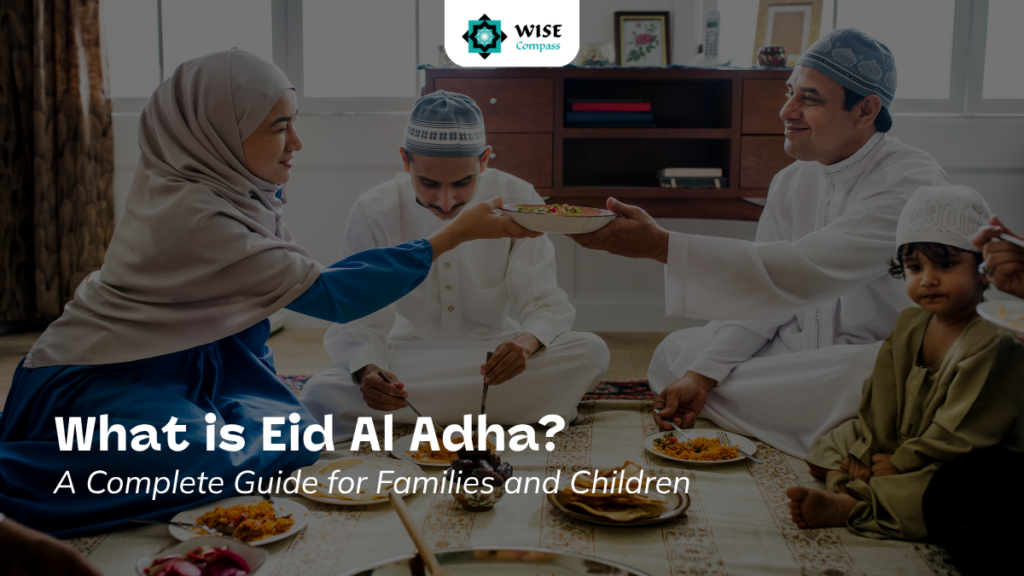
Families gather together to visit relatives and share a meal, and many adults give gifts or money (commonly referred to as ‘Eidi’) to children – one of the most joyful parts of the celebration for young Muslims.
Eid Al Adha is a time to check up on neighbours, reach out to anyone who might be alone, and ensure that the spirit of generosity extends beyond the family home.
Eid Al Adha and Hajj are inseparably linked. Every year, as Muslims around the world celebrate Eid Al Adha at home, millions of pilgrims are completing the final days of Hajj in and around Makkah, standing at the plains of Mount Arafat on the 9th of Dhul Hijjah, then moving to the sites of Muzdalifah and Mina, where the Qurbani is also performed as part of the Hajj rituals.
The two observances share the same spiritual root: the story of Prophet Ibraheem (AS), his family, and their submission to Allah Almighty. The sites of Hajj itself, the Ka’bah, the hills of Safa and Marwah, and the plains of Mount Arafat are all connected to that story. Even families who are not performing Hajj are spiritually connected to the actions of the pilgrimage through the celebration of Eid Al Adha and the Qurbani they perform at home.
Children often ask direct, honest questions about Eid Al Adha, and they deserve direct, honest answers that are appropriate to their age. Here are some approaches that work well:
Keep it simple and warm, and focus on sharing, gratitude, and celebration.
‘Eid Al Adha is a special day when we remember that Prophet Ibraheem (AS) loved Allah Almighty more than anything, and Allah Almighty showed him so much mercy. We share food with people who need it, we say thank you to Allah Almighty, and we celebrate together as a family.’
You can introduce the full story of Prophet Ibraheem (AS) and Prophet Ismaeel (AS), explain what Qurbani means and why the meat is shared, and have a real conversation about what it means to trust Allah Almighty even when it is hard.
‘Eid Al Adha teaches us that faith is not just words; it is when we are willing to do what pleases Allah Almighty even when we do not ‘feel’ like doing it. It is what we are willing to do when it costs us something, or goes against what we ‘want’ for ourselves.’
If a child asks about the animal, a helpful framing is.
‘Allah Almighty has provided permissible sources of food and sustenance for us, and this includes animals such as sheep, goats, cows and camels. Qurbani instills even more blessings in this food source and gives families who can afford to share the meat with others, the chance to share it with those who may not have enough to eat. In this way, Qurbani is a way of making sure EVERYONE can enjoy Eid, and receive from its blessings, not just families who are comfortable.’
The Wise Compass library includes beautiful and meaningful Islamic stories for children of all ages that bring the values of Eid Al Adha to life year-round, from the story of Prophet Ibraheem (AS) to stories about generosity, gratitude, and trusting the plans of Allah Almighty.
✅ Wise Compass Parental Tip:
Check out the full Prophetic Stories series on Prophet Ibraheem (AS) and Explore the full collection here.
Let your children learn independently or read the stories together as online e-books, video books or audio books.
What is Eid Al Adha in simple words?
Eid Al Adha is a Muslim celebration that remembers the faith of Prophet Ibraheem (AS) and expresses gratitude to Allah Almighty through prayer, sharing food with those in need, and spending time with family.
Is Eid Al Adha the same as Eid Al Fitr?
No, they are two separate celebrations. Eid Al Fitr marks the end of Ramadan (the month of fasting) while Eid Al Adha marks the final days of Hajj and commemorates the sacrifice of Prophet Ibraheem (AS). Eid Al Adha is generally considered the more significant of the two.
Do all Muslims have to perform Qurbani (sacrifice)?
No. Qurbani is obligatory (according to most scholars) for Muslims who meet the Nisaab threshold, which means a minimum level of taxable wealth. Those who cannot afford to perform Qurbani are not required to do so. Many who are required to perform it donate to organisations that carry it out on their behalf instead, in communities that need it most.
How long does Eid Al Adha last?
Eid Al Adha is celebrated over 3 to 4 days, beginning on the 10th of Dhul Hijjah. The Eid Salah is prayed on the first day only but the festivities may continue for the next few days. The exact number of days observed varies by country and local tradition.
What do you say on Eid Al Adha?
The most common greeting is ‘Eid Mubarak’ (Blessed Eid (to you)). Many Muslims also greet each other with the words ‘Taqabbal Allahu minna wa minkum’ (May Allah Almighty accept (this) from us and from you).
Eid Al Adha is not simply a holiday or festival. It is an annual reminder and invitation to live the values that Prophet Ibraheem (AS) embodied.
Whether you are celebrating Eid Al Adha for the hundredth time yourself or explaining it to a child for the first time, the message at the heart of Eid Al Adha is the same: trust Allah Almighty, do good, and share your blessings with others.
Eid Mubarak.
✅ Wise Compass Tips: