





One of the fundamental lessons we learn from the Hijra or Hijrah (Migration) of holy Prophet Muhammad ﷺ from Makkah to Madinah is that trusting Allah Almighty, even when the path ahead is unclear, always leads to a new and better beginning. When holy Prophet Muhammad ﷺ left behind his home, his belongings, and his beloved city of Makkah, he did so with complete Tawakkul (Trust in Allah Almighty), willing to accept whatever Allah Almighty willed as the outcome.
Every step of the Hijrah, from leaving Makkah undetected to evading capture from the enemies of Islam by taking refuge in the Cave of Thawr to arriving safely in Madinah, shows that Allah Almighty’s plan is always at work, even in moments of challenge and uncertainty. This is why the Hijrah is remembered not as a story of loss, but as the beginning of the Islamic calendar itself, a symbol of hope, renewal, and Divine timing. For children and parents alike, the Hijrah is a powerful reminder that letting go of what feels safe, when done with trust in Allah Almighty, often opens the door to something far greater.
Before we look at the lessons within the Hijrah, it helps to picture the scale of what was being asked of holy Prophet Muhammad ﷺ and the early Muslims. They were not simply moving house. They were leaving the city they were born in; the blessed Ka’bah they had prayed towards their whole lives; and, for many, family members who did not share their faith. There was no guarantee of safety on the way to nor in Madinah. There was only the command of Allah Almighty and the promise that came with obeying it.
When Allah Almighty commanded holy Prophet Muhammad ﷺ to migrate, there was no map showing exactly how the journey would go. The people of Makkah had grown hostile, and the danger to holy Prophet Muhammad ﷺ and his followers was very real. Yet the response was not hesitation, it was Tawakkul. This is the first lesson of the Hijrah for children: sometimes Allah Almighty asks us to take the first step before we can see the whole path, because He has already planned the whole journey – and our job is simply to trust that He is guiding us.
One of the most moving moments of the Hijrah took place inside the Cave of Thawr, where holy Prophet Muhammad ﷺ and Khalifa Abu Bakr Al Siddiq (RA) hid from the enemy search party sent to find them. Murshid Khalifa Abu Bakr (RA) was focused on the safety of holy Prophet Muhammad ﷺ, and it is at this exact moment that Allah Almighty revealed words of comfort in the noble Quran.
Allah Almighty tells us in the noble Quran, at Surah Al Tawbah (9), Verse 40:
لَا تَحْزَنْ إِنَّ اللَّهَ مَعَنَا
Laa tahzan innAllaaha ma’anaa
Do not grieve; indeed, Allah Almighty is with us
This verse is often the first one taught to children about the Hijrah because it captures the entire lesson in a single sentence: even when we cannot see a way out, Allah Almighty has already planned and provided it for us.
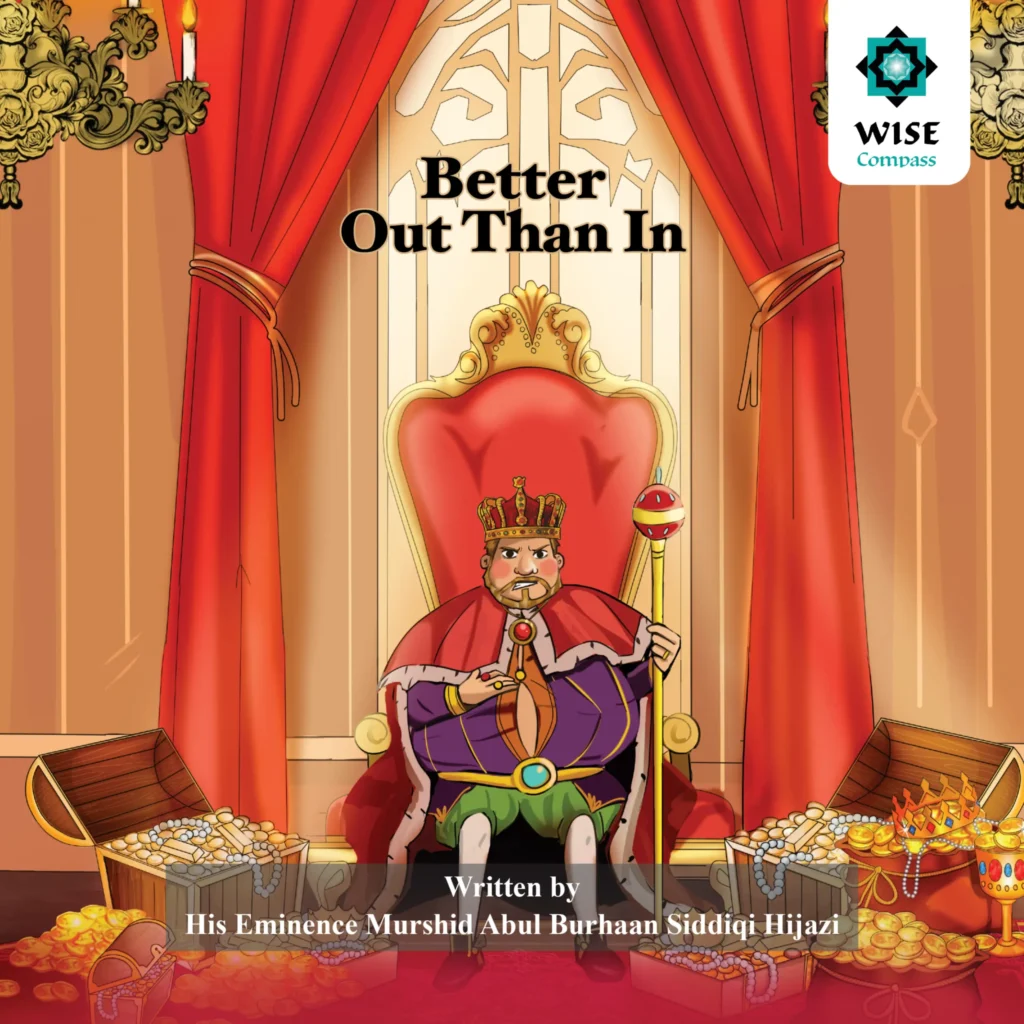
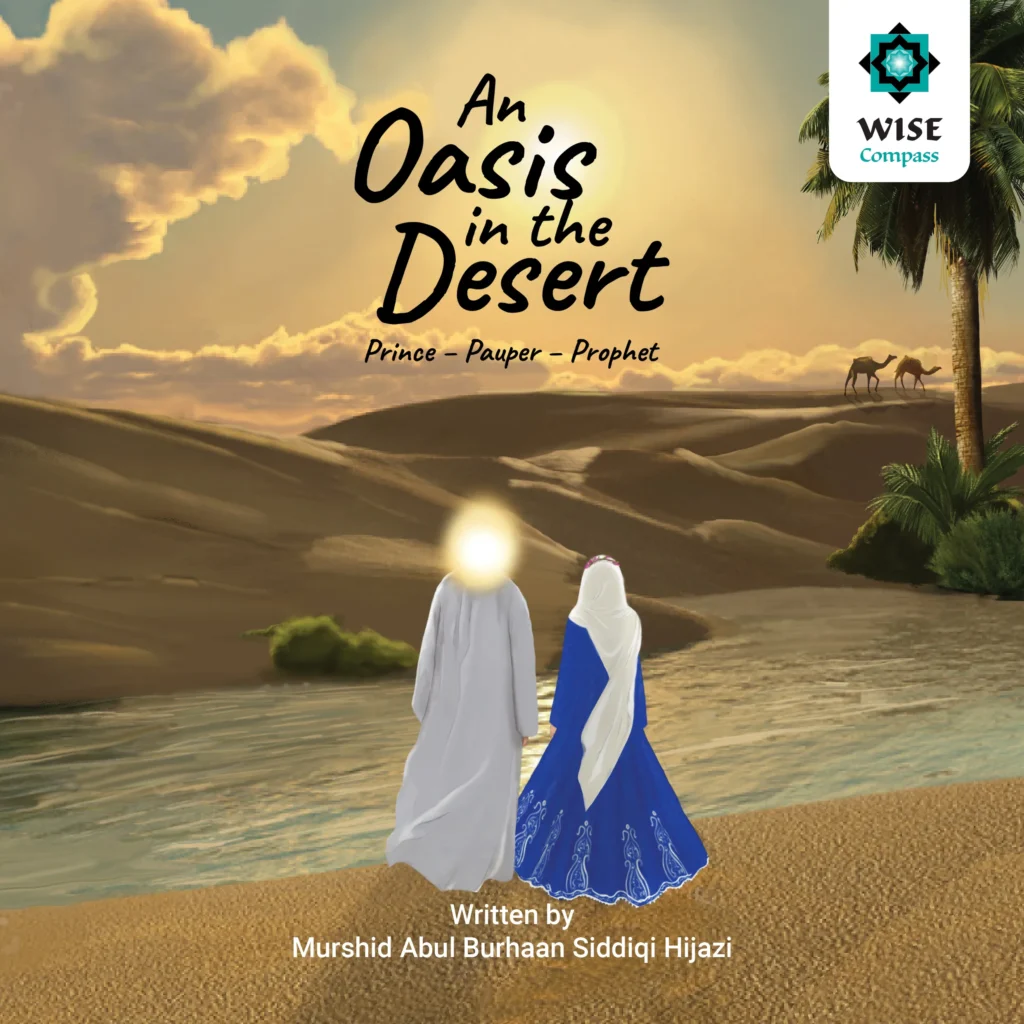
If your child is anxious about change and needs comfort, this is a wonderful moment to introduce them to An Oasis in the Desert, a gentle story about a young prince who leaves behind his life of comfort and pride, only to discover that true peace comes from simplicity, humility, and trust in Allah Almighty, a theme that mirrors exactly what holy Prophet Muhammad ﷺ experienced when he left the comforts of Makkah behind.
The Hijrah was not just the journey of holy Prophet Muhammad ﷺ leaving Makkah, it was an entire community choosing to let go of homes, businesses, and belongings for the sake of their Imaan (Faith). This kind of trust, releasing what feels secure because it does not allow you the circumstances to lead your life and worship Allah Almighty freely and being willing to accept whatever may come as being better even though it is unknown, is one of the hardest lessons to teach children but also one of the most powerful.
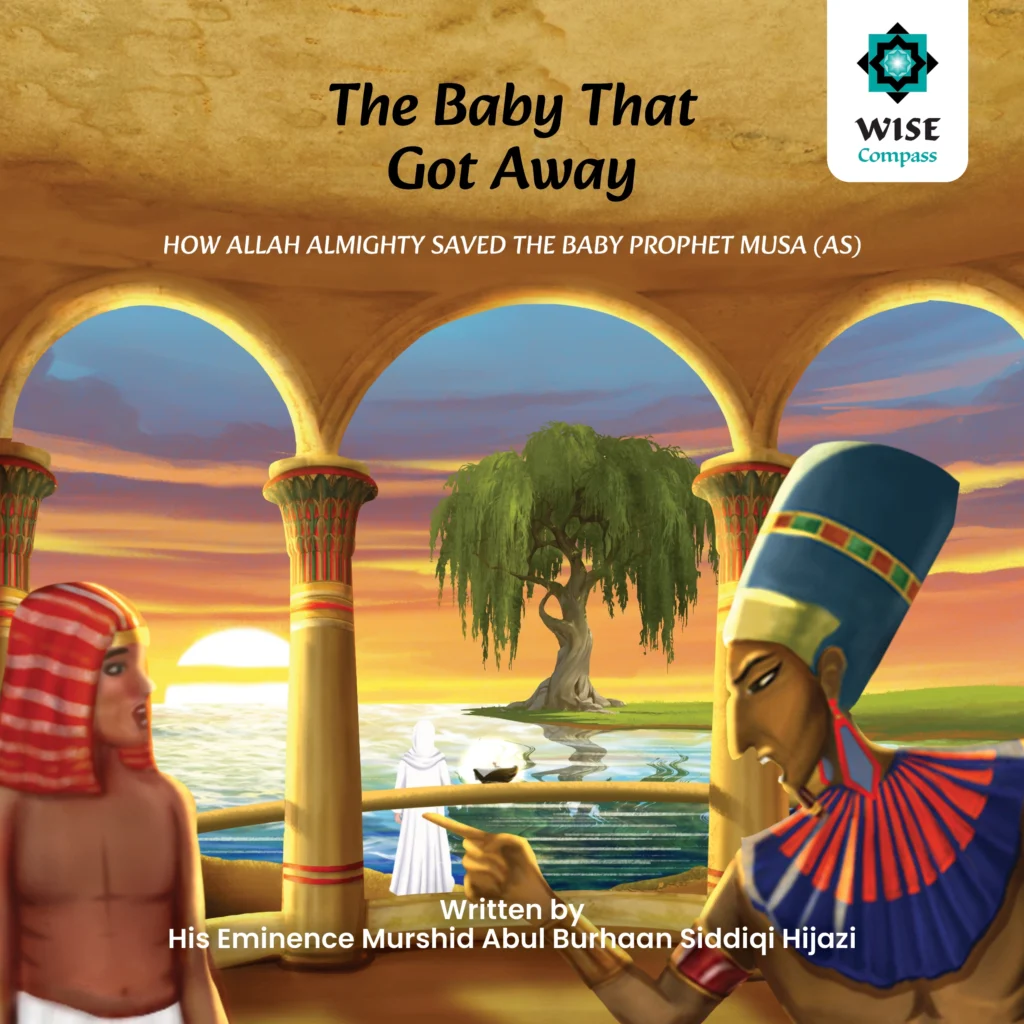
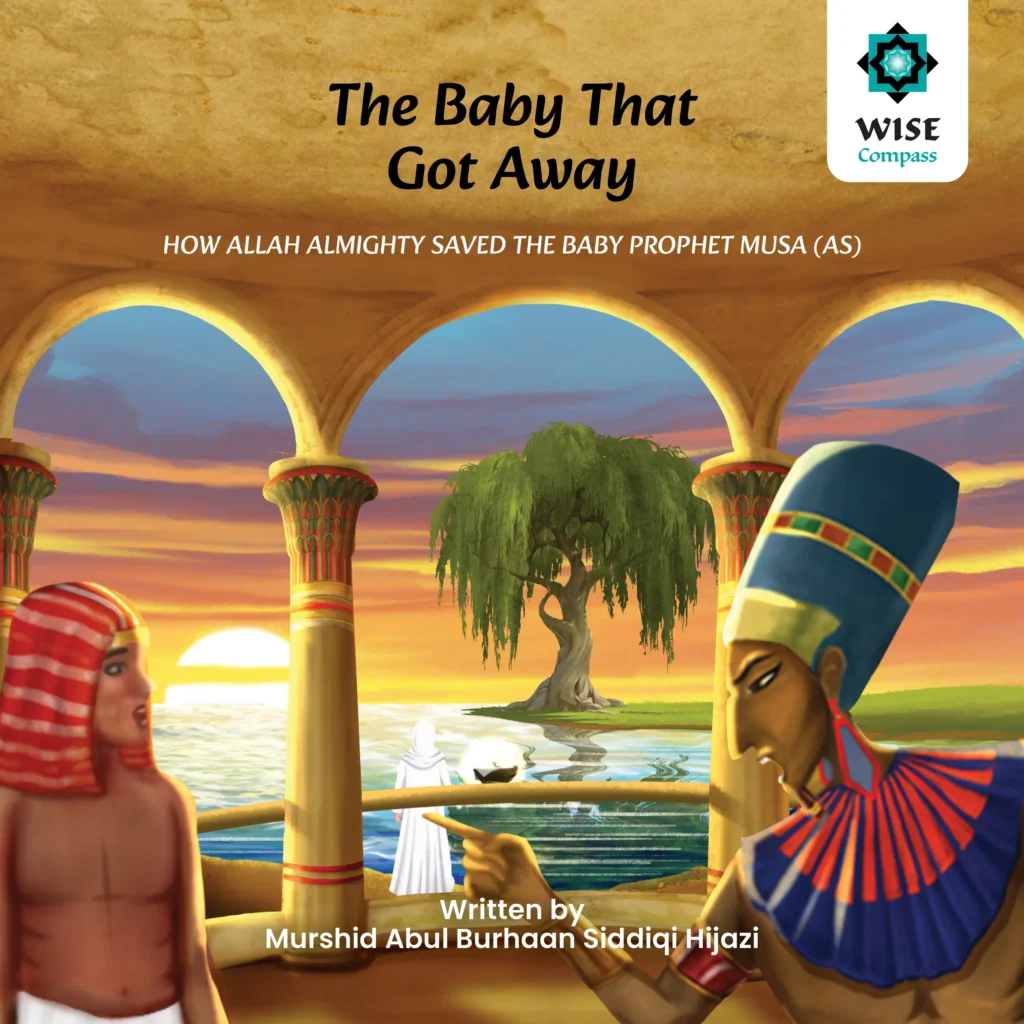
This is a highly relevant point in the conversation with your child about Hijrah to bring in The Baby That Got Away, the story of a desperate mother who has to send her baby down the river in a basket to give him the best chance at life, trusting Allah Almighty completely with the outcome. Just as this mother could not see how her baby would be protected, the early Muslims could not see exactly how their migration to Madinah would turn out. Yet, both stories demonstrate a strong trust in Allah Almighty and end in Divine mercy far greater than any outcome the protagonists could imagine.
The journey to Madinah was physically gruelling. Food and water were scarce, the desert heat was punishing, and the travellers relied entirely on Rizq (Provision) that Allah Almighty placed in their path. Time and again in Islamic history, we see this pattern: when a person or family is stripped of their usual comforts, Allah Almighty provides in ways they never expected.
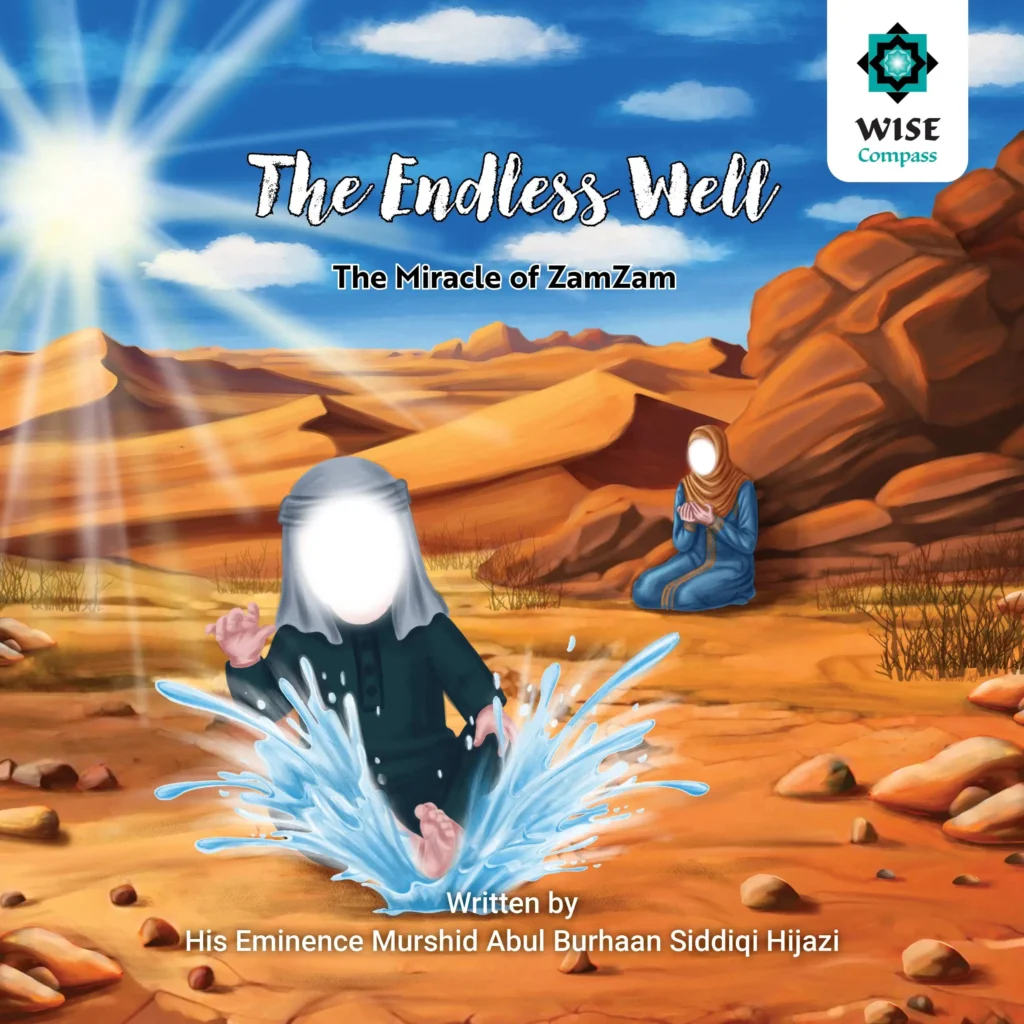
This theme runs through The Endless Well, the story of Sayyidah Murshidah Haajrah (RA) when she was left alone in the desert with her baby, trusting Allah Almighty until the miracle of the ZamZam well changed the fate of an entire nation. It is a perfect companion story to the Hijrah, since both show that provision from Allah Almighty, the Sustainer, often arrives at the exact moment it is most needed and when it feels furthest away.

It is reported in Sahih Bukhari, Hadith 1, that holy Prophet Muhammad ﷺ said:
‘Actions are judged by intentions, and every person will get what they intended. So whoever migrates for the sake of Allah Almighty and His Messenger, their migration is for Allah Almighty and His Messenger.’
This Hadith was revealed in the context of the Hijrah itself, and it teaches children something essential: it is not the journey alone that matters, but the sincerity of the heart that undertakes it. A new beginning only carries true Barakah (Blessing) when it is undertaken for the sake of Allah Almighty.
When holy Prophet Muhammad ﷺ finally reached Madinah, the city welcomed him with open arms, in a scene of celebration that is still remembered today. The very people who had left everything behind found not loss, but a flourishing new community; a new home; and the foundation of the entire Muslim Ummah (Community). This is the heart of the Hijrah’s lesson: the new beginning Allah Almighty grants is often far greater than what was given up to reach it.
For younger children (ages 4-7 years), you can explain it in this way:
‘A long time ago, holy Prophet Muhammad ﷺ had to leave his home and travel far away. He did not know exactly what would happen, but he trusted Allah Almighty completely. And guess what? Allah Almighty took care of him every single step of the way, and gave him a wonderful new home.’
Holy Prophet Muhammad ﷺ and the early Muslims faced growing persecution and danger in Makkah. Allah Almighty commanded the migration to Madinah, where the Muslim community could practise their faith safely and build the foundations of the Ummah (Community).
The Cave of Thawr is where holy Prophet Muhammad ﷺ and Murshid Khalifa Abu Bakr Al Siddiq (RA) hid from the enemies searching for them. It is remembered for the revelation of the blessed Quranic verse reminding believers that Allah Almighty is always with those who trust Him, even when danger feels close.
The Hijrah was chosen to mark the start of the Islamic calendar because it represents the moment the Muslim community was established as a functioning society with its own structure, laws, and Masjid (Place of established prayer); a true new beginning rather than a single life event.
Parents can focus on simple, relatable moments, such as travelling with a trusted pious companion and close friend, the comfort of being told in the cave that Allah Almighty is with them, or the arrival in Madinah, and connect them to situations children understand, like feeling scared of change but discovering something good on the other side.
The Hijrah teaches that difficult transitions, moving home, starting school, losing something familiar, are not signs of being abandoned by Allah Almighty. With sincere intention and Tawakkul (Trust in Allah Almighty), these moments often lead to unexpected growth and provision.
Yes, many Companions migrated in stages before and after holy Prophet Muhammad ﷺ. Families such as that of Murshid Khalifa Abu Bakr Al Siddiq (RA) were closely involved with the Hijrah, with his daughter Sayyidah Murshidah Asma (RA) famously delivering food and news to the Cave of Thawr at great personal risk.
While the physical Hijrah took place in the 7th century, many scholars describe an ongoing spiritual Hijrah, migrating away from sin, bad habits, or unhealthy environments towards a life that is more pleasing to Allah Almighty, making its lessons relevant in every generation.