




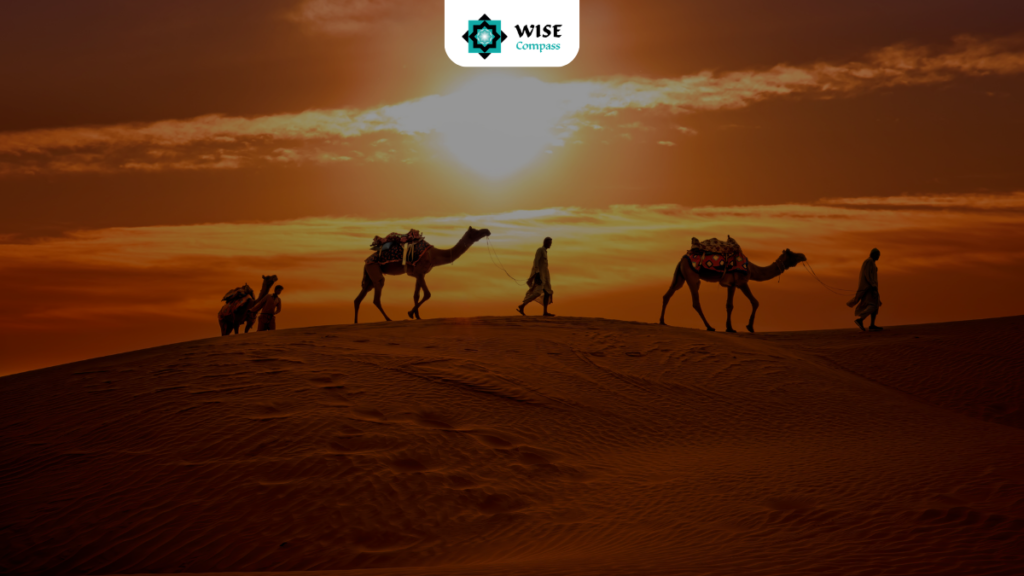
The Hijra or Hijrah (Migration) refers to the migration of holy Prophet Muhammad ﷺ and his companions from Makkah to Madinah in 622 CE, after years of persecution by the Quraysh tribe in Makkah. It marks the beginning of the Islamic lunar calendar, known as the Hijri calendar, because it represents not merely a physical journey, but a turning point in the history of Islam: the moment an oppressed community of believers transformed into a united, organised Muslim Ummah (Nation).
The second Caliph or ‘Khalifa’, Umar ibn Al Khattab (RA) later formally established the Hijri calendar during his reign, selecting the year of the Hijrah as its starting point because of its immense spiritual and historical significance. For Muslim families today, the Hijrah is a powerful lesson in many ways: signifying courage, trust in Allah Almighty, and the willingness to sacrifice everything for one’s faith – as well as a reminder of Muslim identity, valuing time and measuring one’s life by faith in action and not futile pursuits.
The word ‘Hijrah’ comes from the Arabic root meaning ‘to migrate’ or ‘to leave behind’. In Islamic history, it refers specifically to the migration of holy Prophet Muhammad ﷺ from Makkah to the city of Yathrib, later renamed Madinah Al Munawwarah (The City of Light), in the year 622 CE.
For thirteen years, holy Prophet Muhammad ﷺ and his companions persevered in their home city of Makkah, among their family, community, and tribes, inviting the hard-hearted to the truth of Islam by their dignified conduct and good character. But they were subjected to harsh treatment and relentless persecution in Makkah.
The Quraysh (The ruling tribe of Makkah) attacked the early Muslims with boycotts, torture, and social ostracism. Yet the Muslims did not rebel or cause disorder, nor did they forsake their faith; rather, they endured. When the frustrated leaders of Makkah could not break their spirit or weaken their growing numbers, they plotted to assassinate holy Prophet Muhammad ﷺ in their desperation. It was at this point that Allah Almighty guided His last and final Messenger to leave for the blessed city of Madinah. This was not flight, and it was not defeat; it was a Divinely commanded migration, a Hijrah ordained by Allah Almighty, the Best of Planners and the Creator of All Destiny Himself.
Holy Prophet Muhammad ﷺ sent groups of Muslims to safety ahead of himself, so that they could easily get away from the difficulties facing them in Makkah and reach sanctuary in Madinah unharassed. When it came time for him to leave, he departed under the safety and privacy of night with only his closest companion, Murshid Khalifa Abu Bakr Al Siddiq (RA). They took refuge in the Cave of Thawr for three days before journeying northward to Madinah, hotly pursued by those who sought to end the message of Islam with the Messenger.
The journey covered approximately 450 kilometres across harsh desert terrain, with few provisions and vigilance against the enemies of Islam the whole way. And culminated in finally reaching Madinah, safe and sound, fortified by Allah Almighty to begin the work of sharing Islam freely with the world in real earnest.
This is the journey that changed the world.
The Hijri calendar did not come into existence immediately. It was formally established in approximately 638 CE, during the reign of Murshid Khalifa Umar Al Farooq (RA), the second Caliph of Islam. He convened a council to decide upon a dating system for the expanding Muslim State, as administrative correspondence required a clear chronological reference.
Several suggestions were put forward: some proposed using the birth of holy Prophet Muhammad ﷺ as the starting point; others suggested the year of his passing. Murshid Khalifa Umar (RA) ultimately chose the year of the Hijrah for a profoundly important reason.
The Hijrah was not simply a logistical move. It represented the establishment of the first Islamic community, the first Masjid (Mosque), the first Muslim constitution, and the birth of the Ummah (Nation) as a collective body. Before the Hijrah, Muslims were an oppressed minority. After it, they became a community capable of practising their faith freely, building institutions, and carrying the message of Islam to all of humanity.
In other words, the Hijrah marks the moment Islam moved from a private conviction to a public civilisation. This is why it was chosen as the foundation of the Islamic calendar.
The noble Quran speaks directly about those who migrate for the sake of Allah Almighty, affirming that such a journey is never without divine reward.
The courage to leave everything behind – home, wealth, family, and safety – for the sake of Allah Almighty is itself an act of worship. Allah Almighty, in His Infinite Wisdom and Generosity, praises those who make this sacrifice sincerely.
Allah Almighty states in the noble Quran at Surah Al Baqarah (2), Verse 218:
إِنَّ ٱلَّذِينَ ءَامَنُوا۟ وَٱلَّذِينَ هَاجَرُوا۟ وَجَـٰهَدُوا۟ فِى سَبِيلِ ٱللَّهِ أُو۟لَـٰٓئِكَ يَرْجُونَ رَحْمَتَ ٱللَّهِ
Innal lazeena aamanoo wallazeena haajaroo wa jaahadoo fee sabeelillaahi ulaa’ika yarjoona rahmatallah
Indeed, those who have believed and those who have emigrated and fought in the cause of Allah (Almighty) expect the mercy of Allah (Almighty).
This verse clearly educates us that the Hijrah was not an act of fear or retreat. It was an act of Jihad (Striving for betterment) in the truest sense: a sacrifice of comfort and security in pursuit of the pleasure of Allah Almighty.
The migration itself is filled with profound lessons, and the Ahadith (Narrations) of holy Prophet Muhammad ﷺ illuminate many of them. Holy Prophet Muhammad ﷺ himself described the nature of true migration, linking the outer journey to an inner one of moral transformation.
It is recorded in Sahih Al Bukhari, Hadith 10, that holy Prophet Muhammad ﷺ said:
‘The Muslim is one from whose tongue and hand the people are safe, and the Muhaajir (Emigrant) is one who abandons what Allah (Almighty) has forbidden.’
This Hadith teaches us that the true spirit of Hijrah is not confined to geography. Every Muslim who abandons sin, selfishness, and harmful behaviour is, in a spiritual sense, making their own Hijrah: a migration of the self towards Allah Almighty.
The Muhaajiroon (Emigrants), those companions who migrated from Makkah to Madinah, gave up everything. Homes were seized. Wealth was confiscated. Families were torn apart. In some cases, companions were physically prevented from migrating and had to flee in secret, in the darkness of night.
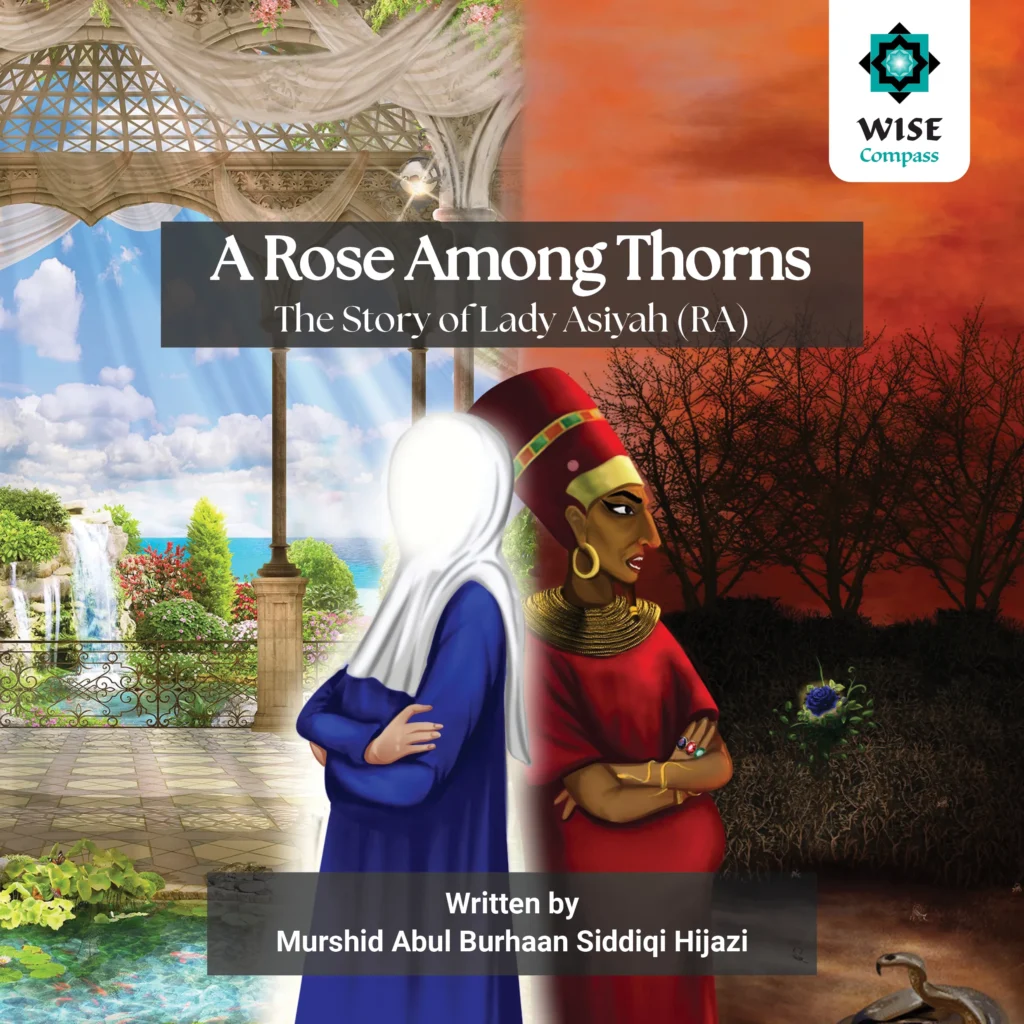
Sayyidah Murshidah Asiyah (RA), the wife of Pharaoh, is another early example of this extraordinary pattern: a believer who lived in the most hostile and corrupt of environments yet maintained her faith immaculately. The Wise Compass story A Rose Among Thorns tells her story – a reminder that when you cannot migrate physically, you must make a Hijrah of the heart, preserving your Imaan even when surrounded by those who wish to extinguish it.
This spiritual Hijrah is one that Muslim children today can relate to and make their own, even in the relative comfort of their daily lives.
The Hijrah of holy Prophet Muhammad ﷺ was not an isolated event in prophetic history. It echoes a sacred pattern seen across the lives of many Prophets (AS) before him, each of whom was compelled to leave their homeland for the sake of truth.
Consider Prophet Ibraheem (AS) and his family. After nearly being thrown into a fire for defending Islam and standing up for the truth as a child, he did not deviate from his integrity and commitment to Allah Almighty. The experience did not shake him, and he went on to travel away from his home and still keep that same level of trust and faith. The courage and conviction required to stick to your true path is encapsulated in this story and presented in the Wise Compass book A Bird’s Eye View.
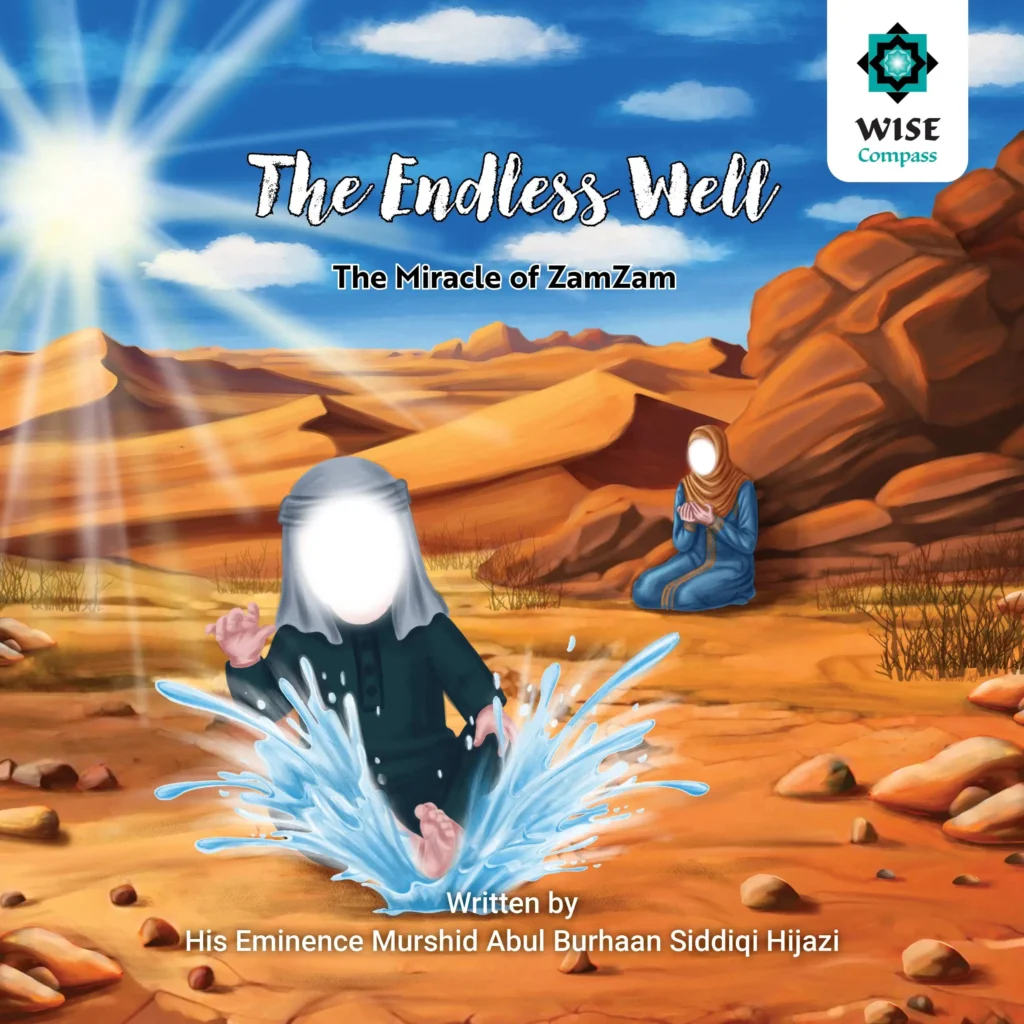
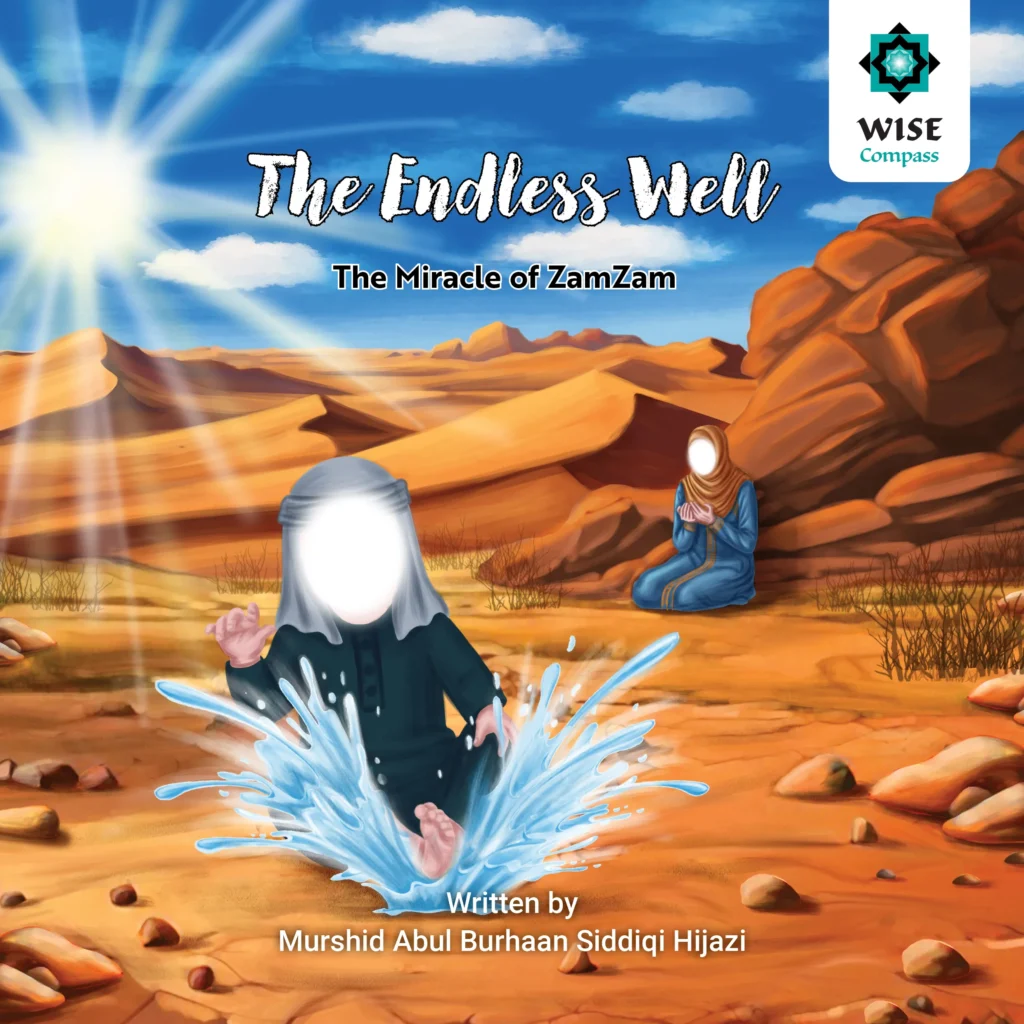
Much later in his life, when he and his noble spouse Sayyidah Murshidah Haajrah (RA) were finally granted a child, he was commanded to migrate her and the child away from their home and leave them in the desert. Sayyidah Murshidah Haajrah (RA) was left alone with her infant son, Prophet Ismaeel (AS), in the barren valley then called ‘Bakkah’, a place with no water, no food, and no people. Yet she did not despair; she accepted the command of Allah Almighty, and her trust in Him was absolute. She ran between the hills of Safa and Marwah, seeking sustenance, while her baby lay in the desert sand, and Allah Almighty responded by causing the blessed spring of ZamZam to flow from the earth beneath her son’s feet.
The Wise Compass story, The Endless Well illustrates this journey. From the circumstance of leaving home to the struggle in the barren desert plains, all the way to the miraculous blessing of the Well of ZamZam being granted to all of mankind because of the Tawakkul (Trust and reliance on Allah Almighty) shown by one blessed Muslimah.
This is precisely the spirit that the companions of holy Prophet Muhammad ﷺ embodied during the Hijrah: leaving behind palaces and farms, carrying only their Imaan (Faith) into the unknown.
The Hijrah of Sayyidah Murshidah Haajrah (RA) planted the very seeds of what would one day become the Ka’bah, the holiest site in Islam, the direction towards which every Muslim prays, and the destination that holy Prophet Muhammad ﷺ would one day return to in triumph.
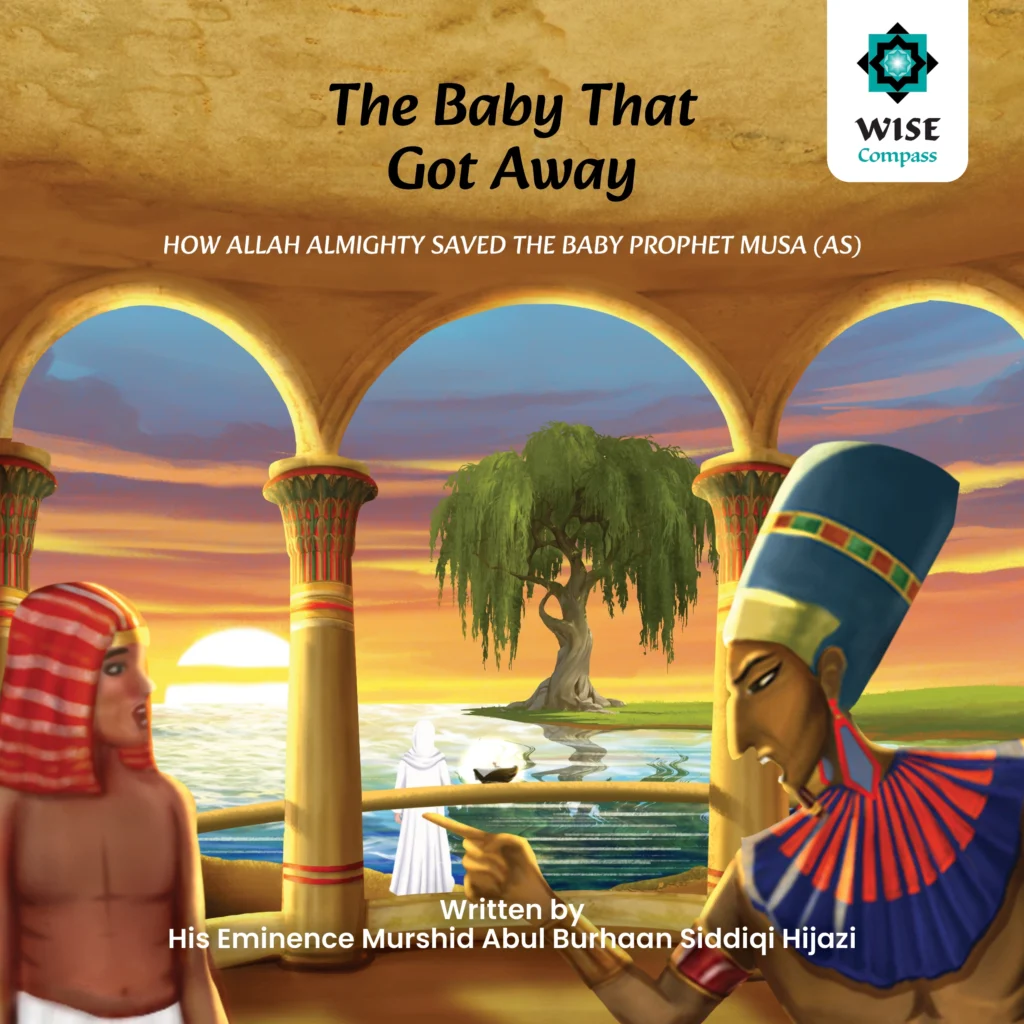
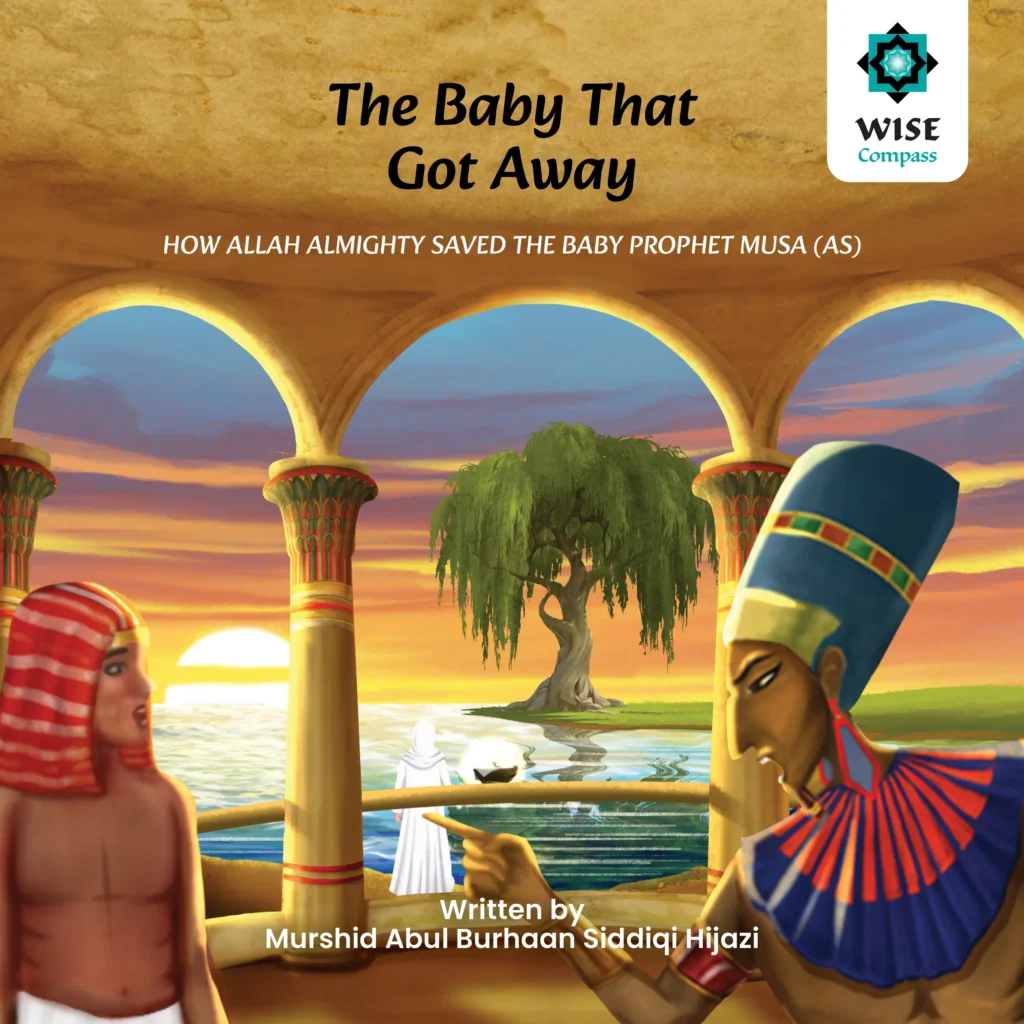
Another key Prophet whose life is exemplary when it comes to moments of migration for the sake of Allah Almighty is Prophet Musa (AS). Perhaps one of the most remarkable and tender parallels to the Hijrah of holy Prophet Muhammad ﷺ is the story of Prophet Musa (AS) as an infant. Born under the tyrannical rule of Pharaoh, who had ordered the killing of every newborn boy, baby Musa (AS) was placed in a basket by his mother and sent down the River Nile. It was a migration ordained, protected and completely guided by Allah Almighty.
Allah Almighty promised the mother of Prophet Musa (AS) that He would return her child to her safely, despite an impossible-seeming situation. And He fulfilled that promise precisely. The Wise Compass story The Baby That Got Away brings this miraculous account to life, illustrating the same truth that underlies the Hijrah of holy Prophet Muhammad ﷺ: when Allah Almighty commands a migration and you place your trust in Him completely, His plan will always prevail over the plans of the oppressors.
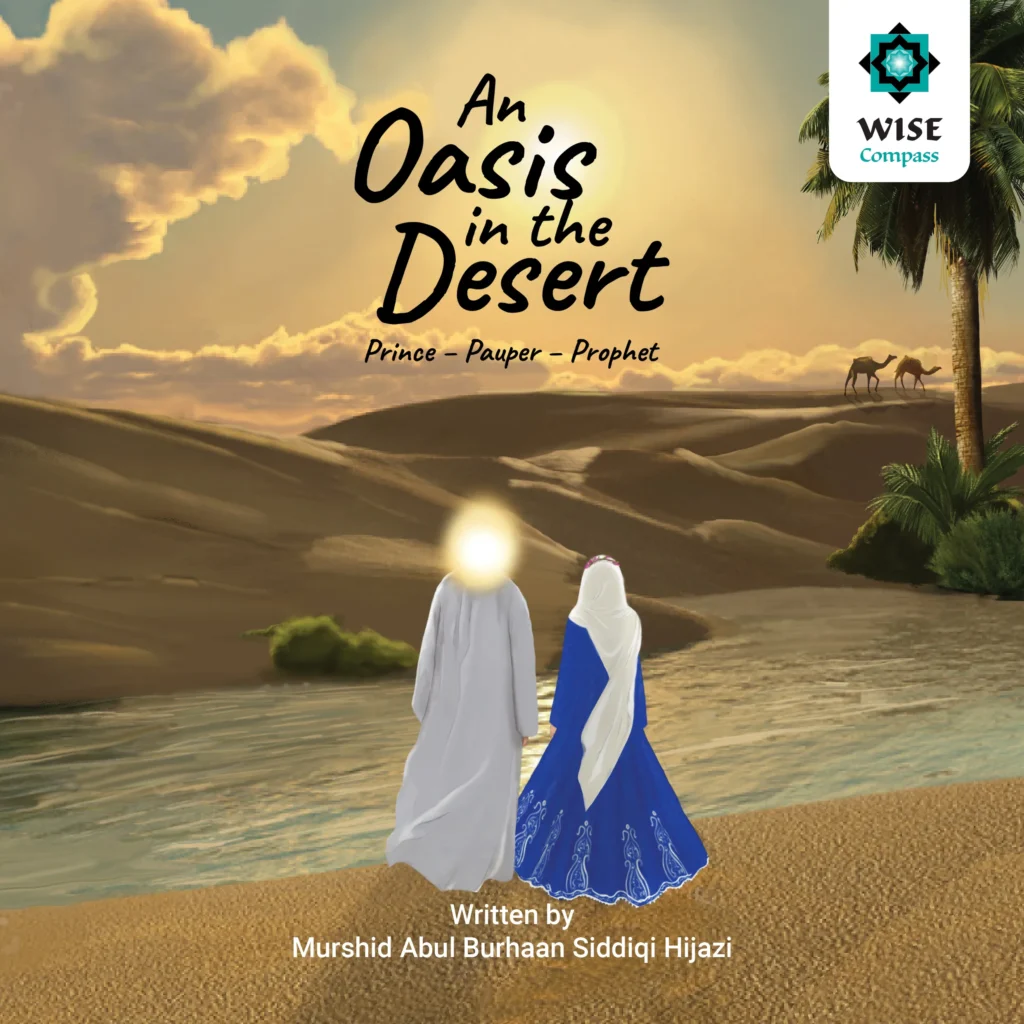
Later in his adult life, when Prophet Musa (AS) was beset by the corruption and accusations of scheming courtiers in Egyptian society against him, he was guided to safety away from Egypt by migration to the rural town of Madyan. Here he exchanged his princely comfort for a natural and harmonious life as a shepherd and trusted in Allah Almighty through the entire change of fortune. The Wise Compass book An Oasis in the Desert captures the spirit of this extraordinary trust beautifully: the realisation that true nobility of character is found not in the comforts you possess but in the faith you carry when all comforts are stripped away.
One of the most famous migrations in the life of Prophet Musa (AS) is the communal migration and miraculous liberation of the oppressed tribe, the Children of Israeel. Much like the first Muslims in Makkah, the community of Prophet Musa (AS) was persecuted for their faith and kept enslaved by circumstance. And much like the Divine planning and intervention that allowed the Muslim community to be liberated through migration under the leadership of holy Prophet Muhammad ﷺ, the miraculous liberation of the Bani Israeel was led by Prophet Musa (AS) and granted success by Allah Almighty.
All of these life stories of Prophet Musa (AS) and the journey of truth are presented in the Wise Compass Prophetic Series on Prophet Musa (AS), allowing our future generations to learn about the history of their religion.
In every one of these instances – from baby Prophet Musa (AS) arriving safely down the Nile, escaping the traps of Egypt and being guided to a peaceful new home as a young adult, standing firm against oppressors and being miraculously protected by Allah Almighty for this unshakeable faith – we see the parallels with the Hijrah of holy Prophet Muhammad ﷺ. And the lesson is crystal clear each time: the protection of Allah Almighty is the greatest shield a believer can carry.
Explaining the Hijrah to children does not require complex theological vocabulary. It requires heart and context.
‘Holy Prophet Muhammad ﷺ had to leave his home because some people were very unkind to him. But Allah Almighty kept him safe on a long journey, and he found a new home where he could teach everyone about Islam.’
‘Holy Prophet Muhammad ﷺ and his companions gave up their houses, their money, and their friends – everything they owned – because they loved Allah Almighty more than anything in the world. When we remember this at the start of every Islamic year, it reminds us to ask ourselves, ‘What am I willing to do for Allah Almighty?’
A Dua to teach your children at the start of the Hijri New Year:
Arabic:
اللَّهُمَّ أَدْخِلْنَا فِي هَذِهِ السَّنَةِ بِالسَّلاَمَةِ وَالإِيمَانِ
Transliteration:
Allahumma adkhilna fi hadhihi as-sanati bis-salamati wal-iman
Meaning
Translation (Simple English):
O Allah Almighty, bring us into this year with safety and faith.
The Hijri calendar is a lunar calendar, meaning each month begins with the sighting of the new crescent moon. It consists of twelve months, making the Hijri year approximately eleven days shorter than the Gregorian year. This is why Islamic occasions, such as Ramadan, Eid, and the day of Hijrah, fall on different Gregorian dates each year.
1. Muharram | 2. Safar | 3. Rabi’ Al Awwal | 4. Rabi’ Al Thani
5. Jumada Al Ula | 6. Jumada Al Akhirah | 7. Rajab | 8. Sha’ban
9. Ramadan | 10. Shawwal | 11. Dhul Qa’dah | 12. Dhul Hijjah
The first month, Muharram, is one of the four sacred months in Islam. The tenth day of Muharram, known as Yawm Ashura (Day of Ashura), is a recommended day of fasting, honoured because it commemorates the day Allah Almighty saved Prophet Musa (AS) and the Children of Israeel from Pharaoh.
Helping your children understand the Hijri calendar anchors them to Islamic time, a way of seeing the year that is orientated around the remembrance of Allah Almighty, rather than merely around secular milestones.
The Islamic calendar is called the Hijri calendar because its year count begins from the year of the Hijrah, the migration of holy Prophet Muhammad ﷺfrom Makkah to Madinah in 622 CE. The word ‘Hijri’ is derived directly from ‘Hijrah’ (Migration), and so the calendar carries that event within its very name, making it a perpetual reminder of one of the most significant moments in Islamic history.
The decision to implement the Hijri calendar formally was made by the second Caliph in Islam, Murshid Khalifa Umar Al Farooq (RA), during his leadership. As is good Muslim practice, he consulted the other Prophetic companions about the decision. He (RA) chose the year of the Hijrah over other proposals, such as the birth or passing of holy Prophet Muhammad ﷺ, because the Hijrah represented the establishment of the first Muslim community and the founding of the Islamic state in Madinah.
The Hijri calendar is a lunar calendar, based entirely on the cycles of the moon, with each month beginning at the sighting of the new crescent. This makes the Hijri year approximately 354 days long, roughly eleven days shorter than the Gregorian solar year of 365 days. As a result, Islamic events such as Ramadan, Eid, and the Hijri New Year shift approximately eleven days earlier each Gregorian year.
Yes. The pattern of prophetic migration is found throughout Islamic history. Prophet Ibraheem (AS) migrated from his homeland after being thrown into a fire for opposing idol worship. His noble spouse, Sayyidah Murshidah Haajrah (RA) migrated with her infant son Prophet Ismaeel (AS) to the barren valley of Makkah, a journey of divine trust.
Prophet Musa (AS) was guided through multiple timely migrations throughout his life, beginning with his journey even as a baby, when he was placed in the river Nile in a basket to escape Pharaoh’s tyranny. Later in his early adult life he migrated to Madyan where he established life as a shepherd, and then eventually he migrated from Egypt with the freed Children of Israeel. Each of these migrations shares the same spiritual core as the Hijrah of holy Prophet Muhammad ﷺ: unwavering trust in Allah Almighty during a time of profound trial.
The Islamic New Year, the first of Muharram, is an opportunity for reflection rather than celebration in the conventional sense. You can sit with your children and discuss the story of the Hijrah, exploring what holy Prophet Muhammad ﷺ and his companions sacrificed and what they gained. Encourage your children to set an intention for the new year: a good habit to build, a bad habit to leave behind, or a goal to grow closer to Allah Almighty. Making Dua (Supplication) together at the start of the new Hijri year as a family is a simple, powerful tradition to establish at home.
Beyond its historical context, Hijrah carries a living, personal meaning for every Muslim. Holy Prophet Muhammad ﷺ taught that the true Muhaajir (Emigrant) is one who abandons what Allah Almighty has forbidden. This means that every Muslim who strives to leave behind sin, selfishness, or heedlessness and moves towards greater obedience to Allah Almighty is making a form of Hijrah. The concept invites Muslims to see each new year, each new day, even each moment, as an opportunity to migrate inwardly towards closeness with Allah Almighty.