











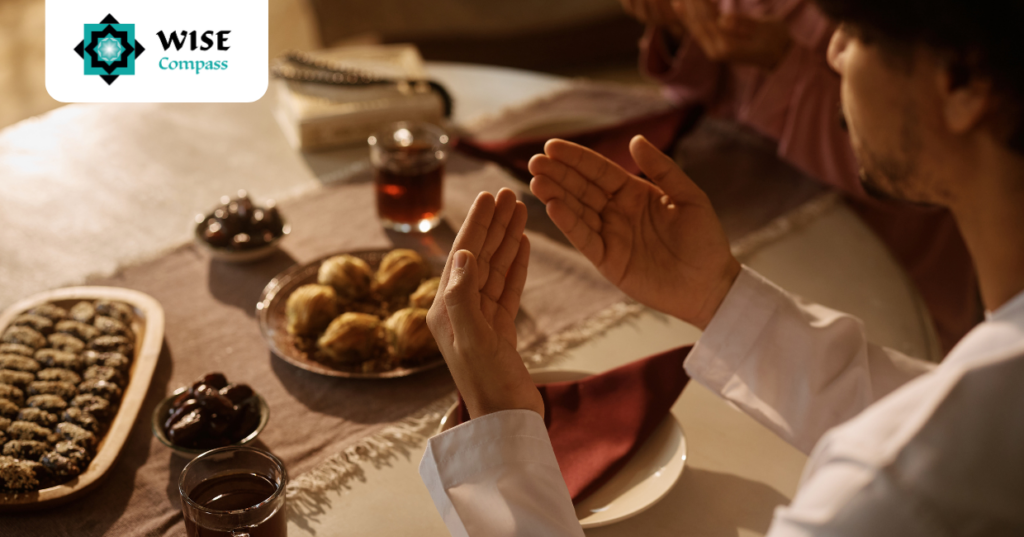
Ramadan arrives each year as a pause in the flow of life, offering believers a rare opportunity to step back, reflect, and realign their hearts. More than a month of fasting. Ramadan is a season of sincere supplication. It is a time when the distance between a servant and their Creator feels closer, and the act of turning to Allah Almighty through dua becomes more natural, more honest, and more deeply felt.
Throughout the year, people carry unspoken worries, hopes, and questions. Ramadan creates space for these to be placed before Allah Almighty with humility and trust. Hunger softens the heart, late nights in prayer quiet the mind, and the rhythm of worship reshapes intention. In this environment, supplication becomes more than a request; it becomes a conversation. Duas made in Ramadan reflect reliance, gratitude, repentance, and hope, all gathered into moments of sincere turning toward Allah Almighty.
The teachings of the noble Quran and the guidance of the Holy Prophet Muhammad ﷺ show that supplication is not limited to moments of hardship alone. It is equally an expression of love, for Allah Almighty and recognition of our complete dependence upon His mercy. Ramadan amplifies this understanding, reminding believers that Allah is always near, always listening, and always aware of what rests within the heart.
This blessed month of Ramadan is also a time of renewal. Duas made during Ramadan often shape the year ahead. They help set intentions, seek protection, ask for guidance, and restore balance between faith and daily life. For families and young people, learning to make sincere dua becomes a lifelong tool, offering direction and comfort long after Ramadan has ended.
The supplications that follow have been carefully selected to reflect this spirit. They address the needs of the heart, the challenges of character, and the hope for goodness in this life and the Hereafter. Each dua offers a moment to pause, reflect, and reconnect with Allah Almighty in a meaningful way.
At times, harm can come not only from others, but from our own actions, words, or attitudes, whether intentional or unintentional. Often, we are unaware of the impact we may have on those around us, even when our intentions are good. This supplication serves as a moment of pause and humility, reminding us to ask Allah Almighty for protection from causing harm and to ask for guidance in our conduct. It helps the heart remain conscious, accountable, and gentle, encouraging us to move through life with greater care, responsibility, and compassion toward others. This is an important dua taught by holy Prophet Muhammad ﷺ to recite:
اللَّهُمَّ إِنِّي أَعُوذُ بِكَ مِنْ شَرِّ مَا عَمِلْتُ وَمِنْ شَرِّ مَا لَمْ أَعْمَلْ بَعْدُ
Allahumma inni a’udhu bika min sharri ma ‘amiltu, wa min sharri ma lam a’mal ba’du.
“O Allah Almighty, I seek refuge with You from the evil of what I have knowingly done, and from the evil of what I have not done yet.”
This supplication carries a quiet depth that reaches across time. It acknowledges the past by asking Allah Almighty for protection from the harmful effects of mistakes already made, asking that they do not weaken faith or burden the heart. At the same time, it looks toward the future, placing what is yet unknown into the care of Allah Almighty and asking for protection from sins, missteps, or harm that could arise from decisions still to come.
There is also a subtle wisdom within this supplication. Beyond guarding against wrongdoing, it seeks refuge from the hidden dangers that can follow even good deeds, such as pride, self-satisfaction, or vanity. In this way, the dua nurtures humility and balance, reminding the believer that sincerity, safety, and steadfastness can only be maintained through the protection and mercy of Allah Almighty, in the past, present, and future.
Life often carries responsibilities that weigh heavily on the heart. Trials, pressures, and moments of exhaustion are part of the human experience, and Islam teaches that these challenges come as tests from Allah Almighty. At the same time, seeking relief from the heaviness of these burdens is not a sign of weakness or failure. It is an expression of trust, humility, and reliance upon the mercy of Allah Almighty.
The noble Quran shows us that even the most patient and devoted servants of Allah turned to Him in moments of hardship. The prayer of Prophet Ayyub (AS), recorded in Surah Al Anbiyaa (21), Verse 83, reflects this deep sincerity:
وَأَيُّوبَ إِذْ نَادَىٰ رَبَّهُۥٓ أَنِّى مَسَّنِىَ ٱلضُّرُّ وَأَنتَ أَرْحَمُ ٱلرَّٰحِمِينَ
Wa-Ayyuba idh nada Rabbahu anni massaniya-durru wa-Anta Arhamur-rahimin
“And when (Prophet) Ayub (AS) called upon his Sustainer and said: “Indeed, I am afflicted with adversity, and indeed, You (Allah Almighty) in Your Infinite Mercy are the Most Merciful.”
This supplication teaches that asking Allah to ease one’s burdens does not diminish the value of patience or effort. Any relief granted by Allah Almighty does not erase the reward of endurance, rather it reflects His compassion in making the path through hardship lighter and more bearable.
Good health is one of the most quietly powerful blessings in a person’s life. It is often only when health is tested that its true value becomes clear. Physical and emotional well-being form the foundation upon which daily responsibilities are carried, relationships are nurtured, and acts of worship are performed with presence and ease. Islam recognises health not as something to be taken for granted, but as a gift to be protected, appreciated, and entrusted back to Allah.
Praying for the preservation of health reflects gratitude as much as need. It is a way of acknowledging that strength, energy, and stability do not exist independently of Allah’s mercy. By seeking continued well-being, a believer asks not only for protection from illness, but for the ability to live meaningfully, serve others, and remain steadfast through life’s challenges.
The Holy Prophet Muhammad ﷺ encouraged believers to be mindful of this blessing and to ask Allah for its continuity. It is recorded in Adab Al Mufrad, Hadith 685, that Holy Prophet Muhammad ﷺ taught the following supplication:
اللَّهُمَّ إِنِّي أَعُوذُ بِكَ مِنْ زَوَالِ نِعْمَتِكَ، وَتَحَوُّلِ
عَافِيَتِكَ، وَفُجَأَةِ نِقْمَتِكَ، وَجَمِيعِ سَخَطِكَ
Allahumma inni a’udhu bika min zawali ni’matika, wa tahawwuli ‘afiyatika, wa fuja’ati niqmatika, wa jami’i sakhatika.
“O Allah Almighty, I seek refuge with You from the reduction of Your facilitations (in this life) and from the loss of good health (provided by You), and Your immediate reprimand, and any aspect of Your disappointment.”
This supplication teaches humility and awareness, reminding believers that maintaining health is not merely about physical strength, but about remaining under the care and mercy of Allah Almighty in every aspect of life.
Illness can leave a person feeling vulnerable, uncertain, and in need of comfort beyond what medicine alone can offer. Turning to Allah Almighty in moments of sickness is an act of trust and hope, acknowledging that true healing ultimately comes from Him.
أَعُوذُ بِعِزَّةِ اللَّهِ وَقُوَّتِهِ مِنْ شَرِّ مَا أَجِدُ
A’udhu bi-‘izzatillahi wa quwwatihi min sharri ma ajidu
‘I seek refuge in Might, Power, and authority of Allah Almighty, from the evil of what I suffer.’
This supplication for cure is a reminder that while treatment and effort are important, relief and recovery rest in the mercy of Allah Almighty. Through this dua, a believer seeks healing not only for the body, but also reassurance for the heart and strength to endure with patience and faith.
As these supplications are recited, they invite the heart to slow down and engage with Allah in a deeply personal way. Each dua becomes an opportunity to strengthen awareness, deepen sincerity, and nurture a sense of trust in divine wisdom. Whether recited quietly in solitude or shared within family moments, these prayers help anchor the soul in remembrance and purpose.
Ramadan offers a unique chance to build a lasting relationship with supplication, one that does not fade when the month ends. The words spoken in humility and hope during these days can shape habits of reflection, gratitude, and reliance that continue throughout the year. By returning to these duas with understanding and intention, believers carry forward the spirit of Ramadan, allowing its light to guide their actions, choices, and hearts long after the final fast has been completed.