






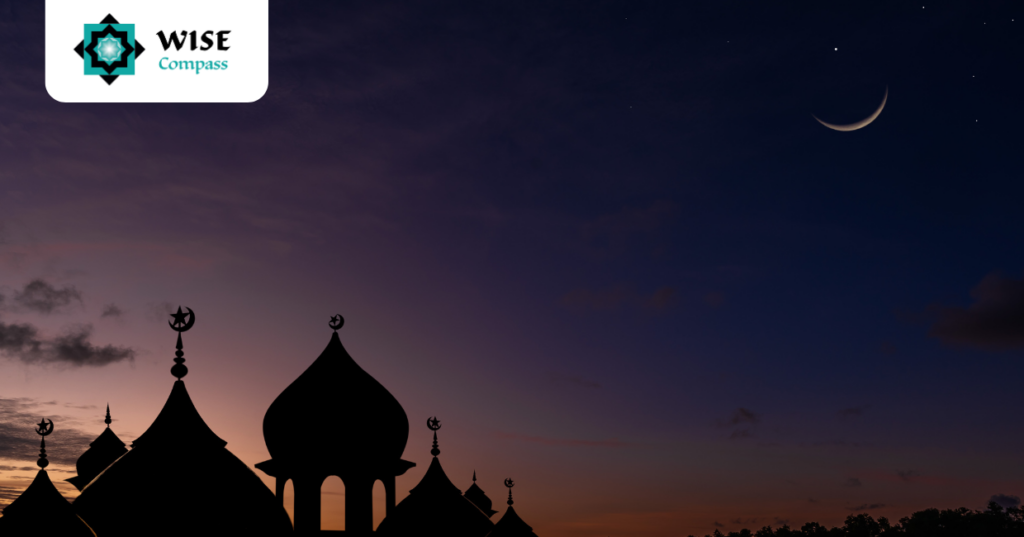
Iftar (إفطار) is the meal eaten by Muslims to break their fast at sunset (Maghrib) during the month of Ramadan and on any day of voluntary fasting.
Fasting in Ramadan (or Sawm as it is also known) is one of the Five Pillars of Islam. Muslims fast by refraining from eating any food, drinking any water or consuming any substances from sunrise to sunset. Iftar marks the moment when Allah Almighty permits the fasting person to eat and drink again, at sunset.
It is both a physical and spiritual act for the fasting person to break their fast, with sustenance provided to them by the mercy of Allah Almighty, the Sustainer. It is a time for gratitude, supplication and remembrance of Allah Almighty.
It is also encouraged as a personal and communal action, whereby a person shares the meal with others such as family, friends and any other hungry person.
The time of beginning and breaking the fast is clearly communicated in the noble Quran, and Allah Almighty tells us at Surah Al Baqarah (2), Verse 187:
‘And eat and drink until the white thread of dawn becomes distinct to you from the black thread. Then complete the fast until the night.’
This clearly informs us that:
The Beloved Messenger of Allah Almighty, holy Prophet Muhammad ﷺ is the perfect role model for all of mankind in his mindset, character, conduct, and practice of Islam. It is a highly blessed action to follow in his footsteps and try to live as he lived. This is why Muslims seek to emulate his example in all actions, and this includes how someone breaks their fast and has their Iftar.
Holy Prophet Muhammad ﷺ
Points:
It is reported in Sunan Abu Dawood, Hadith 2356 and Jami Tirmidhi, Hadith 696 that:
كَانَ رَسُولُ اللَّهِ ﷺ يُفْطِرُ عَلَىٰ رُطَبَاتٍ قَبْلَ أَنْ
يُصَلِّيَ، فَإِنْ لَمْ تَكُنْ رُطَبَاتٌ فَتُمَرَاتٍ، فَإِنْ لَمْ تَكُنْ
حَسَا حَسَوَاتٍ مِنْ مَاءٍ
“The Messenger of Allah Almighty ﷺ used to break his fast with fresh dates before praying. If there were no fresh dates, then with dry dates. If there were no dry dates, then he would take a few sips of water.”
When a Muslim breaks their fast, it is the established Prophetic practice or Sunnah for them to make Dua (Supplication) at that moment. Holy Prophet Muhammad ﷺ taught that the fasting person’s supplication at Iftar is especially accepted.
It is reported in Sunan Ibn Majah, Hadith 1753 that holy Prophet Muhammad ﷺ:
إِنَّ لِلصَّائِمِ عِنْدَ فِطْرِهِ لَدَعْوَةً مَا تُرَدُّ
Inna liṣ-ṣā’imi ‘inda fiṭrihi la-da‘watan mā turaddu.
‘Indeed, the fasting person has a supplication at the time of breaking his fast that is not rejected.’
This is the Dua to recite when opening your fast. Dua can be offered in any language, but we have included the Arabic, English transliteration and translation here.
اللَّهُمَّ إِنِّي لَكَ صُمْتُ، وَبِكَ آمَنْتُ، وَعَلَيْكَ تَوَكَّلْتُ، وَعَلَىٰ رِزْقِكَ أَفْطَرْت
Allahumma inni laka sumtu, wa bika aamantu,
wa ‘alayka tawakkaltu, wa ‘ala rizqika aftartu
‘O Allah Almighty, indeed, I fasted to please You, and I have (absolute) belief in You,
and I place my (absolute) trust in You, and with the sustenance provided I break my fast’
Additional Sunnah Dua
ذَهَبَ الظَّمَأُ، وَابْتَلَّتِ الْعُرُوقُ
،وَثَبَتَ الْأَجْرُ إِنْ شَاءَ اللَّهُ
‘Dhahaba al-zama’, wabtallatil-‘urooq, wa thabatal-ajr insha’Allah’
‘The thirst has gone, the veins are moistened, and the reward is assured, if Allah Almighty Wills’
Hastening to Break the Fast
It is reported in Sahih Bukhari, Hadith 1957 and on Sahih Muslim, Hadith 1098 that holy Prophet Muhammad ﷺ:
لَا يَزَالُ النَّاسُ بِخَيْرٍ مَا عَجَّلُوا الْفِطْرَ
La yazalu an-nasu bikhayrin ma ‘ajjalu al fiṭr
‘The people will remain upon goodness so long as they hasten to break the fast.’
This tells us that avoiding delay and breaking the fast, and in fact hastening to break it, is a blessed and highly recommended practice. It also shows us that the self-discipline and gratitude that fasting develops within a person’s character can be said to be associated with continued goodness in a community.