








Eid prayer is known by many names: Salatul Eid, Eid Namaz, Eid Salah or even just Eid Prayer.
This prayer is one of the most special parts of Eid Day. If you’re new to it, you may be curious about how to pray the Eid prayer. The good news is that it is simple and welcoming, and you do not need to feel nervous. You should definitely try to attend Eid prayer on the two occasions it comes around each year.
So if you’ve ever wondered ‘how to pray Eid prayer’, ‘how to pray Eid Al Fitr’, ‘how to pray Salatul Eid’, or ‘how to pray Eid Namaz’ – we’ve got you covered in this beginner-friendly guide that explains how to perform Eid prayer in a clear, step-by-step way.
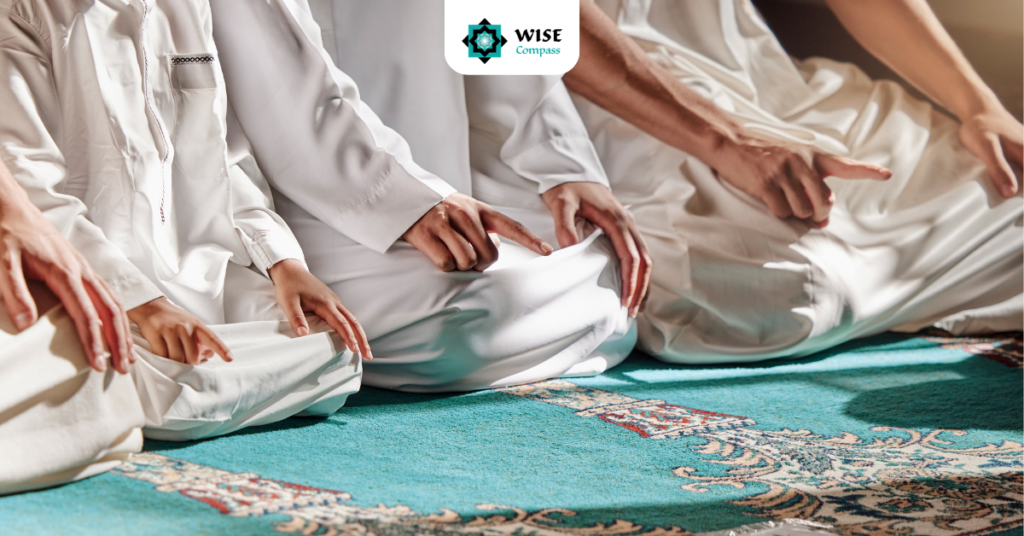
Eid prayer, also called Salatul Eid, is a special congregational prayer that Muslims perform on Eid morning.
It’s usually prayed in a Masjid, a large hall, or an open area with the community. Unlike daily prayers, Eid prayer includes the recitation of extra Takbeers (Declarations of the Greatness of Allah Almighty) than the daily prayers. The Takbeer involves saying the words ‘Allahu Akbar’. The Eid prayer is also followed by a short sermon (Khutbah) that it is highly recommended to attend.
Before learning how to pray Eid Salah, it helps to know what to do beforehand:
If you will be praying the Eid prayer for Eid Al Fitr, you must give a nominal amount of charity before offering the prayer, which is called Zakat Al Fitr or Fitrana.
It is highly beneficial to recite Zikr (Remembrance of Allah Almighty) on Eid day. Many Muslims recite the following Takbeer on Eid morning, while travelling to the prayer as well as afterwards and throughout the day:
Eid Takbeer (Personally Recited Throughout Eid Day)
Arabic:
اللهُ أَكْبَرُ
اللهُ أَكْبَرُ
لا إِلٰهَ إِلَّا اللهُ
وَاللهُ أَكْبَرُ
اللهُ أَكْبَرُ
وَلِلَّهِ الْحَمْدُ
Transliteration:
Allahu Akbar
Allahu Akbar
La ilaha il Allah
Wa Allahu Akbar
Allahu Akbar
Wa li Allahil hamd
Meaning:
‘Allah Almighty is the Greatest
Allah Almighty is the Greatest
There is no god but Allah Almighty
Allah Almighty is the Greatest
Allah Almighty is the Greatest
And to Allah Almighty belongs all praise.’
Eid prayer is two Rakahs (Units) long, prayed in congregation, led by an Imam (Congregational prayer leader). The key difference to other prayers is the 6 extra Takbeers it includes.
RAKAT 1
Stand in the prayer row and make your intention. You don’t need to say it out loud – just intend it in your heart.
Arabic (optional to say):
نَوَيْتُ أَنْ أُصَلِّيَ صَلَاةَ العِيدِ رَكْعَتَيْنِ لِلَّهِ تَعَالَى
Transliteration:
Nawaytu an usalliya salaatal ‘eedi rak‘ataini lillahi ta‘aalaa
Meaning:
‘I intend to pray two Rakats of Eid prayer for Allah Almighty.’
Follow the actions of the Imam. When he begins with the opening Takbeer, raise your hands to your head and repeat the words after him. Then fold your hands over your chest:
Arabic:
اللهُ أَكْبَر
Transliteration:
Allahu Akbar
Meaning:
‘Allah Almighty is the Greatest.’
The Imam will say extra Takbeers and you follow his words and actions each time, by raising your hands to your head when you repeat the Takbeer and lowering your hands to your sides after each recitation:
Arabic:
اللهُ أَكْبَر
Transliteration:
Allahu Akbar
Meaning:
‘Allah Almighty is the Greatest.’
Beginner tip: If you forget which Takbeer you are on, or what to do, don’t worry – just follow the Imam and the congregation and you will be fine.
After the first set of extra Takbeer, you stand with hands folded across your chest while the Imam recites out loud in Qiraat, as normal. Then you follow him into Ruku and Sujood as normal.
RAKAT 2
You stand in position for the second Rakat, just as you would for the daily prayer with hands folded across your chest.
You will hear the next set of extra Takbeers and follow the Imam by raising your hands to your head at each Takbeer and lowering them to your side:
Arabic:
اللهُ أَكْبَر
Transliteration:
Allahu Akbar
Meaning:
‘Allah Almighty is the Greatest.’
After the final Takbeer, the prayer continues and you follow the Imam into Ruku and Sujood as normal.
To end the prayer, you say Salaam as normal:
Arabic:
السَّلَامُ عَلَيْكُمْ وَرَحْمَةُ اللَّهِ
Transliteration:
Assalaamu alaikum wa rahmatAllah
Meaning:
‘Peace and mercy of Allah Almighty be upon you.’
This completes the Eid prayer.
Eid Khutbah (Sermon)
After the prayer, the Imam usually gives a short sermon (Khutbah). It is highly recommended for Muslims to attend and benefit from this special sermon. All people who are able to stay will remain in the prayer area and attend the sermon and then greet each other.
Common Eid Greetings (Arabic + Meaning)
Arabic:
عيد مُبارَك
Transliteration:
Eid Mubarak
Meaning:
‘Blessed Eid’
A longer greeting you may hear:
Arabic:
تَقَبَّلَ اللَّهُ مِنَّا وَمِنْكُمْ
Transliteration:
Taqabbal Allahu minna wa minkum
Meaning:
‘May Allah Almighty accept (this) from us and from you.’
Many Muslims continue to recite Eid Takbeer throughout Eid Day, including on the way home after completing Eid Salah.
Learning how to pray Eid Salah does not have to feel difficult or complicated. Eid prayer is a beautiful community moment: two Rakats, 6 extra Takbeers, and an atmosphere filled with joy and gratitude.
If you are attending for the first time, arrive early, follow the Imam, and don’t worry about small details – your intention and effort matter most.
Wise Compass is here to make faith and family topics simple, respectful, and beginner-friendly – so you can learn with confidence and feel prepared for special days like Eid.