





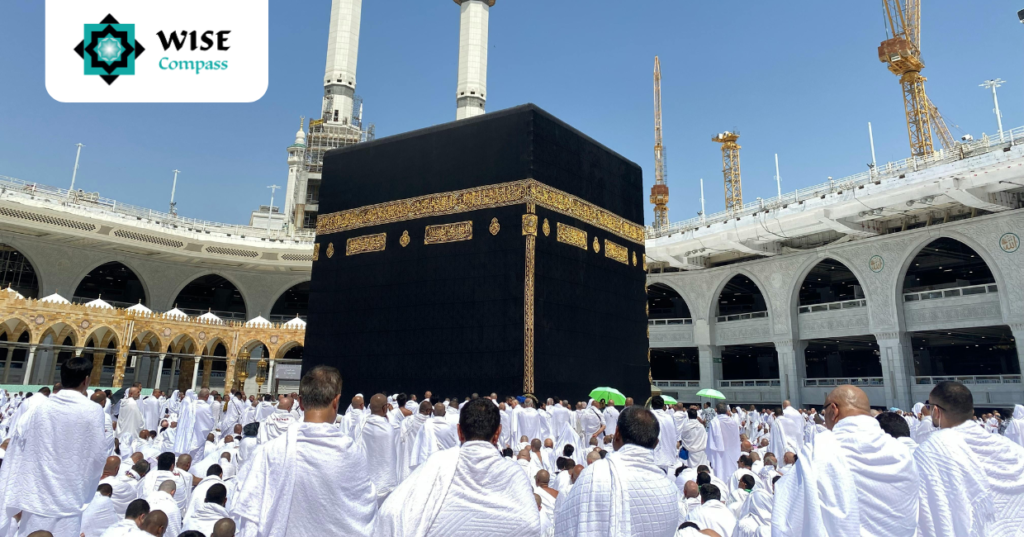
Hajj is one of the obligatory 5 Pillars of Islam that all Muslims hope to complete at least once in their lifetime, if they are able to. It is a pilgrimage to the blessed city of Makkah, which is the location of the Holy Ka’bah (the direction of prayer for Muslims worldwide) and many key sites that have deep significance in Islam.
This sacred pilgrimage is very important and can even feel overwhelming for many reasons. It can be deeply emotional, as it is the fulfilment of such a big responsibility that a person can feel overcome by humility and gratitude to be allowed by Allah Almighty to undertake it.
Spiritually it is a massive process of purification and recalibrating one’s entire life as a devout Muslim. Last but not least is the practical challenge of Hajj. The steps of the pilgrimage include several locations and rituals, but when you break it down, the 7 steps of the Hajj become much easier to understand.
This guide explains how to perform Hajj in a clear, step-by-step way, with a special section for kids and parents at the end.
Hajj takes place during the 12th Islamic month of Dhul Hijjah, with the main rituals happening between the 8th and 13th of the month. Millions of pilgrims gather in and around Makkah to worship Allah Almighty, follow the footsteps of Prophet Ibraheem (AS), and renew their commitment to faith through patience, unity, and sacrifice.
If you are travelling for Hajj, it is likely you will be joining a group either at the time of booking or when you join with others on the pilgrimage. Your group leader (and official Hajj guidance for your country) will tell you the exact relevant timings and practical details for all the acts involved. The steps below explain the core religious journey.
Different scholars may group the actions slightly differently, but the journey below is a simple and widely recognised way to understand the 7 Steps of the Hajj from start to finish.
Pilgrims begin by entering a special state called Ihraam, which is a formal state of abstinence from many actions and attitudes. There is a designated geographical point before reaching Makkah at which a pilgrim must enter Ihraam. This is referred to as the ‘Meeqat’ (appointed place or time). Entering into Ihraam involves changing to specific clothing and adhering to physical and mental prohibitions
What you do:
Talbiyah:
Arabic:
لَبَّيْكَ اللَّهُمَّ لَبَّيْكَ
لَبَّيْكَ لَا شَرِيكَ لَكَ لَبَّيْكَ
إِنَّ الْحَمْدَ وَالنِّعْمَةَ لَكَ وَالْمُلْكَ
لَا شَرِيكَ لَكَ
Transliteration:
Labbayka Allahumma labbayk
Labbayka la shareeka laka labbayk
Innal hamda wa ni‘mata laka wal mulk
La shareeka lak
Meaning (Simple English)
Here I am, O Allah Almighty, here I am
Here I am, You have no partner, here I am
Indeed, all praise, grace, and dominion belong to You
You have no partner
Why it matters: This is the moment you formally begin the pilgrimage and focus your heart and behaviour on worship.
Once in Makkah, pilgrims perform Tawaaf, which is to walk around the Ka‘bah 7 times.
What you do:
A well-known Dua often recited when walking between the Yemeni Corner and the Black Stone is the following:
Arabic:
رَبَّنَا آتِنَا فِي الدُّنْيَا حَسَنَةً
وَفِي الْآخِرَةِ حَسَنَةً
وَقِنَا عَذَابَ النَّارِ
Transliteration:
Rabbana atina fid dunya hasanah
Wa fil-akhirati hasanah
Wa qina ‘adhaban naar
Meaning (Simple English)
Our Lord (Allah Amighty), give us good in this world
And good in the Hereafter
And protect us from the punishment of the Hellfire
After Tawaaf, pilgrims perform Sa’ee, the act of walking (sometimes running) between the two mountain hills of Safa and Marwah 7 times.
What you do:
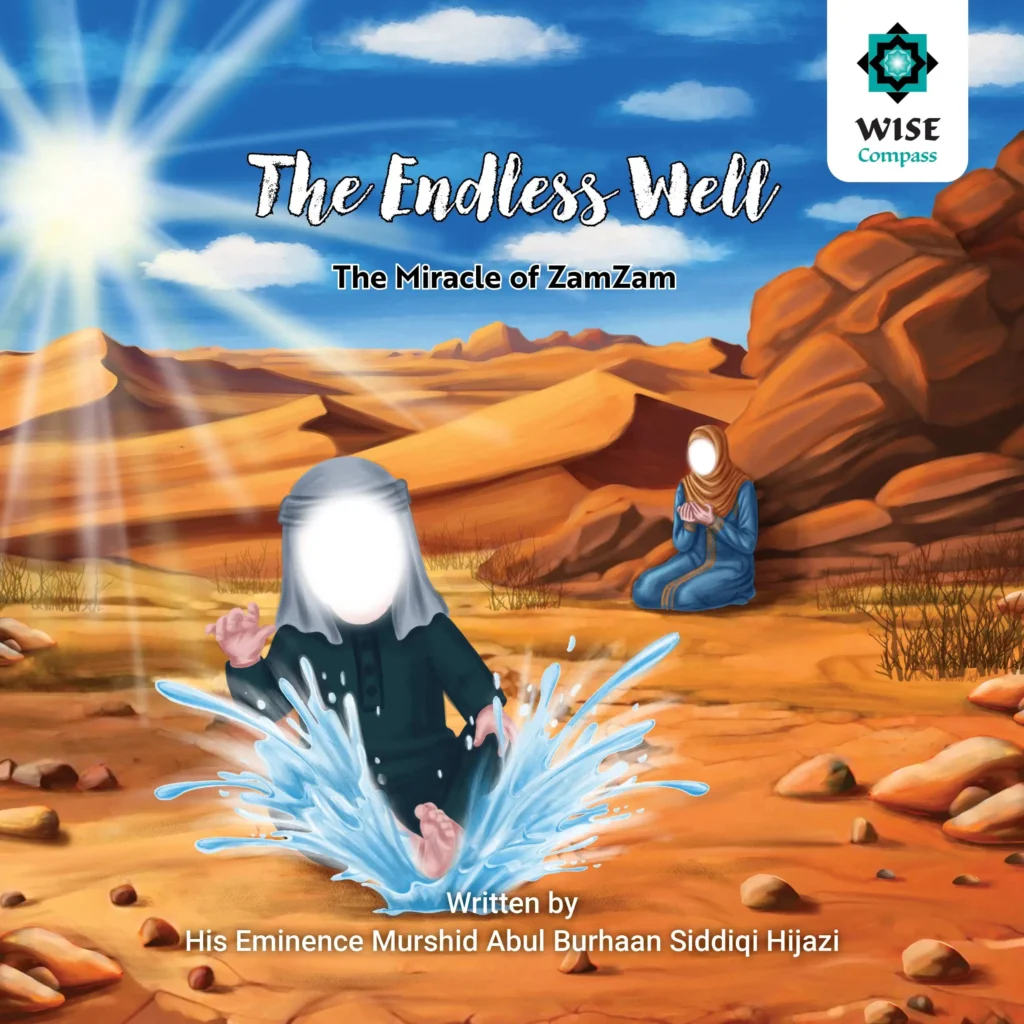
Why it matters: Sa‘ee is an act of remembrance and commemoration of the courage and trust in Allah Almighty shown by Sayyidah Haajrah (RA) as she searched for water for her baby, Prophet Ismaeel (AS) in the desert. Allah Almighty provided the miracle of the ZamZam water, which outflowed from the ground and is collected now in a well. Pilgrims are fortunate enough to drink this water to this day.
When you explain Sa’ee to children, an ideal way to teach them about the full story of ZamZam is by sharing the children’s book.
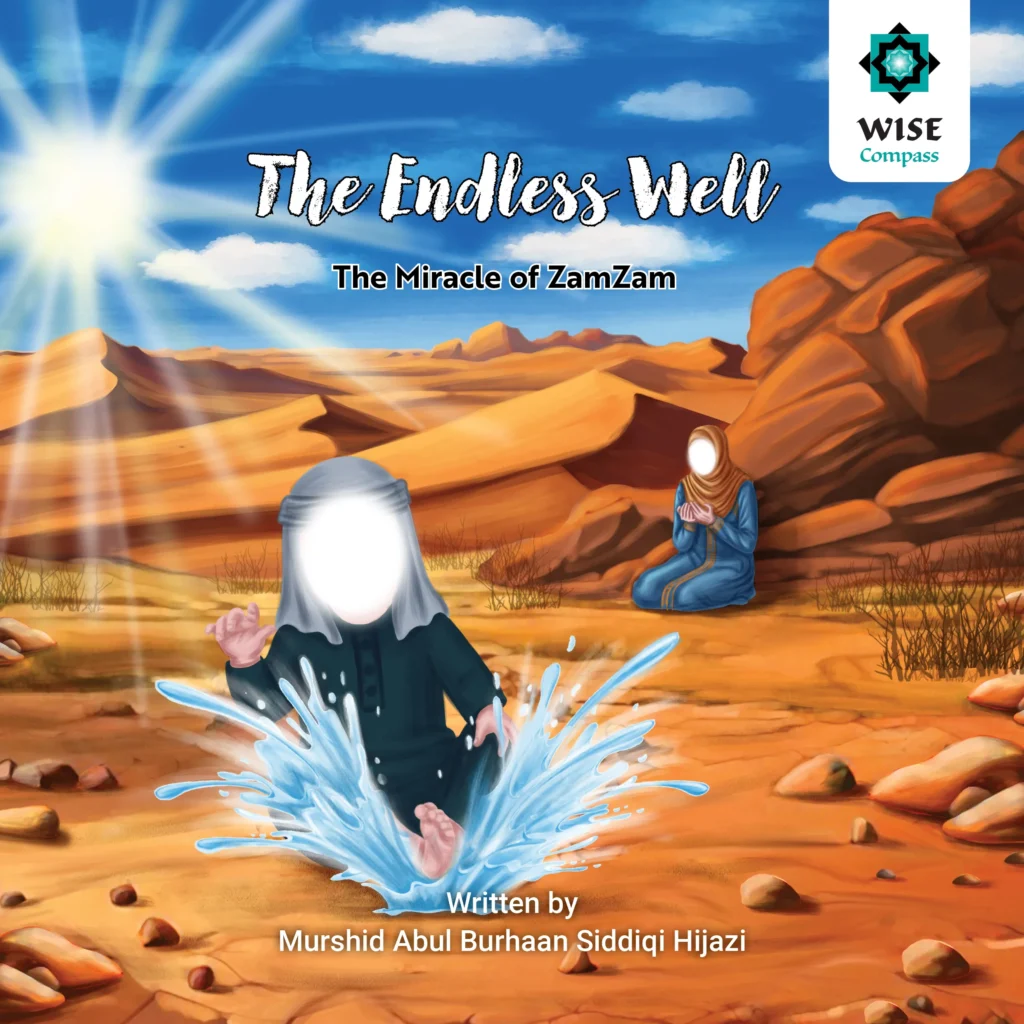
Children can read the story independently or together with you as an online eBook, videobook or audiobook. Click on the link to get the book now!
Pilgrims then travel to Mina, a valley located 8 kilometers southeast of Makkah, where they spend the day and night in worship and preparation. In times gone by, pilgrims would have to set up their own tents in the valley but in contemporary times, there are designated, air-conditioned fireproof tents provided for public service.
What you do:
This day is often about patience and grounding yourself before the most intense part of Hajj.
The Day of Arafah (also known as Yawm Al Arafah) is the most important day of Hajj. Pilgrims gather at the plains of Mount Arafah and spend the day from sunrise until sunset making extensive Dua for forgiveness and mercy.
The combined site of Mount Arafah (which is also referred to as Jabal Al Rahmah,meaning the Mountain of Mercy), and the plains of Arafah are extremely blessed and spiritually significant in Islam for many reasons. One of the reasons is that this is the place where holy Prophet Muhammad ﷺ delivered his final Sermon.
For many Muslims, being present and able to stand and pray here is a once-in-a-lifetime opportunity and they are especially reflective, penitent and prayerful on this day of Hajj.
What you do:
The Day of Arafah is sometimes described as the heart of Hajj because it is a day of mercy, forgiveness, and deep reflection.
After sunset, pilgrims travel to the open, level ground of an area called Muzdalifah, where they spend the night under the open sky (as conditions allow).
What you do:
This step teaches simplicity and humility; everyone is equal, gathered together in worship.
This final ‘step’ includes a set of actions that complete Hajj, often done across a few days:
10th Dhul Hijjah
A) Rami (Stoning the Jamaraat or Pillars)
Pilgrims throw pebbles at 3 stone pillars in Mina, symbolising rejecting temptation and
standing firm in faith.
This action is done in remembrance and emulation of the actions of Prophet Ismaeel (AS)
against the enemy of all mankind, Shaytaan and the temptations of the ego.
B) Qurbani or Udhiya (Sacrifice)
A sacrifice of a livestock animal is performed to remember the willingness of Prophet
Ibraheem (AS) and Prophet Ismaeel (AS) to obey Allah Almighty’s command for a sacrifice.
C) Halq or Taqseer (Hair Cut/Trim):
Next, pilgrims cut their hair to mark the transition out of the state of Ihraam. Men shave or
trim their hair, while women trim a small portion of hair.
D) Tawaaf Al Ifadah or Tawaaf Al Ziyarah (Tawaaf of Visitation)
Pilgrims return to Makkah for another special Tawaaf of the Ka’bah, which is called Tawaaf Al
Ifadah (Tawaaf in Great numbers), or Tawaaf Al Ziyarah (Tawaaf of Visitation) as it is also
known. This represents the return to visit the Ka’bah in a changed state. This is a key part of
completing Hajj.
11th-13th Dhul Hijjah
E) Days of Tashreeq (Days of Celebration)
Many pilgrims remain in Mina, repeat the stoning ritual on these days, and continue worship.
F) Tawaaf Al Wadaa (Farewell Tawaaf)
Before leaving Makkah, pilgrims perform a final Tawaaf as a goodbye to the Ka‘bah.
While the 10th of Dhul Hiijah is the Day of Eid, pilgrims do not pray an Eid Salah or celebrate in the same way as other Muslims around the world on this day. Pilgrims perform the appointed actions of this key day of Hajj, and celebrate in the more traditional sense on the following Days of Tashreeq.
| STEP | WHAT | WHERE | WHEN |
| 1 | Ihraam, Niyyah, Talbiyah | Meeqat, Entering Makkah | 8th Dhul Hijjah |
| 2 | Tawaaf (7 circuits) | Ka’bah | 8th Dhul Hijjah |
| 3 | Sa’ee (7 lengths) | Safa and Marwah | 8th Dhul Hijjah |
| 4 | Mina (Travel to and remain here) | Mina | Evening of 8th Dhul Hijjah |
| 5 | Day of Arafah | Arafah | 9th Dhul Hijjah |
| 6 | Muzdalifah (overnight outdoors) | Muzdalifah | Night of 9th Dhul Hijjah |
| 7 | RamiQurbaniHalqTawaaf Al Ifadah Days of TashreeqTawaaf Al Wadaa | MinaAny location in MakkahAny location in MakkahKa’bah Mina and MakkahKa’bah | 10th Dhul Hijjah 11th-13th Dhul Hijjah |
If a child asks, ‘What is Hajj?’
You can explain it as follows:
Hajj is a special journey Muslims take to Makkah to perform extra special worship of Allah Almighty. It helps us to learn patience, and remember the blessed and historical actions of Prophet Ibraheem (AS) and his blessed family. It is something every Muslim must try to complete once in their lifetime, if they are able to.
Muslims face when they pray
Sayyidah Murshidah Haajrah (RA)
kicked the ground and Sayyidah Murshidah Haajrah (RA) needed help
When you reach the part about Sa’ee, you can tell children the story ‘The Endless Well: The Miracle of ZamZam’, to explain why we walk between the two mountain hills of Safa and Marwah as well as the miracle of ZamZam.
Learning how to perform Hajj becomes much clearer when you understand the purpose behind each ritual. The 7 Steps of Hajj are not just a checklist, they are a journey of worship, unity, patience, and coming to Allah Almighty with a renewed heart.
If you are preparing for Hajj, it is always wise to follow your official Hajj group guidance for timings and local arrangements while using a simple step-by-step guide like this to understand the flow of the pilgrimage.