






Every year, as the first Islamic month of Muharram arrives, millions of Muslims around the world prepare themselves. They turn their attention to one of the most historically layered and emotionally significant days in the Islamic calendar: the Day of Ashura on the 10th of Muharram.
Ashura is a day that is renowned for many significant events in Islamic history. But the most commemorated is the noble sacrifice made by the Blessed Family members of Holy Prophet Muhammad ﷺ. It is a day marked by remembrance, fasting, and above all, gratitude for this unparalleled sacrifice.
But even before this defining historical instance, the day was marked as a significant turning point in Islamic history, several times over.
For many children, the Day of Ashura raises natural, important questions: ‘What happened on this day?’ ‘Who is Murshid Syed Al Shuhada Imam Hussain (RA)?’ ‘What is Karbala?’ ‘Why do some Muslims fast and others mourn?’
This guide answers all of those questions clearly and respectfully, as well as educating us about the other layers of significance to this day in human history. It covers:
The term ‘Ashura’ refers to the 10th day of Muharram, the first and one of the most sacred months of the Islamic lunar calendar. The word itself comes directly from the Arabic word ‘Ashara’, which means ten, and marks its date precisely.
Ashura carries spiritual and historical importance for all of humanity and is a day marked by many miraculous and life-altering events granted to numerous Prophets (AS) throughout the ages as well as the Ahl Al Bayt, the blessed family of Prophet Muhammad ﷺ. Allah Almighty has singled out this day, time and time again, with distinct and deeply significant historical events.
These events demonstrate truly testing times, the greatest noble good mankind can aspire to, as well as the rewards that accompany those who remain patient and steadfast. Each event carries lessons that resonate across human history and show us truly how to be Muslim.
At its most fundamental, Ashura is a day of remembrance of Allah Almighty’s Power, His Mercy, and the courage of the people He chose to bear witness to both.
Understanding this is essential to understanding what Ashura truly means.
There are 10 Prophetic events that took place on Ashura, the 10th Day of Muharram.
The 10th of Muharram is the day on which Allah Almighty accepted Prophet Adam’s (AS) Dua for forgiveness on Mount Rahmat in Makkah Shareef.
After being removed from Paradise, Prophet Adam (AS) was placed in an isolated place on earth, separated from his wife Sayyidah Hawwa (AS). After wandering the expanse of the earth, searching for her (AS) and seeking the forgiveness of Allah Almighty endlessly, the blessed moment finally came for Prophet Adam (AS) on the day of Ashura. He (AS) was reunited with his wife, and together they were allowed to ask for forgiveness from Allah Almighty and have their Dua be accepted.
The hope of mercy for mankind that was shown on this day inspires us to always seek Allah Almighty’s forgiveness, always keep our hands raised in supplication and always hope and wait patiently for Mercy from the All Forgiving.
Ashura is the day on which Allah Almighty allowed Prophet Nooh (AS) and the inhabitants of the Ark to finally disembark from it when it finally came upon land after the Great Flood subsided.
After the catastrophic event of global flooding that destroyed the world, except for those faithful Muslims and animals who boarded the Ark, the water level remained high with no land in sight. By the blessing of Allah Almighty, the waters finally subsided, and the Ark that carried the faithful finally came to rest upon Mount Judi in Turkey. This deliverance from catastrophe and uncertainty highlights how those who hold tight to the rope of belief in Allah Almighty and His Beloved Prophet Muhammad ﷺ will find salvation.
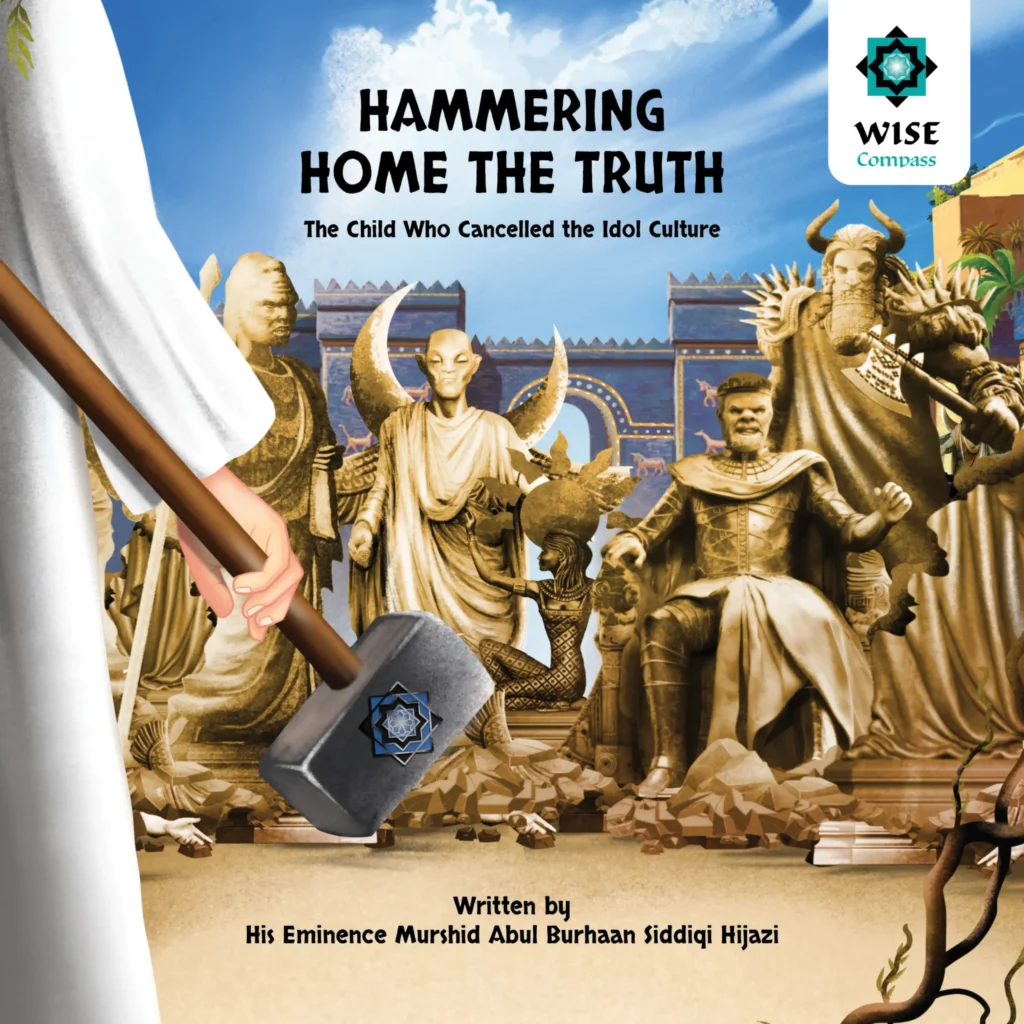
The 10th of Muharram is the day on which Allah Almighty extinguished the fire in which the arrogant king Namrood tried to burn Prophet Ibraheem (AS) alive.
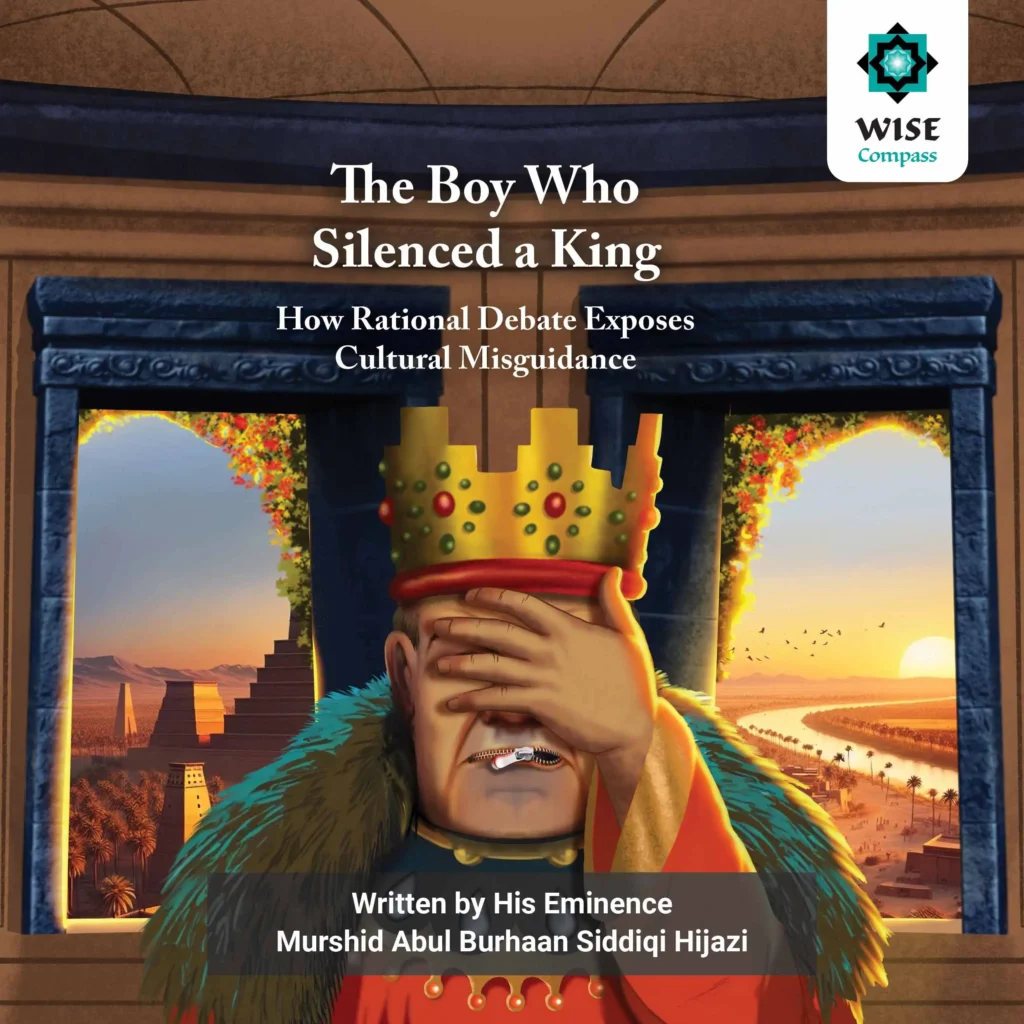
When he was still just a child, Prophet Ibraheem (AS) fearlessly debated the deluded king Namrood, who claimed to be a godking. In a battle of rational debate, the young Prophet silenced a king and won. But his defence of truth was punished by him being thrown into a raging fire.
Prophet Ibraheem (AS), known as Khaleel Allah, the Friend of Allah Almighty, showed complete Tawakkal (Reliance and trust in Allah Almighty), and Allah Almighty commanded the fire to be cool for His friend, His faithful Prophet.
We can learn from this gallant example how we too should strive to stand up for truth, no matter the odds, and have complete trust in Allah Almighty.
Ashura is the day on which Allah Almighty reunited Prophet Yaqoob (AS) with his son Prophet Yusuf (AS) after their long, painful separation.
When Prophet Yaqoob (AS) heard of his beloved son’s death, reported by his other sons, he was sure there had been foul play, yet he sought fortitude from Allah Almighty to bear this toughest of challenges. The struggle of a parent, caught between battling children and seeking forbearance to do justice between them, is still real.
His grief ran so deep that it caused him to lose his eyesight for many years, yet he did not despair. His trust and patience for the sake of Allah Almighty was eventually rewarded with reunion. It is a reminder for us to seek patience and fortitude from Allah Almighty to face any challenge, no matter how personal it feels, just as Prophet Yaqoob (AS) did.
The 10th of Muharram is also the day on which Allah Almighty united Prophet Yusuf (AS) with his father Prophet Yaqoob (AS) after their long separation.
The pain of a son who has been torn away from his father and cannot see him or serve him is a crushing pain. When Prophet Yusuf (AS) found himself tortured, cheated and attacked by his own siblings, one of the most lasting struggles he felt was being separated from his beloved father. Yet he did not lose hope, and he did not let his pain twist his morality and make him vengeful.
Allah Almighty granted him this merciful reunion that reassures us not to despair of fate. It is a reminder to us that while humans might scheme and try to affect the plan of our lives, Allah Almighty is the Ultimate Planner. Our destiny may hold sweet surprises from the benefactions of Allah Almighty that are unimaginable; therefore, we should never lose hope and keep striving in the way of Allah Almighty.
Ashura is the day on which Allah Almighty released Prophet Ayyub (AS) from the long tests of endurance in losing his health, wealth and family after he successfully remained patient and faithful to Allah Almighty.
Prophet Ayyub (AS) showed faith and trust in Allah Almighty despite every affliction that he had to face. He was tested with his wealth being stripped. Then with his health deteriorating to crippling lengths. Then with the loss of his children through death, and then the rest of his family through abandonment. Through every hardship, he (AS) still called out to and worshipped his Creator.
Through every debilitation, he (AS) persevered. And on the day appointed by Allah Almighty for his relief – the Day of Ashura – his every hardship was lifted, and he was restored to even greater states than he had begun with. The example of Prophet Ayyub’s (AS) life of perseverance through hardship exemplifies how we too should keep going in the face of any adversity. We must remember that Allah Almighty states in the noble Quran that He does not burden any soul with more than it can bear.
The 10th of Muharram is the day on which Allah Almighty granted the most formidable kingdom to Prophet Sulaiman (AS).
Prophet Sulaiman (AS) was blessed with inheriting from his father, Prophet Dawood (AS), the dominion of sacred knowledge and duty from Allah Almighty. Prophet Sulaiman (AS) supplicated in complete humility to Allah Almighty to ask for a kingdom the like of which no one had ever seen and would never see again. He (AS) asked out of a complete desire to serve and please Allah Almighty with even greater capacity. Allah Almighty accepted this prayer of Prophet Sulaiman (AS) and blessed him with dominion beyond even what he could imagine. This includes control over land, wind, Jinns and knowledge of the language of animals.
This momentous occasion, marked on Ashura, is a reminder to every servant of Allah Almighty that we should appreciate all that we have been blessed with by Allah Almighty; give thanks for it wholeheartedly; and use it in the servitude of the Creator and all He has created.
Ashura is the day on which Allah Almighty released Prophet Yunus (AS) from the belly of the whale and granted forgiveness to his sinful society.
Few of us could imagine ourselves in a more constricted state than being trapped in the darkness of the belly of a colossal creature, in the depths of the sea, without any foreseeable way of release or rescue. When Prophet Yunus (AS) found himself trapped alive in such darkness, he uttered heartfelt words of reliance and remembrance of Allah Almighty: “There is no one worthy of worship except You (Allah Almighty); Glory be to You; indeed, I was lost in the darkness (of my frustration and despair for my people).” Allah Almighty alleviated him from his distress and freed him from such a dire situation, forgiving his people for their wrongdoing and granting them mercy.
We learn from this example that we should always remain patient and in a state of constant remembrance of Allah Almighty – no matter how impossible or insurmountable our situation may appear to us. We are reminded to be hopeful of Allah Almighty’s mercy and rely on Him even if we cannot ‘see any light at the end of the tunnel’.
The 10th of Muharram is the day on which Allah Almighty raised Prophet Isa (AS) to the Heavens.
Prophet Isa (AS) was sent to a community that had long become corrupt, and his duty was to bring to them the message of true submission to Allah Almighty. He (AS) fearlessly and humbly committed to fulfilling this duty, but the corrupt government in Jerusalem persecuted him (AS) for his belief in Allah Almighty and Islam. They put the full force of their injustice and cruelty against this Prophet of Allah Almighty and his message of truth.
When they unfairly sentenced Prophet Isa (AS) to death, Allah Almighty protected and raised Prophet Isa (AS) to the Heavens. The example of Prophet Isa (AS) teaches us to reflect on how truthful we are in our own lives and to question ourselves. Do we speak the truth in the face of oppression and institutional persecution? Do we stand up for the truth? Even under threat of being shunned and tortured by society, Prophet Isa (AS) showed faith and reliance upon his Creator, just as all Muslims must do, no matter the risk.
Ashura is the day on which Allah Almighty allowed Prophet Musa (AS) to free Bani Israeel (the Children of Israeel) from the oppression of Pharaoh, spectacularly parting the Red Sea to allow the safe passage of the believers.
As one of the most significant prophets in Islam, Prophet Musa’s (AS) whole life demonstrates immense blessings that culminated in this pinnacle of liberation.
From his birth to his mission of prophethood, Prophet Musa (AS) was blessed with miraculous protection and support by Allah Almighty at every step. Allah Almighty protected Prophet Musa (AS) as a baby and allowed him to be raised safely in the palace of Pharaoh. Allah Almighty allowed Prophet Musa (AS) to grow up strong and noble and guided him to his Prophetic mission, to invite Pharaoh to Islam and peacefully convince him to free the oppressed people.
Allah Almighty blessed Prophet Musa (AS) with numerous miraculous signs to change the heart of Pharaoh. But Pharaoh refused. Until he finally had to submit to the Will of Allah Almighty and let Bani Israeel go free. In his hypocrisy and arrogance, Pharaoh did not honour his word, and on the fateful day of Ashura, he chased the freed people to the Red Sea with his vast army, thinking he could overpower them. This is when Allah Almighty parted the sea, and the enslaved people walked to safety, while their persecutors drowned as they followed.
This mercy from Allah Almighty is a humbling reminder to us all. He, in His Infinite Mercy invites us all to Islam, and we should ask ourselves, ‘Do we strive against our inner Pharaoh that pushes us to follow our lower desires? ‘ Do we treat people nicely or do we become oppressive and abusive like an egotistical tyrant?’
The many noble messages of this Ashura story are clear:
These examples show us the significance of the Day of Ashura in human history before the lifetime of Holy Prophet Muhammad ﷺ. And during his lifetime, Holy Prophet Muhammad ﷺ singled out the Ashura story of Prophet Musa (AS) especially and honoured it.
There is another extremely spiritually and historically significant event in Islamic history that took place on the Day of Ashura, after the passing of Holy Prophet Muhammad ﷺ. It is this event by which Ashura is almost synonymously known throughout the Muslim world. And of all the events that have taken place on Ashura, this is the most heart-breaking and humbling for Muslims.
✅ Wise Compass Books That Bring These Stories to Life
The Wise Compass library includes several books that make the stories connected to Ashura accessible and emotionally resonant for children of different ages.
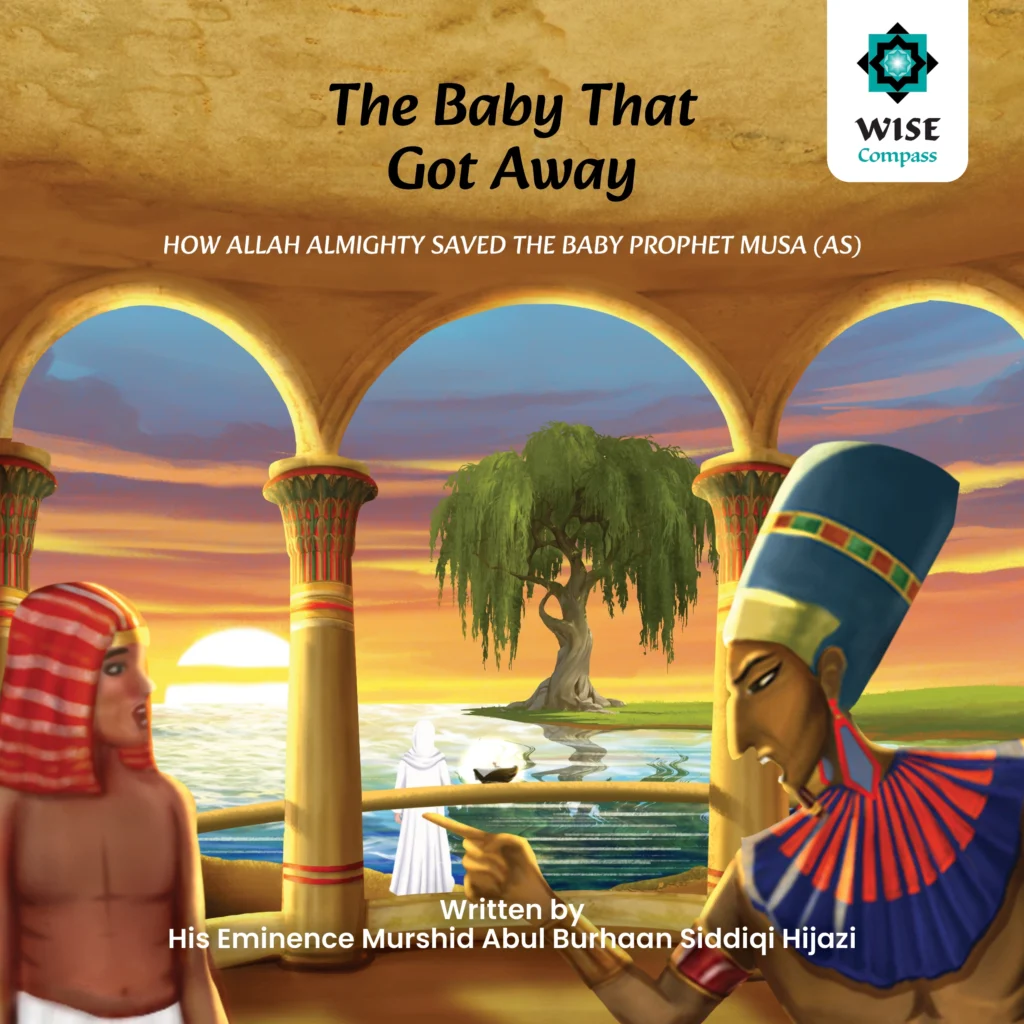
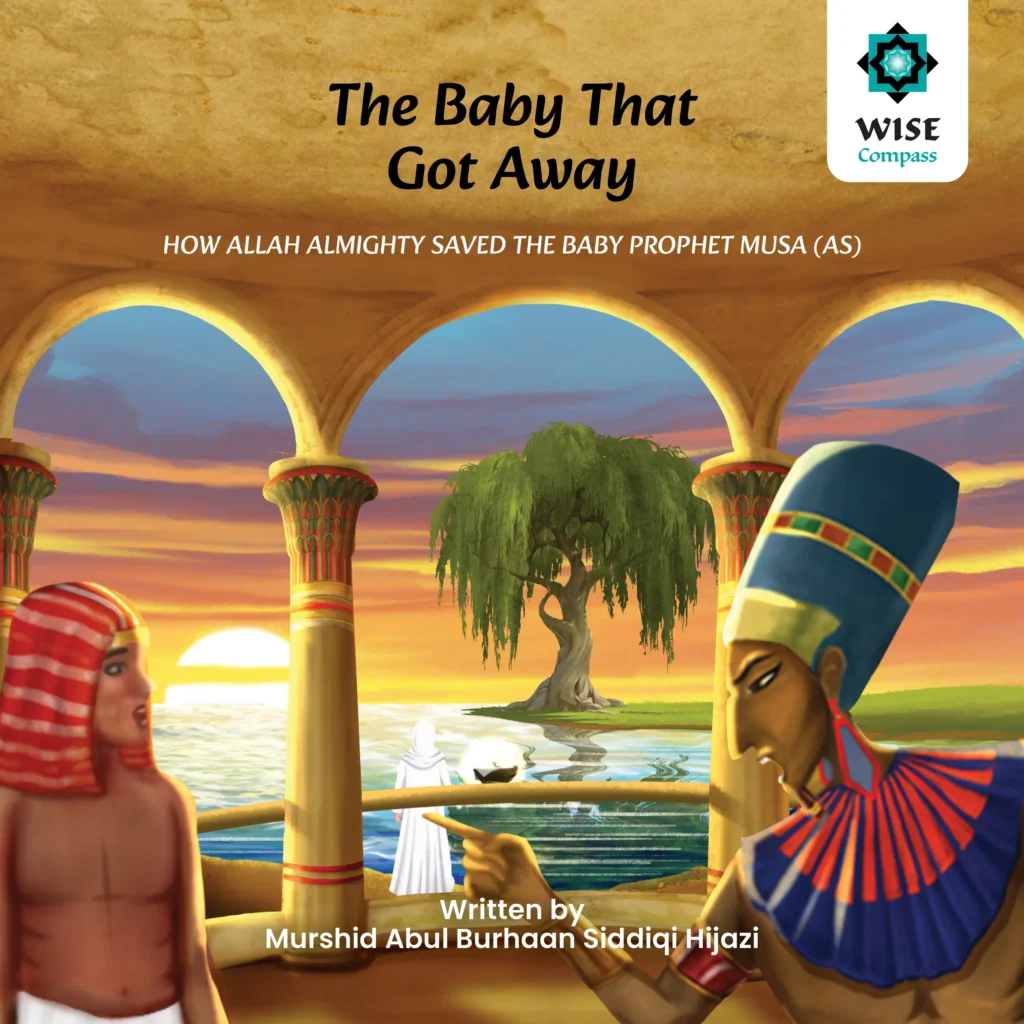
For the story of Prophet Musa (AS): The Baby That Got Away tells the story of Prophet Musa’s (AS) extraordinary infancy, saved as a newborn through his mother’s complete trust in Allah Almighty.
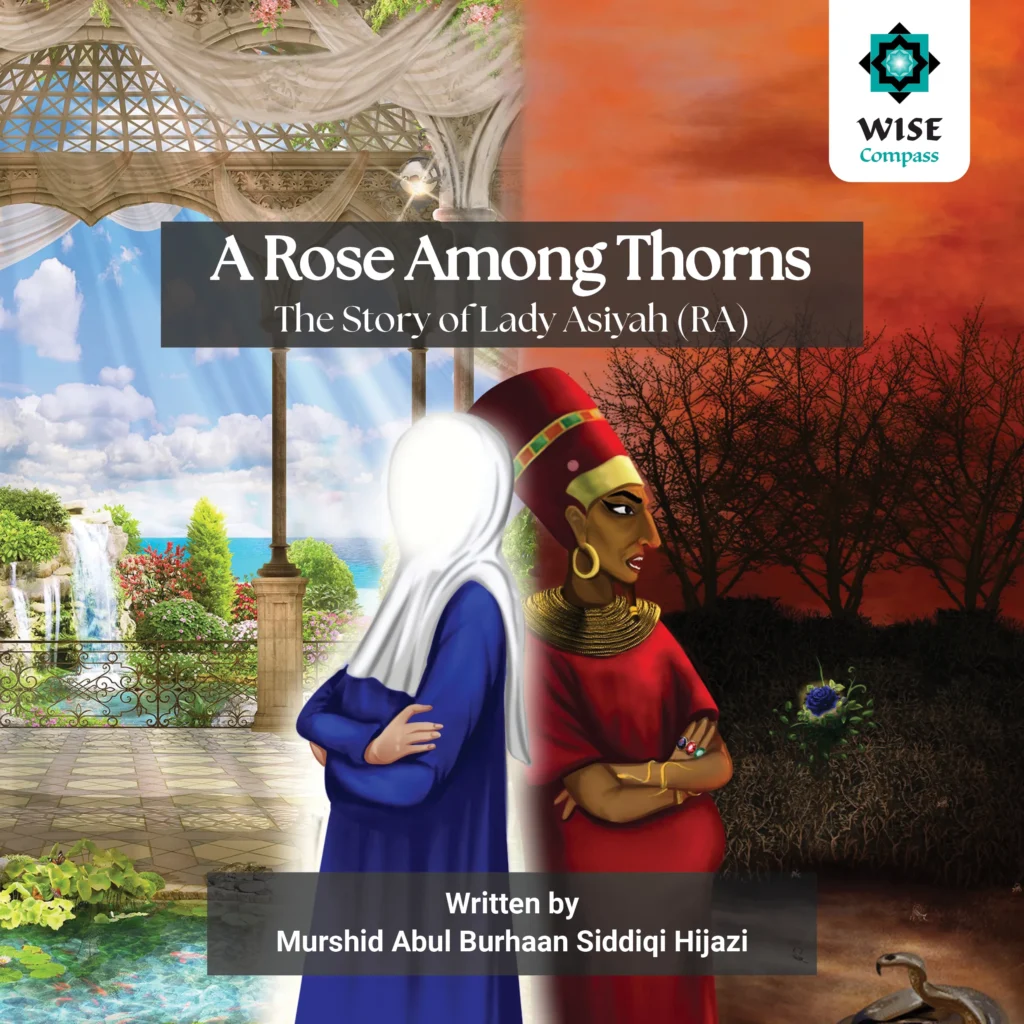
A Rose Among Thorns follows Lady Asiyah (RA) raising the young Prophet Musa (AS) inside Pharaoh’s palace.
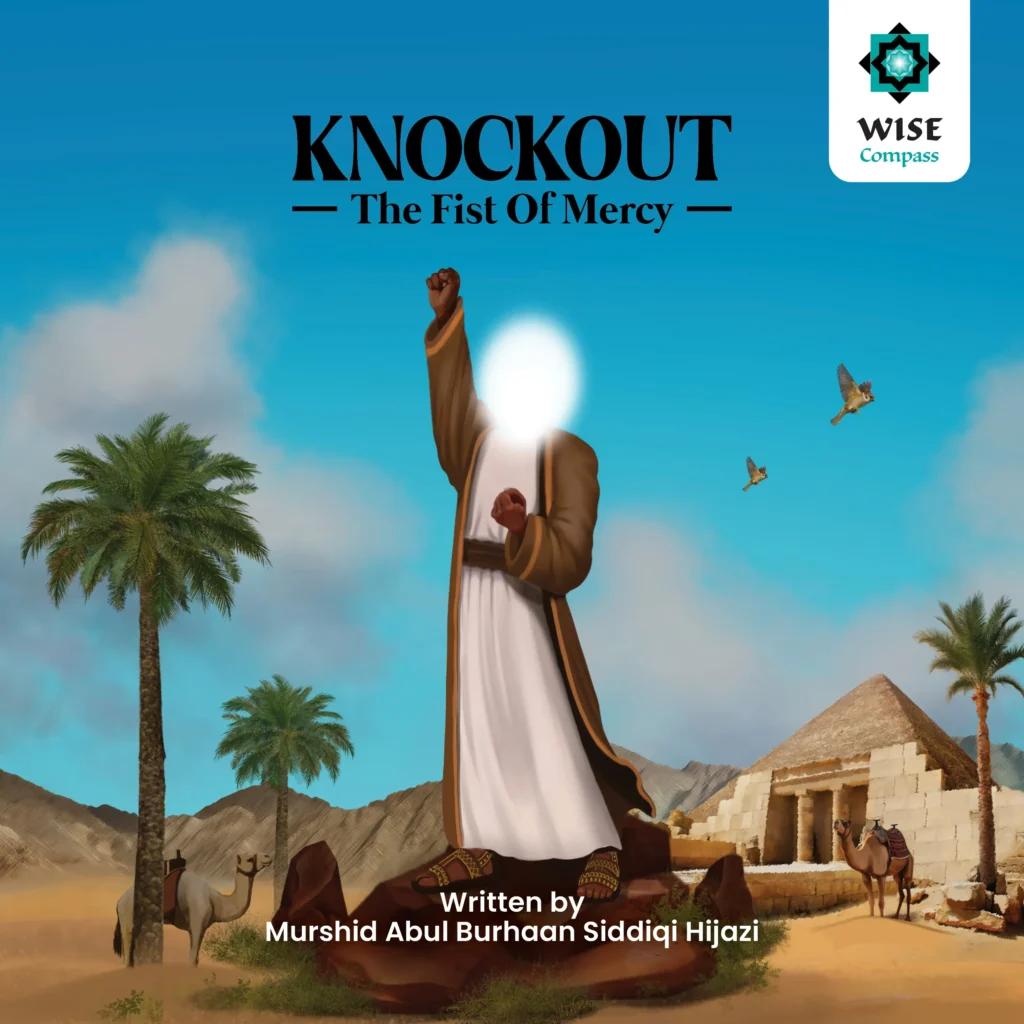
Knockout – Fist of Mercy captures the pivotal moment when an adult Prophet Musa (AS) confronts injustice on the streets of Egypt and faces the full weight of what that confrontation costs him.
These stories carry the same lessons that echo through the plains of Karbala over a thousand years later:
Explore the full Wise Compass collection
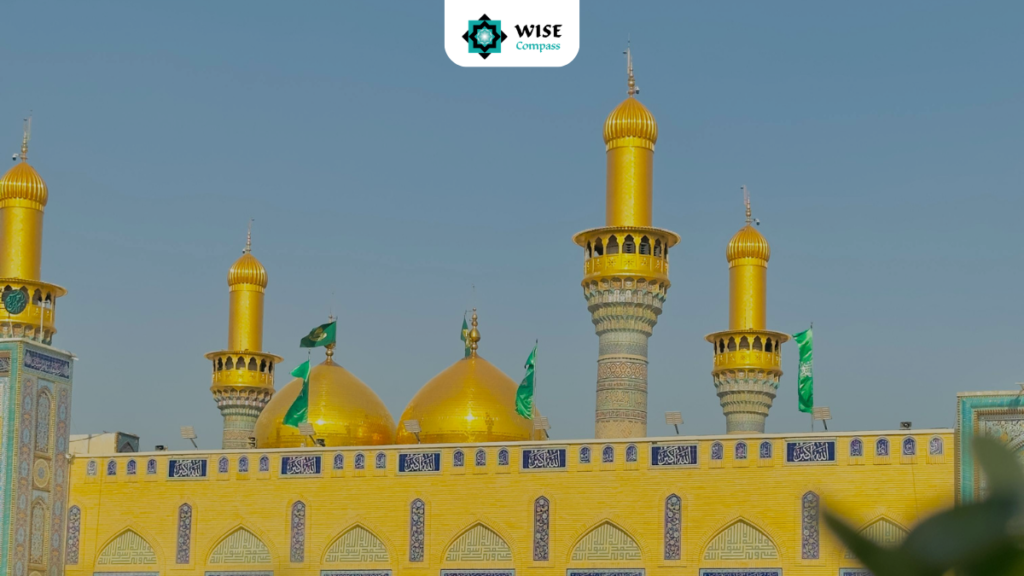
Ashura marks the martyrdom of the grandson of Holy Prophet Muhammad ﷺ, Murshid Syed Al Shuhada Hussain ibn Ali (RA) and his companions, including 16 members of his blessed family and 72 devoted companions.
It is a day that asks Muslims, wherever they are, to stop and reflect: on what faith costs, on what justice demands, and on what it means to stand on the right side of history even when it may cost you everything.
Murshid Syed Al Shuhada Hussain ibn Ali Al Murtaza (AS) is the younger grandson of Holy Prophet Muhammad ﷺ. He is the younger son of the Fourth Caliph, Murshid Imam Ali Al Murtaza (RA), and the beloved daughter of Holy Prophet Muhammad ﷺ, Sayyidah Murshidah Fatimah (RA). Murshid Syed Hussain (RA) was one of the most beloved members of Holy Prophet’s ﷺ own family, described by Holy Prophet ﷺ as a Leader of the Youth of Paradise.
Murshid Syed Hussain (RA) was said to resemble Holy Prophet’s ﷺ physique and build and was an impeccable man of morals who upheld the example of social justice embodied by his blessed Grandfather ﷺ.
In the generations after the passing of Holy Prophet Muhammd ﷺ and the blessed Four Khalifa Rashidun, the leadership of the Muslim community passed through a series of Caliphs. By 680 CE, the Caliphate had come into the hands of a corrupt man named Yazeed ibn Mu’awiya, who laid claim to the position of Leader of the Muslim Ummah. His nomination was contested by several prominent Muslims on moral grounds. Yazeed was powerful but he knew this might not be enough to secure his seat in leadership. So he demanded that Murshid Syed Hussain (RA) pledge allegiance to him and endorse his running for office, knowing that if he had the public support of the family of Holy Prophet ﷺ, it would give his rule the stamp of legitimacy.
But Murshid Syed Hussain (RA) knew how corrupt and unfit Yazeed was for the role of leading the Muslim Ummah and refused to pledge allegiance to such an unjust man and cause. Murshid Syed Hussain (RA) was honour-bound to protect the dignity of Islam and his lineage and not allow unIslamic values to be given a seat of power. He (RA) refused to endorse the corrupt rule of Yazeed ibn Mu’awiya, and spoke out against him, despite it being a risk to his life.
Murshid Syed Hussain (RA) peacefully left Madinah with his family and a small group of companions, fewer than 150 people in total, including women and children. He was travelling toward Kufa, in modern-day Iraq, where people had written to him in their thousands pledging their support and asking him to come to them. But when he approached Kufa, the Kufis withdrew their support under pressure from Yazeed’s forces that included the corrupt governor of Kufa.
On the first day of Muharram, while on the way to Kufa, Murshid Syed Hussain (RA) and the small caravan were intercepted by the Umayyad army and forced to camp in the desert lands of Karbala. They were surrounded by Yazeed’s forces, who came to intimidate and punish Murshid Syed Hussain (RA) for speaking out against Yazeed’s tyranny and immorality. They offered Murshid Syed Hussain (RA) the choice to submit and pledge allegiance to Yazeed or face battle and death at their hands.
Murshid Syed Hussain (RA) and his brave companions refused and held off the negotiations from the army for 7 days, despite being severely outnumbered.
On the 7th of Muharram, the Umayyad army cut off Murshid Syed Hussain’s (RA) access to the drinking water of the nearby Euphrates River to torture he and his family and try to beat them into submission. For three days, Murshid Syed Hussain (RA), his family, and his companions, including young children, endured thirst in the desert heat. Yet they did not submit to tyranny and evil.
Negotiations between Murshid Syed Hussain (RA) and the Umayyads failed on the 9th of Muharram.
On the 10th of Muharram, the Day of Ashura, the Battle of Karbala was fought.
Murshid Syed Hussain (RA) and his small group of men fought the army of Yazeed bravely, knowing that the example they set on that fateful day would light the fire of revolution and realisation for Muslims for generations to come.
One after another, Murshid Syed Husaain’s (RA) companions were killed until only he himself remained. Fatigued, thirsty and heavily wounded, he did not give up and stuck to his principles until the very end – an eternal role model for all humanity of how to fulfil the responsibilities of a Muslim. While his head was bowed in prayer, the Umayyad army martyred Murshid Syed Hussain (RA) on the 10th of Muharram, 61 AH, the Day of Ashura.
The martyrdom of Murshid Syed Hussain (RA) at Karbala is not simply a historical tragedy. His martyrdom serves as a lesson for Muslims about the significance of unwaveringly upholding what is right, irrespective of the repercussions. Murshid Syed Hussain’s (RA) moral stand against the tyrant Yazeed, and his refusal to pledge allegiance to an unjust ruler are a symbol of truth against falsehood.
Murshid Syed Hussain (RA), the noble son of the Lion of Islam, Murshid Syed Ali Al Murtaza (RA) and the noble grandson of the Last and Final Prophet, Holy Prophet Muhammad ﷺ, is universally acknowledged as a martyr who died standing for justice and Islamic principles.
His courage, faith, and sacrifice is unsurpassed and recognised across the Muslim world, and are captured in the verses of a renowned Persian poem:
Shah ast Hussain, Baadshah ast Hussain,
Deen ast Hussain, Deen Panaah ast Hussain,
Sar daad, na daad dast, dar dast-e-Yazeed,
Haqaa ke bina-e-La ilah ast Hussain.
Hussain is the King, Hussain is the Emperor,
Hussain is the faith, Hussain is the protector of faith,
He gave his head, but not his hand, in the hand of Yazeed,
Verily, the foundation of ‘La ilah’ (the testament that There is no god but Allah Almighty) is Hussain.
The Prophetic Example of Observing Ashura: Fasting, Its Reward, and How to Fulfil the Sunnah
Ashura is observed across the whole Muslim world and the best way to observe and mark it has been told to us by Holy Prophet Muhammad ﷺ.
When Holy Prophet Muhammad ﷺ migrated to Madinah, he found the Jewish community fasting on the 10th of Muharram to commemorate the day when Prophet Musa (AS) and the Children of Israeel were liberated from tyranny.
When Holy Prophet ﷺ saw this, his response was both immediate and illuminating. It is reported in Sahih Muslim, Hadith 1130c that Holy Prophet Muhammad ﷺ said:
‘What is the (significance) of this day that you observe fast on it?’ They said: ‘It is the day of great significance when Allah (Almighty) delivered Musa (AS) and his people, and drowned the Pharaoh and his people, and Musa (AS) observed fast out of gratitude and we also observe it.’
Upon hearing this, the Messenger of Allah Almighty (ﷺ) said: ‘We have more right, and we have a closer connection with Musa (AS) than you have.’ So, Allah Almighty’s Messenger (ﷺ) observed fast (on the day of Ashura), and gave orders that it should be observed.
In recognition of this divine event, Holy Prophet ﷺ fasted on the day of Ashura and instructed Muslims to fast the 10th of Muharram.
Fasting on the day of Ashura is one of the most established and rewarding voluntary acts of worship for Muslims in the entire Islamic year. The reward for fasting on 10th Muharram is described as expiation for the previous year’s minor sins. It is recorded in Sahih Muslim, Hadith 1162b that when Holy Prophet Muhammad ﷺ was asked about fasting on the day of Ashura (10th of Muharram), he said:
‘It expiates the sins of the preceding year.’
This extraordinary reward reflects the deep significance Allah Almighty has attached to this day.
How to Observe the Fast of Ahsura
Ashura is a time of personal worship, reflection, and voluntary fasting. The exact fast of Ashura is on the 10th of Muharram. However, Holy Prophet Muhammad ﷺ recommended fasting either the day before or the day after Ashura In order to distinguish the Islamic practice from the Jewish observance,
This means that fasting either the 9th and 10th together or the 10th and 11th together is the more complete Sunnah. The fast follows standard voluntary fast rules, abstaining from food and drink from Fajr to Maghrib.
In the UK, the Day of Ashura 2026 is expected to begin on the evening of Thursday, 25th June, and end on the evening of Friday, 26th June. Families should confirm the exact date with their local Masjid, as the Islamic calendar follows confirmed moon sightings, which can vary by community and country.
Children are far more ready for the real stories of Ashura than many parents expect. Both the liberation from Pharaoh and the events of Karbala are stories that children respond to deeply because, at their heart, both are stories about courage in the face of impossible odds. Children are strengthened from learning about standing up for what is right, and the way Allah Almighty’s justice ultimately prevails.
For younger children (ages 4-6), you can explain it in this way:
Start with the story of Prophet Musa (AS); it is vivid, dramatic, and immediately graspable.
‘On Ashura, we remember the day Allah Almighty did something amazing; He saved Prophet Musa (AS) and all his people when it seemed impossible. He split the sea for them so they could walk through safely. We fast to say thank you to Allah Almighty for how powerful and merciful He is.’
For the story of Murshid Syed Hussain (RA), keep it simple and age-appropriate:
‘We also remember one of the most brave Muslims ever to exist, Murshid Syed Hussain (RA), who is the grandson of Holy Prophet Muhammad ﷺ. Murshid Syed Hussain (RA) stood up for what was right even though it was very hard and very dangerous. Muslims remember him because he showed us what it looks like to be truly brave and truly good.’
For older children (ages 7-11), you can go deeper into both stories:
For the story of Prophet Musa (AS), explore the years of slavery, the signs and miracles, the confrontation with Pharaoh, and the parting of the sea.
Ask your child thoughtful questions:
‘What do you think it felt like to be standing at the water’s edge with an army behind you?’
‘What did trusting Allah Almighty look like in that moment?’
‘In what ways do you think we might be like Pharoah and in what ways can we be more like Prophet Musa (AS)?’
For the story of Murshid Syed Hussain (RA), tell the story honestly and age-appropriately. Explore the principled refusal, the journey and siege at the Euphrates, the battle, and the meaning of his (RA) moral stand.
Ask your child thoughtful questions:
‘Why do you think Murshid Syed Hussain (RA) refused to follow Yazeed?’
‘What does the example of Murshid Syed Hussain (RA) show us that Muslims should do when they see injustice?’
‘How can we make sure that we are being sincere Muslims no matter what we face?’
These are not abstract questions; they are the kind that shape a child’s moral character for life.
Ashura is the name given to the 10th of Muharram, a day that marks many important events in Islamic history, but most notably the liberation of Prophet Musa (AS) from Pharaoh and the martyrdom of Murshid Syed Al Shuhada Hussain ibn Ali Al Murtaza (RA) at the Battle of Karbala in 680 CE. The day is commemorated by Muslims across the globe through fasting on the 10th Muharram and either the 9th or 11th Muharram as well.
The word ‘Ashura’ comes from the Arabic word for ‘ten’, referring to the date of the 10th of Muharram. It is a highly important day of remembrance for Muslims, a reminder of Allah Almighty’s Mercy and power and our relationship to Him as Muslims striving for sincerity.
This is particularly exemplified by the story of how Prophet Musa (AS) and Bani Israeel were liberated from the tyranny of Pharaoh on this date and the courage and sacrifice shown by Murshid Syed Hussain (RA) on this date.
Muslims follow the Sunnah and advice of Holy Prophet Muhammad ﷺ, who fasted on this day in gratitude for the liberation of Prophet Musa (AS) from Pharaoh, and on a day before or after to distinguish the practice of Muslims from the actions of the Jewish community. The fast of Ashura is the 10th of Muharram, and it is rewarded by Allah Almighty with expiation for the previous year’s minor sins.
On the 10th of Muharram, 61 AH (680 CE), Murshid Syed Al Shuhada Hussain ibn Ali Al Murtaza (RA), the grandson of Holy Prophet Muhammad ﷺ, was martyred alongside most of his male companions by the forces of the notoriously corrupt Umayyad ruler Yazeed in the Battle of Karbala. Murshid Syed Hussain (RA) and his companions refused to pledge allegiance to an unjust, immoral and un-Islamic ruler and were persecuted for their devotion to Islam.
No. It is a strongly recommended Sunnah, one of the most rewarding voluntary fasts in the Islamic year, but it is not obligatory like Ramadan.
Ashura is a day that holds more historical weight than almost any other in the Islamic calendar. On this very date, the 10th of Muharram, many important events have taken place throughout human history. Two of the most defining stories converge and have a lasting impact on collective Muslim memory: A sea that parted for a people in chains and a grandson of Holy Prophet who died rather than allow Islam to bow to injustice.
Both tales pose the same basic question: when standing for truth meets impossible odds, what do you do? Prophet Musa (AS) held up his staff and Murshid Syed Hussain ibn Ali (RA) upheld his principles. Both held fast to their absolute faith in Allah Almighty and their actions have shaped the faith of billions of Muslims across fourteen centuries.
However you are able to observe Ashura – through fasting, through teaching your children these stories, or simply through a moment of quiet reflection – may this day bring you closer to the values that both of these exemplary servants of Allah Almighty embodied:
Taqabbal Allahu minna wa minkum.
Explore Islamic Stories for Children at Wise Compass
Also read: Prophet Stories for Kids
Also read: Islamic Stories That Strengthen Faith and Imaan