
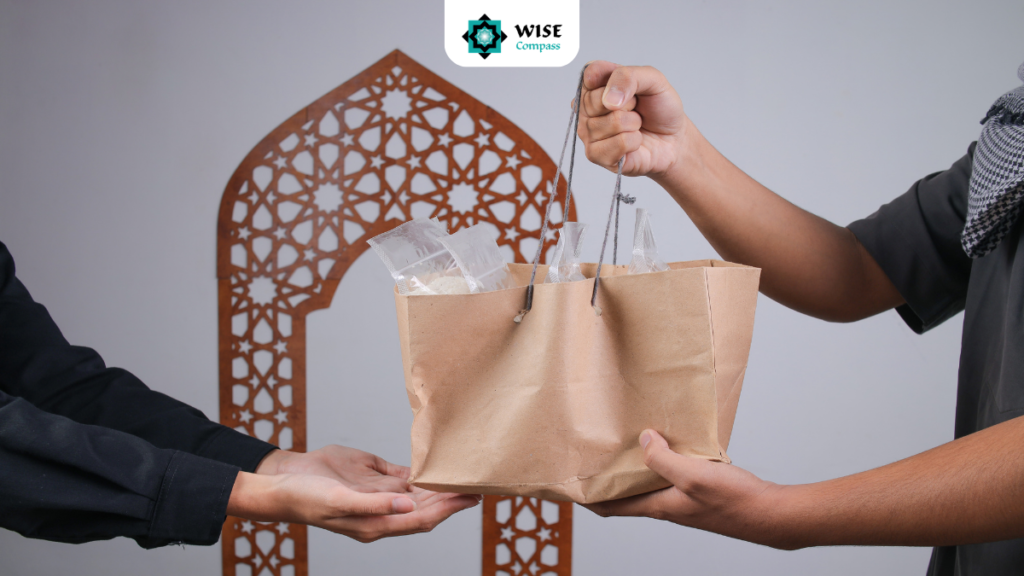
Zakat (Obligatory charity) is one of the blessed Five Pillars of Islam, a yearly act of worship in which Muslims who have wealth above a certain amount give a fixed portion of it, 2.5%, to those in need. It is not optional charity but a right that the poor have over the wealthy, built directly into the fabric of Islamic practice.
Teaching children about Zakat helps them understand that money is a trust from Allah Almighty, that sharing is an act of worship, and that a Muslim’s relationship with wealth is defined by gratitude and generosity, not greed. Zakat purifies our earnings and reminds us that everything we own ultimately belongs to Allah Almighty alone.
Many parents wait until their children are older to introduce concepts like Zakat, assuming it to be too abstract as an idea for young minds. But children are remarkably concrete thinkers, and Zakat is, at its heart, a beautifully concrete idea: you have been given something good, so you share some of it with someone who has less.
Introducing Zakat early is not about teaching tax calculations and causing financial worry for kids. It is about planting a seed of awareness in their young, still-forming minds that wealth is not truly ours and should not be hoarded. It is a gentle reminder that there will be people around us who are struggling and that Allah Almighty has made generosity an act of worship so that we can always take care of each other. A child who grows up with this understanding is less likely to develop a stingy or miserly relationship with money and more likely to experience the deep satisfaction that comes from giving.
This article walks you through what Zakat is, what the noble Quran and holy Prophet Muhammad ﷺ say about it, and how to explain it to your children at every age, with scripts, stories, and one very practical tip to make it stick.
The word ‘Zakat’ comes from the Arabic root word meaning both ‘purification’ and ‘growth’. That combination is intentional and profound, giving purity to the wealth that remains and causing it to grow in Barakah (Divine blessing).
Zakat is obligatory upon every adult Muslim who possesses wealth for a full lunar year that is above a minimum threshold, known as the ‘Nisaab’. The amount of Zakat to pay is 2.5% of that saved wealth and is due to be paid only once a year. It is important to understand that Zakat is not a ‘favour’ done for the poor. It is a right that has been granted to them by Allah Almighty and which is acknowledged and protected by Islamic law. It is a great blessing to those who are enabled to fulfil this right for them.
There are 8 categories of people who are entitled to receive Zakat. These are outlined directly by Allah Almighty in the noble Quran, making it clear who the recipients are. Such divine instruction honours the people who are entitled to Zakat and protects the people paying it by removing any risk of bias or preference.
‘Zakat is when we share some of our money with people who don’t have enough. Allah Almighty asks us to do this every year because He loves it when we help each other.’
‘Imagine Allah Almighty gave you a bag of sweets. He asks you to keep most of them but give just a small portion, about two and a half sweets out of every hundred, to someone who has no sweets at all. That’s Zakat. It helps everyone, and reminds us that everything we have came from Allah Almighty in the first place.’
One of the most important things we can do as parents is to show our children that Zakat is not a man-made rule; it is a direct command from Allah Almighty. The noble Quran mentions Zakat alongside Salah (Prescribed prayers) in dozens of verses, and emphasises that the two are inseparable in the life of a believer.
When speaking about those who are entitled to receive Zakat, Allah Almighty states in the noble Quran, Surah Al Tawbah (9), Verse 60:
إِنَّمَا ٱلصَّدَقَـٰتُ لِلْفُقَرَآءِ وَٱلْمَسَـٰكِينِ وَٱلْعَـٰمِلِينَ عَلَيْهَا وَٱلْمُؤَلَّفَةِ قُلُوبُهُمْ وَفِى ٱلرِّقَابِ وَٱلْغَـٰرِمِينَ وَفِى سَبِيلِ ٱللَّهِ وَٱبْنِ ٱلسَّبِيلِ
Innamas sadaqaatu lil-fuqaraa’i wal-masaakeeni wal-‘aamileena ‘alayhaa wal-mu’allafati quloobuhum wa fir-riqaabi wal-ghaarimeena wa fee sabeelillaahi wabnis-sabeel
Zakat expenditures are only for the poor and the needy; and for those employed for it, and for bringing hearts together, and for freeing captives, and for those in debt, and for the cause of Allah Almighty, and for the stranded traveller.
You can point to this verse when speaking to your children and say:
‘See, Allah Almighty Himself listed the people who deserve our Zakat.’ This isn’t something we made up. It’s from Allah Almighty.’
Allah Almighty also assures us that spending in His way is never a loss. He states in the noble Quran at Surah Al Baqarah (2), Verse 261:
مَّثَلُٱلَّذِينَ يُنفِقُونَ أَمْوَٰلَهُمْ فِى سَبِيلِ ٱللَّهِ كَمَثَلِ حَبَّةٍ أَنۢبَتَتْ سَبْعَ سَنَابِلَ
Mathalulladheena yunfiqoona amwaalahum fee sabeelillaahi kamathali habbatin anbatat sab’a sanaabil
The example of those who spend their wealth in the way of Allah Almighty is like a seed that sprouts seven ears.
This is a verse children can visualise immediately: plant one seed and grow seven. That is what Zakat does, spiritually and in terms of Barakah.
You can even show this verse to your child and then plant a seed together to make the lesson tangible and memorable for them.
One of the most powerful ways to help children understand Zakat is through Hadith, which are the recorded sayings and actions of holy Prophet Muhammad ﷺ. Share Hadith that describe what happens to wealth when it is happily given away and when it is selfishly hoarded. Holy Prophet Muhammad ﷺ did not speak abstractly about money; he ﷺ spoke about matters in the clearest way to enable the best understanding. Many Hadith about charity describe it in images that can really help children imagine its effects.
It is recorded in Sahih Muslim, Hadith 2588, that holy Prophet Muhammad ﷺ said:
‘Charity does not decrease wealth.’
This short, direct statement is one of the most liberating ideas a child can internalise. Everything around them in the modern world says, ‘Hold on to what you have, get more, think of yourself and protect what is your share.’ Holy Prophet Muhammad ﷺ teaches us the exact opposite.
✅ Practical Tip: To help your child begin to think about this, you can ask them:
‘If you gave away some of your pocket money, would you have more or less?’
Then share this Hadith. Let them sit with the paradox and think about what their own thoughts are on the topic.
It is also recorded in Sahih Bukhari, Hadith 1442, that holy Prophet Muhammad ﷺ said:
‘Protect yourself from the Fire, even with half a date (in charity).’
This is powerful advice for children because it removes the idea of any act of sharing being ‘too small’. Your child does not need to be wealthy to give to others and develop their selflessness and generosity to please Allah Almighty. Even the smallest act of charity, sharing half a date, carries enormous weight in the sight of Allah Almighty.
Once children understand Zakat, they might ask: ‘But we already give Sadaqah (Voluntary charity), so why do we need to give Zakat?’ This is a beautiful question, and it is important to teach them the distinction clearly.
Zakat is Fard (Obligatory), it is a pillar of the faith, a fixed minimum that is non-negotiable for eligible Muslims. It is calculated, recorded, and given with intention.
Sadaqah, by contrast, is entirely voluntary; it can be any amount, at any time, for any permissible cause. It can even be something non-monetary: a smile is described as ‘Sadaqah’ in one Hadith.
The reason Islam offers both types of charity is deliberate. Zakat ensures that the basic right of the poor is never neglected or left to the just how people ‘feel’ about giving on any given day. Sadaqah creates a culture of open-hearted and open-handed giving that goes far beyond the minimum, allowing individuals to develop as enriched, selfless people who make up an enriched and selfless society.
You can use this helpful analogy for children:
‘Zakat is like the minimum amount you are required to eat to stay healthy. Sadaqah is everything else on the table. You must eat the minimum, but you are encouraged to eat well.’
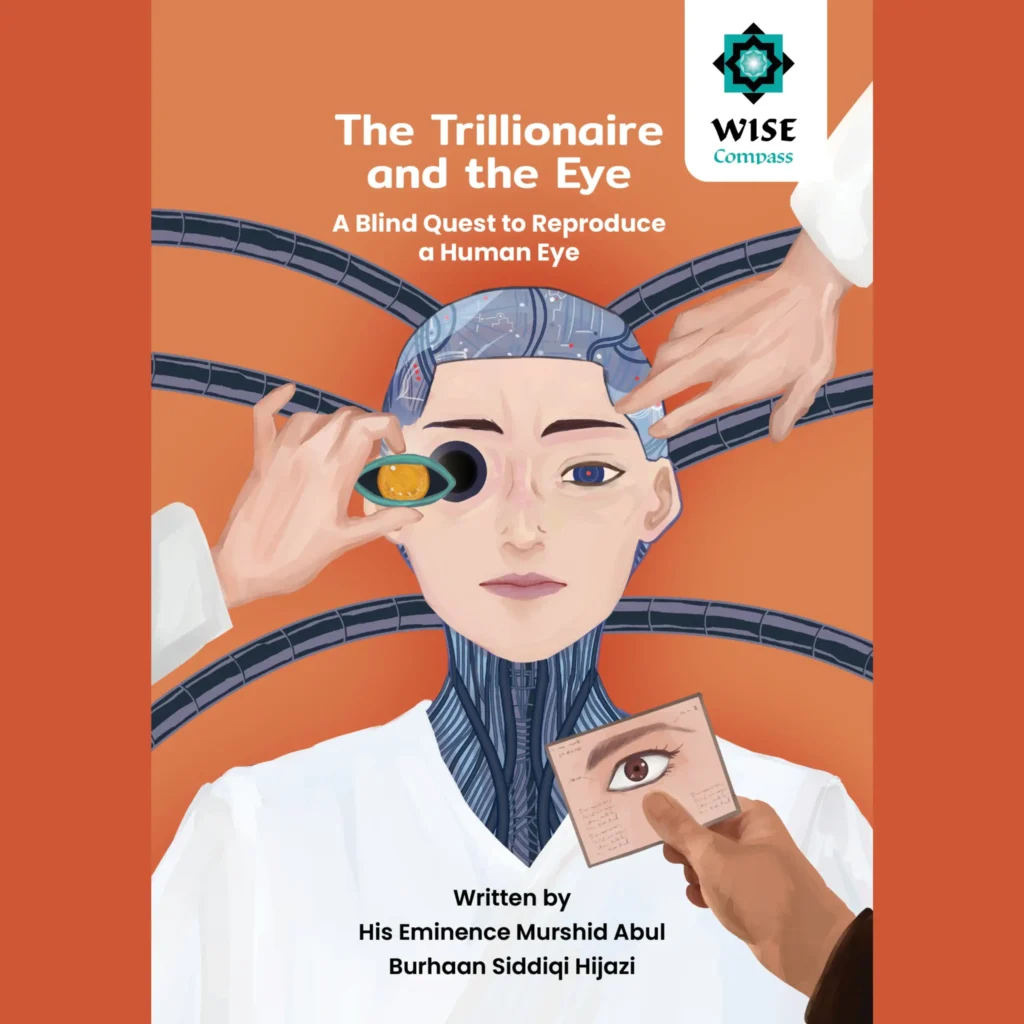
✅ Wise Compass Tip: This is also a wonderful moment to introduce the Wise Compass story, The Trillionaire and the Eye, which explores how we see what we have and how gratitude shifts our entire relationship with wealth and giving. It pairs powerfully with this conversation about why we give to others.
Children learn values through role modelling, repetition and ritual, not lectures. One of the most effective tools parents can use is what we call the Three Jar Method.
Set up three jars or boxes in your child’s room and label them:
Every time your child receives money as pocket money, Eid gifts, birthday money, or a reward, help them divide it across the three jars. The Giving jar is not Zakat in the legal sense (your child is not yet formally responsible or ‘Mukallaf’), but it builds the habit and the mindset that giving is always part of what we do with what we receive.
When the Giving jar is full, let your child choose where that money goes: a local food bank, a water project abroad, or a classmate who needs something. The choice and their sense of ownership matters.
✅ Parental Tip: The Gratitude and Giving Journal
Once a week, sit with your child and ask them two questions: ‘What is one thing you have that someone else might not have?’ and ‘What is one small thing you could give this week?’
Write both answers down in a journal with them. Over time, this simple exercise builds the twin muscles of gratitude and generosity, the spiritual foundation on which an understanding of Zakat rests.
The language you use matters enormously. Here are ready-to-use explanations by age.
For younger children (ages 4-7), you can explain it in this way:
‘Zakat is when we share some of our money with people who don’t have enough. Allah Almighty asks us to do this every year because He loves it when we help each other.’
For younger children (ages 8-12), you can explain it in more detail:
‘Every year, Muslims (who have savings above a certain amount) give 2.5% of it to people in need. It’s called ‘Zakat’, and it is one of the Five Pillars of Islam. Allah Almighty has told us that it is as important as ‘Salah’. This reminds us that our money is really a trust from Allah Almighty, and we’re responsible for what we do with it.’
For teenagers, the conversation can deepen:
‘Zakat is not just charity. It is an economic principle for the betterment of society. It prevents wealth from concentrating only in the hands of a few and circulates money through the community. It creates an environment in which poverty is reduced, and everyone remembers that everything we earn has only been possible through the blessings of Allah Almighty.
As one of the Five Pillars of Islam, it is also a very important act of worship. You have to calculate it, you make a Niyyah (Intention), and you complete it (by paying it). Just like Salah.’
One of the most moving conversations you can have with your child about Zakat and generosity might begin better with a story that touches their heart and helps them connect to the lesson.
Wise Compass has a number of stories that could help. Choose from whichever will best suit your child.
One of the most moving conversations you can have with your child about Zakat and generosity begins not with a lesson, but with a story.
The Wise Compass story An Oasis in the Desert tells the tale of a prince who walks away from his stately life among the wealthy and powerful and finds something unexpected in the simple, honest world of a shepherd. It is a story about the nobility of character and what truly makes a person rich. It speaks directly to the heart of what Zakat teaches: that our worth is not in what we accumulate but in how we carry what we have been given.
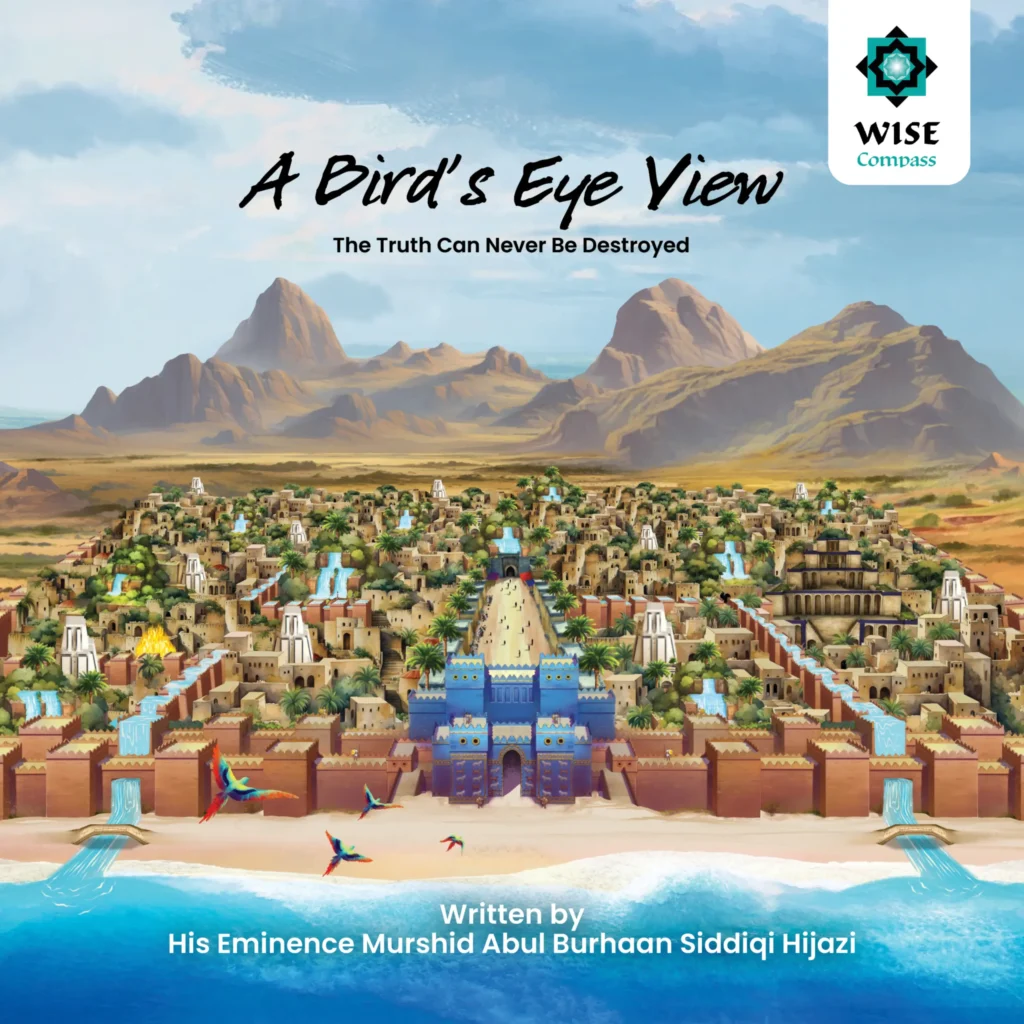
The Wise Compass story A Bird’s Eye View tells the tale of a tiny Babbler bird who witnesses a young boy being picked on by a cruel crowd that is building a bonfire to punish him. The tiny bird finds the courage to help the boy, no matter how small his contribution might be. It is a story about truth and honesty, but also the bravery to be found in even the smallest acts of kindness, from the most unexpected little helpers. This story can help a young child understand the attitude of open-heartedness that charity in Islam teaches: that every little helps, no matter how small our contribution or gift may seem.
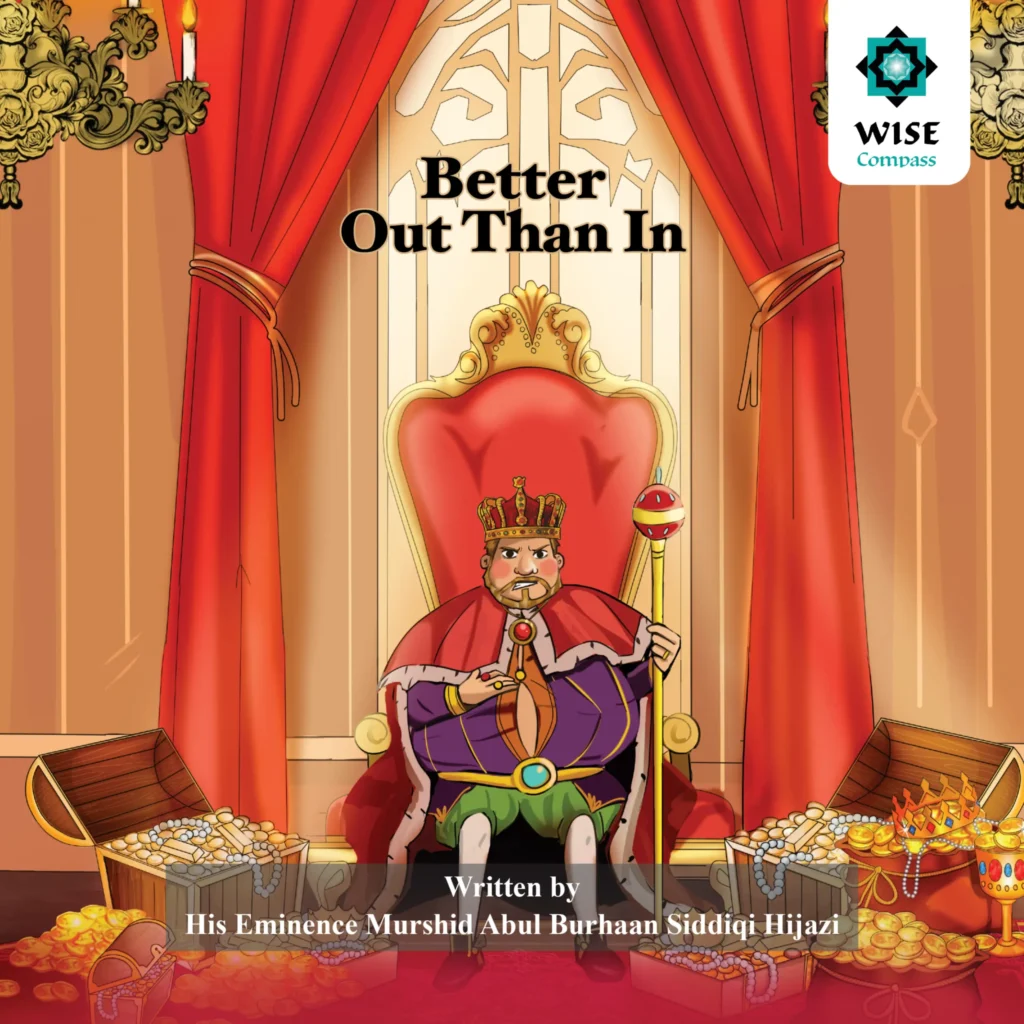
The Wise Compass story Better Out Than In brings us face to face with a king who has every luxury item you can think of – the most opulent palace, the most delectable sweet treats, the most scrumptious food and drink, the best clothes and jewels and accessories… but he has a royal pain that none of these worldly things can help with!
His pain is so great that he ignores his duties to the whole kingdom; failing to give the people who rely on him what they need and what is their right. He is in desperate need of help, and thinks hard to find the cure for his ailment. This funny story entertains readers with humour and realisations that are important for us all – royal and layman alike. It reminds us of what it means to be blessed by Allah Almighty, and how we should view our blessings AND our duties: gratitude for all we have and generosity in fulfilling the rights that others have on us.
Reading any of these books together after a conversation about Zakat will give your child not just information but positive feelings. And it is the positive feeling connected with lessons on Zakat and charity that will stay with them, carried into the rest of their lives.
While there is no formal Zakat Dua (Supplication), it is highly recommended to make Dua when giving Zakat and there are a number of recommended Duas, especially the one here. You should teach your child to make this Dua whenever they give, even though they are not formally giving Zakat, as such. Connecting the act of giving charity with speaking to Allah Almighty in your child’s mind helps to make it a personalised experience. It also helps them begin to recognise how Zakat is an act of worship and not just a transaction.
Arabic:
اللَّهُمَّ اجْعَلْهَا مَغْنَمًا وَلَا تَجْعَلْهَا مَغْرَمًا
Transliteration:
Allahumma aj’alhaa maghnamaw wa laa taj’alhaa maghramaa
Meaning (Simple English)
O Allah Almighty, guide me among those whom You have guided.
You can begin introducing the concept of Zakat from as young as 4 or 5 years old, using simple language focused on sharing and helping others. The formal information such as mechanics of how to pay, understanding Nisaab and threshold amounts, and calculation of percentages are more appropriate to teach from around age 8 onwards. What is important for children to learn in the early years is the emotional and spiritual foundation. Teach them that giving is an act of worship, that others have needs, and that we are responsible for responding to those needs.
No. Zakat is obligatory (Fard) for eligible Muslims and has fixed conditions including: a minimum wealth threshold, a full lunar year of ownership of the wealth, a fixed rate of 2.5% payment in total and must be paid once a year. Sadaqah is voluntary charity with no fixed amount or timing. Both are acts of worship, but Zakat is one of the Five Pillars of Islam, making it a foundational religious duty rather than an optional act of kindness.
Classical Islamic Jurisprudence (Fiqh) specifies that Zakat is payable on certain categories of wealth, such as: savings, gold, silver, livestock, trade goods, and agricultural produce. Children are not legally obligated to pay Zakat as they are not yet Mukallaf (Legally responsible). However, encouraging children to give from what they have, whether it is toys, food, or time, instills in them the spirit of Zakat, long before they are obligated to pay it.
We can see from the nature of changing societies what can happen when some societal responsibilities are left to personal choice. In Allah Almighty’s command to make Zakat obligatory, we can see the infinite wisdom behind having some social responsibilities being a matter of certainty and obligation. It ensures the foundation of society remains strong for the sake of all people in that society. While voluntary generosity is beautiful, it cannot be relied upon to meet the consistent needs of those in poverty. By making Zakat obligatory, Islam creates a systematic guarantee, a right of the poor over the rich, that functions regardless of individual mood or circumstance. It also removes the ego from giving: Zakat is not a favour, it is the fulfilment of a duty.
This is one of the most important questions a child might ask. The Islamic answer is that wealth and poverty are both forms of tests. The wealthy person is tested on whether they will be grateful and generous. The person experiencing poverty is tested in whether they will be patient and maintain trust in Allah Almighty. Neither condition is a sign of Allah Almighty’s love or displeasure; both are opportunities for the believer to draw closer to Him. Zakat is part of how the Muslim community passes its collective test and has personal development.
There is Islamic scholarly difference of opinion on this matter. The majority view in classical Fiqh is that obligatory Zakat is to be given only to Muslims in need. However, voluntary Sadaqah can and should be given to anyone in need, regardless of faith. Many Islamic charities operating today distribute Sadaqah (and sometimes Zakat, depending on scholarly guidance) across communities of all faiths. Teaching children that our compassion extends to all of humanity, while understanding the specific rules of Zakat, is both accurate and deeply important.
May Allah Almighty make our children among those who give freely, receive gratefully, and understand that every blessing they hold is first and foremost a gift from Allah Almighty, Ameen.