









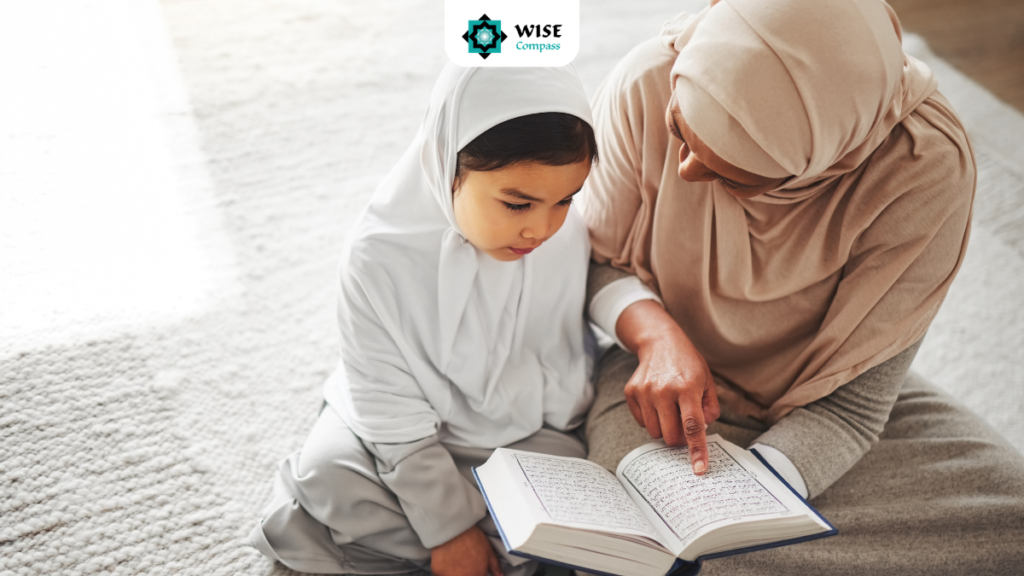
Teaching your child to read the noble Quran at home begins with establishing a calm, consistent routine and introducing the Arabic alphabet through a structured programme such as the Noorani Qaida (a standardised beginner tool used globally).
Most children are ready to start between the ages of four and six years, though every child’s pace will differ. The key is to pair daily practice, even just 10 to 15 minutes, with warmth, encouragement, and an understanding of why this recitation is so spiritually significant. With the right approach, home-based Quran learning can become one of the most bonding and rewarding actions in your family’s day.
For many Muslim parents, hearing their child recite the noble Quran correctly is among the deepest joys they can imagine. Yet the path to getting there, finding the right method, sustaining motivation, and knowing when to push and when to step back can feel genuinely daunting, especially for parents whose own Arabic literacy is limited.
This guide walks you through the entire journey: from choosing your first resource to building a routine that your child will actually look forward to – all rooted in love for Allah Almighty and the Sunnah (Practice) of holy Prophet Muhammad ﷺ.
Before diving into the different methods of learning and teaching, it helps to anchor this effort in understanding its spiritual weight. Allah Almighty has promised extraordinary reward for those who recite, learn, and teach His Divine book, the noble Quran.
The immense reward of Quranic recitation is captured in a Hadith that every parent should hold close. It is recorded in Sahih Bukhari, Hadith 5027, that holy Prophet Muhammad ﷺ said:
‘The best among you are those who learn the Quran and teach it.’
When you sit down with your child and help them read even a single letter of the noble Quran, you are participating in this very chain of transmission. You are helping your child benefit from the blessing mentioned in this Hadith and earning the reward of a teacher at the same time.
Allah Almighty reminds us of the ease and accessibility of His Divine book, the noble Quran. As Allah Almighty states in the noble Quran at Surah Al Qamar (54), Verse 17:
وَلَقَدْ يَسَّرْنَا ٱلْقُرْءَانَ لِلذِّكْرِ فَهَلْ مِن مُّدَّكِرٍ
Wa laqad yassarnal-Qur’aana lidhdhikri fahal min muddakir
And We have certainly made the Quran easy for remembrance. So is there any who will remember?
This verse is a direct reassurance from Allah Almighty to parents who feel unqualified or overwhelmed. The task has been made easy; your sincere effort and consistent presence are what Allah Almighty asks of you.
✅ Parenting Tip
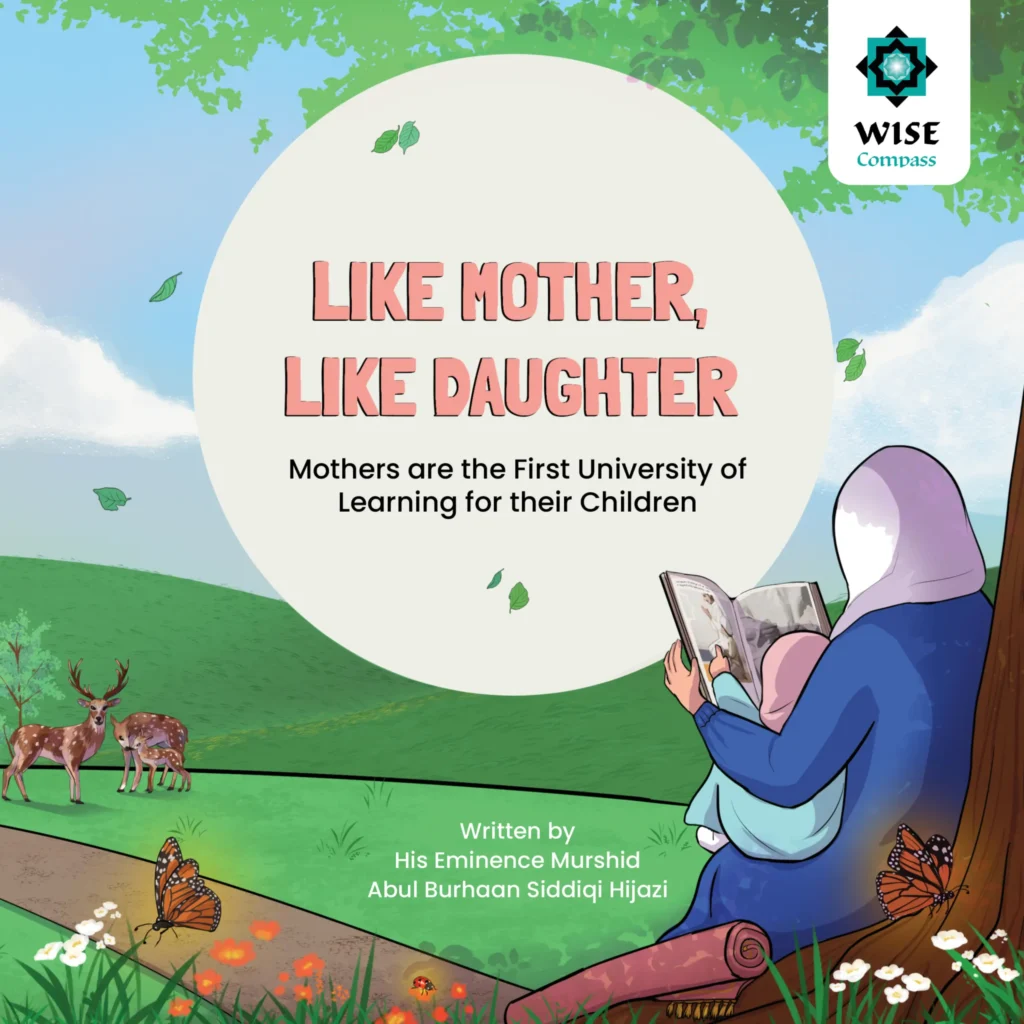
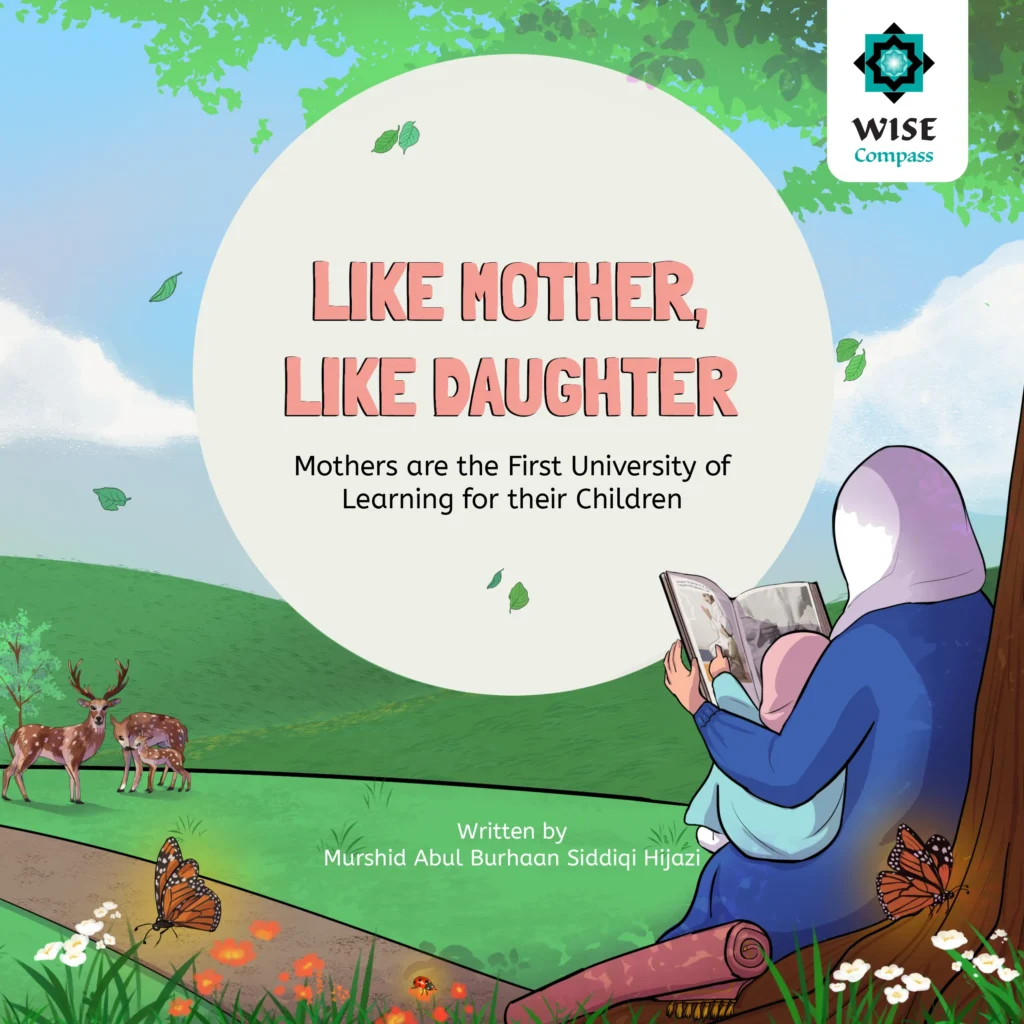
If you are looking for a story that captures the spirit of patiently nurturing your child’s learning, take a look at Like Mother, Like Daughter from the Wise Compass library. This story beautifully explores the bond between a Muslim mother and her child and how values and dedication pass from one generation to the next – exactly the spirit you are cultivating when you teach the Quran at home.
Before the very first lesson, make a sincere Niyyah (Intention), not just for your child’s benefit, but for yours. Ask Allah Almighty to place Barakah (Blessing) in your efforts, to grant your child ease in learning, and to accept this act of worship from your family.
Teach your child this simple Dua before beginning any lesson or task:
Arabic:
رَبِّ زِدْنِي عِلْمًا
Transliteration: Rabbi zidni ‘ilma
Meaning (Simple English): O my Lord, increase me in knowledge.
Reciting this together at the start of every session transforms the lesson into an act of Ibadah (Worship) and teaches your child that all learning begins with turning to Allah Almighty.
Most children can begin recognising Arabic letters between the ages of four and six years. However, readiness matters far more than age. Signs that your child is ready include:
For children who are ready, the standard starting point across most Muslim families worldwide is the Noorani Qaida, a primer designed specifically to teach Arabic letter recognition, pronunciation, and linking letters in sequences before moving to actual Quranic verses. Many families also use the Baghdadi Qaida or more contemporary programmes such as Iqra or Quran Explorer.
For younger children (ages 4-6):
You can explain this to your child in this way:
‘We are going to learn the special letters that make up Allah Almighty’s book, the noble Quran. These are the most important letters in the whole world.’
Children learn better when they associate a specific space with a specific activity. This does not require a separate room; a clean corner, a small mat, and a dedicated Quran stand or book rest are enough. Ensure the space is:
Consistency is the single most important factor in learning to read the noble Quran at home. A daily 10-minute session will produce far better results than an irregular 40-minute session once or twice a week.
The best times for most families tend to be:
You should choose a time that is best suited to your child, a time that is calm and does not compete with hunger, tiredness, or screen time.
✅ Parenting Tip: The Weekly Quran Journal
Keep a small notebook dedicated to your child’s Quran learning.
Each week, write down one letter, word, or short verse your child has successfully learnt. Let your child draw a small star or sticker next to it.
Reviewing this at the end of each month allows both of you to see visible progress, which is one of the most powerful motivators for young learners.
You can also use it as a gentle Muhasabah (Self-reflection) tool and encourage your child to ask: ‘What did we manage this week? What does next week look like?’
Tajweed refers to the set of rules that govern the correct pronunciation and recitation of the noble Quran. Many parents make the understandable mistake of prioritising speed, to get the child through as many Surahs as possible, over accuracy of pronunciation. The noble Quran should be recited as it was revealed, and beginning with correct pronunciation is the best way to do this.
Learning with Tajweed from the outset is far easier than correcting entrenched mispronunciation habits later. The action of practicing and perfecting pronunciation is also highly beneficial for cerebral development in children, as it is a language learning practice that engages many areas of the brain. Children have higher neural plasticity than adults and can pick up language reading and speaking quicker from the earliest ages,
If your own Tajweed is limited, this is an ideal time to learn alongside your child. Many reputable online teachers offer parent-child Tajweed sessions, and platforms such as Bayyinah TV, SeekersGuidance, and Al-Azhar Online provide structured beginner courses.
The classical method of Quran teaching relies heavily on Tikrar (Repetition). A letter, a word, or a verse is repeated aloud, ideally with the parent, until it is firmly embedded. Modern research on language acquisition strongly supports this approach.
Keep your reward system sincere and proportionate. Praise effort over outcome. When a child struggles in their learning, model patience. You can remind them (and yourself) of the Islamic principle that is famously recorded in Hadith that someone who struggles with Quranic recitation receives a double reward.
This Hadith offers enormous comfort to struggling learners and parents alike and is worth sharing with your child from an early age. It is recorded in Sahih Bukhari, Hadith 4937, that holy Prophet Muhammad ﷺ said:
‘The one who is proficient in reciting the (noble) Quran will be with the noble, righteous, and obedient scribes (Angels), and the one who recites it and finds it difficult, stumbling over its verses, will have a double reward.’
One of the most common missed opportunities in home Quran teaching is treating Arabic recitation as entirely separate from understanding. You do not need to deliver a scholarly Tafseer (Exegesis, explanation of sacred texts), but even the briefest glimpse of meaning can ignite a child’s love for what they are reciting.
When your child learns the first Chapter of the noble Quran, Surah Al Fatiha, for example, you can explain that they are speaking directly to Allah Almighty and asking Him for guidance. When they learn Chapter 112, Surah Al Ikhlaas, you can explain that this short Surah tells us exactly Who Allah Almighty is.
For children (ages 5-8):
You can explain this to your child in this way:
‘Every time you recite Surah Al Fatiha, you are talking directly to Allah Almighty. He listens to every single word you say.’
‘Every time you recite Surah Al Ikhlaas, you are learning some important things that Allah Almighty wants you to know about Him.’
There will be days when your child does not want to sit for their lesson. This is normal and should not be treated as a crisis. The goal is to build a lifelong relationship with the noble Quran, and that relationship must be rooted in love, not dread.
On days when they feel resistant, try these:
The routine must be maintained, but its intensity can be flexible.
Teaching the noble Quran is ultimately about nurturing steadfastness, the willingness to keep going even if progress feels slow.
✅The Wise Compass story An Oasis in the Desert carries this very lesson at its heart: a young prince who leaves behind ease and comfort to live with honesty and patient effort, discovering that the most meaningful growth happens quietly, away from shortcuts.

Read it with your child this evening, and afterwards, ask, ‘What do you think the prince had to keep practising to get good at his new life?’
Let the conversation find its own way to relate to Quran learning.
Closing each lesson with a shared Dua reinforces that the session was not merely an academic exercise but an act of worship. The following Dua seeks Allah Almighty’s acceptance and continued guidance:
Arabic:
اللَّهُمَّ اهْدِنِي فِيمَنْ هَدَيْتَ
Transliteration: Allahumma ihdinee feeman hadayt
Meaning (Simple English): O Allah Almighty, guide me among those whom You have guided.
Most children are developmentally ready to begin recognising Arabic letters between the ages of four and six years. However, readiness varies; the key indicators are the ability to concentrate for short periods and a basic understanding that the Noble Quran is something special. Starting too early with a child who is not ready can create negative associations; it is better to wait a few months and begin positively.
Yes, absolutely. Many parents learn alongside their children, using the same Noorani Qaida or beginner programme. Others use a qualified online Quran teacher for the formal reading instruction while taking responsibility for creating the daily routine, maintaining motivation, and building the spiritual context at home.
Your role as the parent, the one who encourages your child and makes the lesson happen every day, is irreplaceable, regardless of your own Arabic proficiency.
For children aged four to six years, 10 minutes per day is sufficient and often ideal. For children aged seven to ten years, 15 to 20 minutes is appropriate. The quality and consistency of the sessions matter far more than their length. A focused 10-minute daily lesson will outperform an irregular 40-minute session every time, both for retention and for the emotional associations your child builds with reading the noble Quran.
Apps and online teachers are valuable supplements for learning, but they work best alongside active parental involvement rather than as a replacement for it. Apps such as Quran Companion or Tarteel can reinforce daily practice and help with letter recognition. An online Quran teacher provides expert pronunciation teaching and correction that most parents cannot.
However, neither replaces the spiritual and emotional significance of a parent sitting with their child and demonstrating, through their own presence, that learning the noble Quran is the most important thing in the home.
Resistance is common and rarely means your child dislikes the noble Quran; it usually means the current format, timing, or duration is not working. Try shorter sessions, a different time of day, or mixing up the activity (listening to a beautiful recitation, colouring Islamic art while listening, or learning one new word together instead of formal reading).
Never make the lesson a source of confrontation or fear. The long-term goal is to have a loving relationship with the noble Quran, and that relationship is built over years, not won in a single difficult session.
Memorisation and reading reinforce each other powerfully when done together. Play short Surahs during car journeys, mealtimes, or before bed; passive listening builds phonetic familiarity long before a child can read.
In this way, when your child is learning Surah Al Fatiha or Surah Al Ikhlaas in their reading lesson, they will find that they already half-know the sounds. Repetition in Salah (Prescribed prayers), even for children who are still learning, reinforces Hifz (Memorisation) naturally over time.
The majority of contemporary Islamic scholars permit the use of digital Quran Apps and audiovisual resources as tools for learning, provided the content itself is handled with the same respect accorded to the physical Mushaf (Physical copy of the noble Quran). Children should understand that the words of Allah Almighty on a screen carry the same reverence as in print. Tablets and phones used for Quran learning should ideally not be on the same device used for entertainment immediately before or after a lesson, as this helps preserve the sense of respect and reverence.
✅Check out these books from the Wise Compass library: