


As the moon waxes and we find ourselves in the heart of the beautiful month of Shaban, a very special night approaches. Shab-e-Baraat, also known as Laylat Al Baraat or the Night of Salvation, is a time of immense mercy and the chance for a fresh start.
Falling on the night between the 14th and 15th of Shaban, this is a night where the gates of Heaven are flung wide open. It is a time for families to come together, reflect on the past year, and pray for a bright, blessed year ahead.
In the Islamic tradition, Shab-e-Baraat is often called the Night of Records. It is believed that on this night, Allah Almighty finalises our fate for the upcoming year, deciding our sustenance, health, and life events.
More importantly, it is a night of boundless forgiveness. It is recorded in Jami Tirmidhi, Hadith 739 that holy Prophet Muhammad ﷺ said:
“Indeed Allah Almighty, Mighty and Sublime is He, descends to the lowest Heavens during the night of the middle of Shaban, to grant forgiveness to more than the number of hairs on the sheep of (Banu) Kalb.”
The mention of Allah Almighty descending to the lowest Heaven represents an extraordinary act of Divine Love, where Allah Almighty extends His already abundant mercy and forgiveness even further towards any repentant and sincere person. On this night, the mercy and love of the Creator comes even closer to His creation, extending to ‘meet’ us exactly where we are, whatever state we are in – in our struggles, guilt, and hope. For a Muslim, this is a powerful reminder that you do not have to reach a state of perfection before asking for Allah Almighty’s help or having hope of being heard by Him. On this blessed night, Allah Almighty makes Himself even more accessible to the broken-hearted, the tired, and the repentant soul, reminding us that He is near and He is respondent.
This Hadith Shareef teaches us that Divine Mercy is not a limited resource. We often worry that our sins are too great, but this Hadith shatters that doubt. It reminds us that while our mistakes may feel like a mountain, Allah Almighty’s mercy is like the vast sky that covers everything.
This Hadith is a beautiful reminder that Shab-e-Baraat is a night for the entire Ummah. By describing such a vast number of forgiven souls, (more than the number of hairs on the sheep of a large flock) it inspires a sense of communal renewal. When a family stands in prayer, they are part of a global movement of hearts seeking to be better.
It also encourages us to find the strength to let go of negative behaviours, traumas and baggage that may be holding us back. It can help us find the strength and space to forgive those who have wronged us, just as we hope to be forgiven and receive from the boundless mercy from Allah Almighty.
The ultimate inspiration found in these words is the concept of a Divine Reset. We live in a world that rarely lets us forget our mistakes, but this Hadith promises a blank page. It tells every Muslim that their past does not have to define their future. On this night, the countless hairs of the sheep represent the infinite opportunities we have to start over. It is an invitation to shed the heavy weight of last year’s regrets and walk into the new year with a light heart and a purified soul.
This night is a gift, a chance to wipe the slate clean and ask Allah Almighty for freedom from calamities and hardships (Azaab).
While we strive to do good every day, Shaban holds a very unique position in the Islamic calendar. It is recorded in Sunan Nisai, Hadith 2357 that holy Prophet Muhammad ﷺ said:
“It is a month in which the deeds are taken up to the Lord of the worlds, and I like that my deeds be taken up when I am fasting.”
Think of this as the “Annual Report” of our spiritual lives. Throughout the year, every kind word, every hidden prayer, and every moment of patience have been recorded. In this blessed month, and specifically leading up to the middle of Shaban, these deeds are presented to Allah Almighty.
This gives the month a sense of beautiful anticipation. Just as a student feels a mix of nerves and excitement when handing in a final project, a Muslim approaches this time with a heart full of hope. It is an invitation to “finish strong.” By increasing our worship, fasting, and kindness during this time, we ensure that our “book of deeds” concludes its yearly cycle on a high note, wrapped in the fragrance of devotion and sincere repentance.
While not mentioned by name, many scholars associate this night with the “blessed night” mentioned in the noble Quran at Surah Al Dukkhan (44), Verses 3-4:
إِنَّآ أَنزَلْنَٰهُ فِى لَيْلَةٍ مُّبَٰرَكَةٍ إِنَّا كُنَّا مُنذِرِينَ
Indeed, We (Allah Almighty) revealed (this Quran) in the blessed night, undeniably so that We continue to caution (mankind of the negative consequences of their disobedience)
فِيهَا يُفْرَقُ كُلُّ أَمْرٍ حَكِيمٍ
In this night, the wisdom of every action is distinctively (stipulated between good and bad)
It is believed that Allah Almighty will reward you by fulfilling 70 worldly needs and 70 needs in the Hereafter.
Preparing for Shab-e-Baraat is as much about the heart as it is about our actions. Here is how your family can prepare:
It is said that this simple act can bring the forgiveness of 40 years of sins!
The beauty of this night lies in Nawaafil (Voluntary acts of goodness and prayer).
Here are a few ways to focus your worship:
Perform 2 Nafal Rakat of prayer after Maghrib.
In the first Rakat, recite Surah Fatiha (Chapter 1) as normal, followed by Surah Ikhlaas (Chapter 112) three times and Surah Falaq (Chapter 113) once after.
In the second Rakat, recite Surah Ikhlaas (Chapter 112) three times and Surah Naas (Chapter 114) once.
Then make Dua (Supplication) and ask Allah Almighty to protect your faith, with strength, sincerity, purity, resilience and steadfastness.
After the Maghrib prayer, perform 2 Nafal Rakat of prayer and recite Surah Yaseen (Chapter 36) once.
Then recite Surah Ikhlaas (Chapter 112) 21 times.
At the end, ask Allah Almighty for Barakah (Blessing) in your sustenance and that He may never make you dependent on anyone but Him.
Perform 20 Nafal after Maghrib Salah. After reciting Surah Fatiha (Chapter 1) in each Rakat, recite Surah Ikhlaas (Chapter 112) ten times.
If a person performs 100 Nafal Rakats of prayer on this night, it is said that Allah Almighty sends 100 Angels to:
Scholars such as Imam Ahmad Sawi and Imam Al Ghazali (in his famous book Ihya Uloom Al Deen) mention that for those who devote themselves to prayer on this night, Allah Almighty sends 100 Angels.
They each have specific roles:
Shab-e-Baraat is a wonderful night to build lasting memories for children. Since it is a night of fate being decided, it is the perfect time to teach them about the power of Dua.
Have children write down one thing they are sorry for (to ask for forgiveness) and one thing they want to ask Allah Almighty for in the coming year.
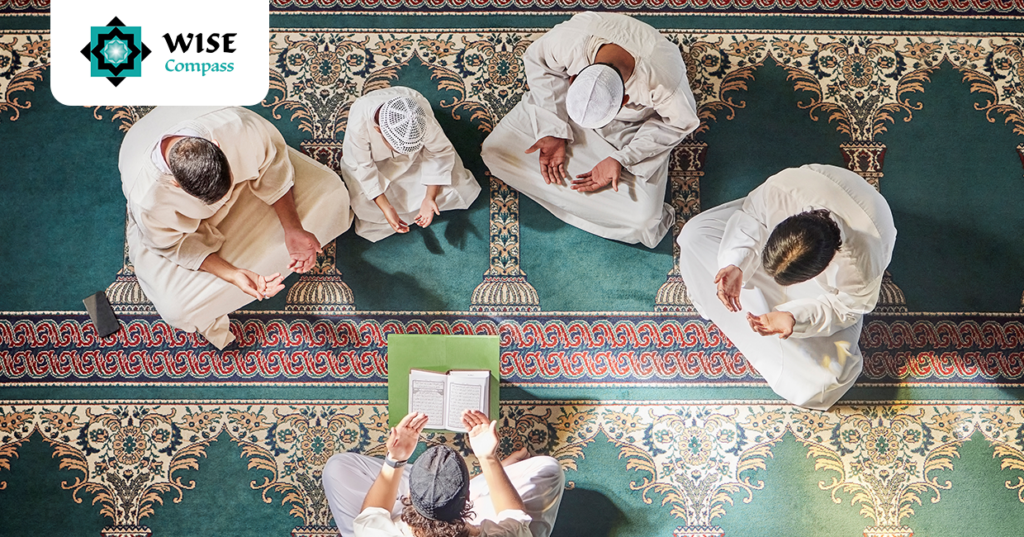
Sit together and recite Durood Shareef (Praise upon holy Prophet Muhammad ﷺ) abundantly. Children love the rhythm and peacefulness of Zikr and can benefit endlessly from this act of voluntary worship.
Teach them to pray for deceased family members. It is a beautiful way to connect them to their roots and teach them the value of asking for Allah Almighty’s mercy for others.
Tell them the story of the Angels being sent by Allah Almighty with grace and blessings for the sincere, worshipful believers on this night. It makes the night feel special and sacred for little hearts.
This helps children feel a sense of responsibility and pride in their actions, making the concept of ‘deeds’ feel tangible and rewarding rather than heavy or scary.
This night holds great significance for Muslims all over the world. It is the perfect time to fix our relationship with Allah Almighty, our families and our communities. By praying together and seeking a life of righteousness, we set the tone for the entire year.
Let us make this Shab-e-Baraat a turning point for our homes, inshaAllah!