

What helps when a child tells grand stories to look impressive, not truthful?
Parenting Perspective
Children sometimes tell exaggerated stories, claiming they scored ten goals when they did not or that something fantastic happened which clearly did not. This can be a cause for concern for parents, who may worry whether their child is lying or if this will become a habit. It is important to distinguish between playful imagination and deliberate dishonesty. Often, children tell ‘grand stories’ not to maliciously deceive, but to feel admired, gain attention, or boost their sense of importance. The challenge is to nurture their honesty while still respecting their creativity and emotional needs.
Understand the Root of the Exaggeration
When children invent grand tales, they are often seeking something deeper.
- Approval: They want others to be impressed by them.
- Belonging: They are trying to match or outshine the stories of their peers.
- Confidence: They are attempting to build a bigger image of themselves when they are feeling small inside.
Recognising this allows you to respond with empathy rather than with frustration.
Acknowledge Their Creativity First
Instead of immediately correcting the falsehood, you can begin by acknowledging their imaginative skill: ‘That is a really creative story. You have such a good imagination.’ This approach avoids shaming them and lets them know that you value their gift for storytelling.
Gently Separate the Story from the Truth
Once their creativity has been affirmed, you can gently guide them to distinguish between fact and fiction. You could say, ‘That is a wonderful story you have created. Now, let’s talk about what really happened.’ This is not a rejection of their story but a way of helping them to see the difference between imaginative play and a truthful account of events.
Teach Them That Honesty Is Impressive
Help your child to understand that their real achievements are valuable and impressive in their own right. You could say, ‘You only scored one goal today, but you ran so hard and kept trying your best. That is something to be truly proud of.’ This shifts their focus from needing to exaggerate to celebrating their genuine effort.
Help Your Child See Honesty in Action
Sometimes, the most powerful lesson does not come from a conversation; it comes from a story a child experiences alongside a character they care about. When children see a peer face the same temptation to look impressive and then find the courage to choose honesty instead, it lands differently than any parental explanation can.
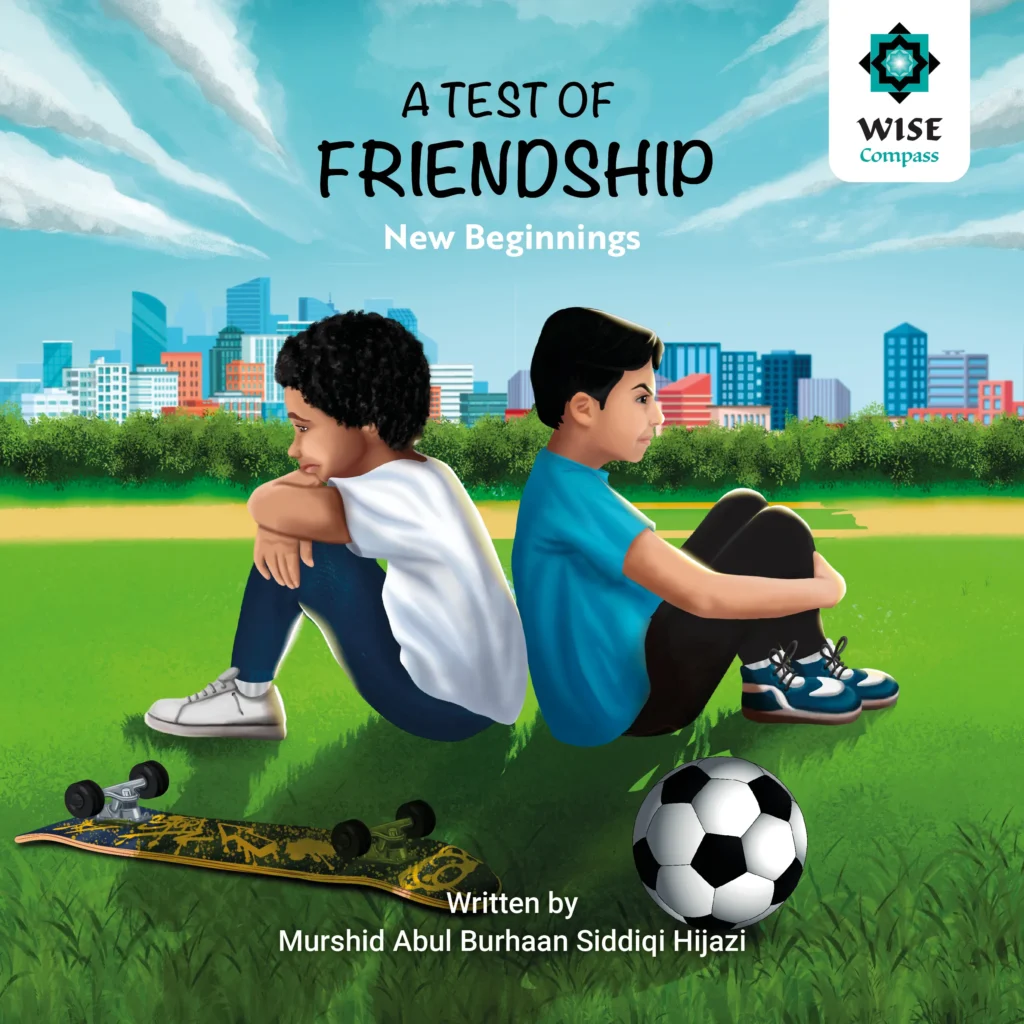
A Test of Friendship, from the Wise Compass library, tells the story of Zayn, a boy whose jealousy leads him to spread a misleading rumour about his friends only to discover that the story he told to feel better about himself ends up costing him the very friendships he wanted to impress. The moment Zayn finds the courage to admit the truth is the moment everything he had lost begins to come back. It is a story children feel, not just hear.
Reading it together creates a natural opening for you to ask your child: ‘Have you ever felt like Zayn like you wanted people to think you were more than you felt inside?’ That single question can open a more honest conversation than any direct confrontation about exaggeration ever could.


Provide Healthy Outlets for Storytelling
A child with a vivid imagination needs a dedicated space to express it. You can encourage them to:
- Write or draw their stories in a special notebook.
- Share their tales during a designated family story time.
- Make up exciting adventures with their toys.
Mini Dialogue Example
Child: ‘I climbed the tallest tree in the whole park and I touched the clouds!’
Parent: ‘Wow, that is a very exciting and creative story. You have such a big imagination! But let’s be clear about what really happened today. Did you climb part of the tree?’
Child: ‘Yes, I climbed up a few branches.’
Parent: ‘That is still wonderful! I am so proud of you for climbing so safely. And I love the way you can make the story of what happened sound so exciting.’
Spiritual Insight
Islam honours honesty as a cornerstone of faith while also valuing storytelling as a way to inspire and to teach. Helping a child to find the right balance between these two ensures that their creativity can flourish without drifting into dishonesty.
The Importance of Speaking the Truth
Allah Almighty states in the noble Quran, Surah Al Baqarah (2), Verse 42:
‘And do not mix the truth with falsehood, and do not conceal the truth, and you are fully aware (of what you are doing).’
This verse teaches us that mixing the truth with exaggeration is not the right path. You can explain to your child: ‘Allah wants us to share our stories honestly. It is wonderful to imagine fun things, but when we talk about something that really happened, we must tell it just as it was.’
True Honour Comes from Honesty
It is recorded in Jami Tirmidhi, Hadith 1971, that the holy Prophet Muhammad ﷺ said:
‘Truthfulness leads to righteousness, and righteousness leads to Paradise. A man continues to speak the truth until he is recorded with Allah as truthful. Falsehood leads to wickedness, and wickedness leads to the fire. A man may keep on telling lies until he is recorded with Allah as a liar.’
You can share the meaning of this with your child: ‘Being truthful makes Allah so happy with us that He writes our name down as one of His truthful servants. That is a greater honour than any big story we could ever make up.’
By combining the encouragement of their creativity with the Islamic call to honesty, you help your child to see that they do not need to exaggerate to be loved or admired. Their real efforts and truthful words are what will earn them trust, respect, and, most importantly, the pleasure of Allah.