

Why Do I or My Child Get Scared When Someone Raises Their Voice?
Parenting Perspective
If you find yourself asking, ‘Why do I get scared when someone raises their voice?’ know this: that jolt of fear, tension, or the urge to freeze, even in a harmless moment, is usually a trauma response rather than a personality flaw. It happens because your nervous system has learned, often from earlier exposure to loud conflict or unpredictable anger, to treat any raised voice as an early warning sign of danger. This reaction is automatic, not a choice, and children are especially prone to developing it. Below, we look at why this happens in children specifically and how parents can help soften and eventually rewire that fear response.
The healing process must begin with validating their sensitivity, not dismissing it as an overreaction. When your child reacts, get down to their level, soften your voice, and offer immediate reassurance: “You are safe. I know that loud voices can feel scary, but we are all okay.” Over time, you can help to rewire this association by narrating non-threatening situations where voices are raised, for example, “Baba is just calling from the other room; nobody is upset.”
This requires a parallel effort in your own emotional regulation. By modelling a calm tone even during moments of stress, you teach them that self-expression does not have to equate to aggression. Slowly and consistently, you can replace their fear with familiarity, showing them that a home can be loud with the sounds of life, rather than the sounds of harm.
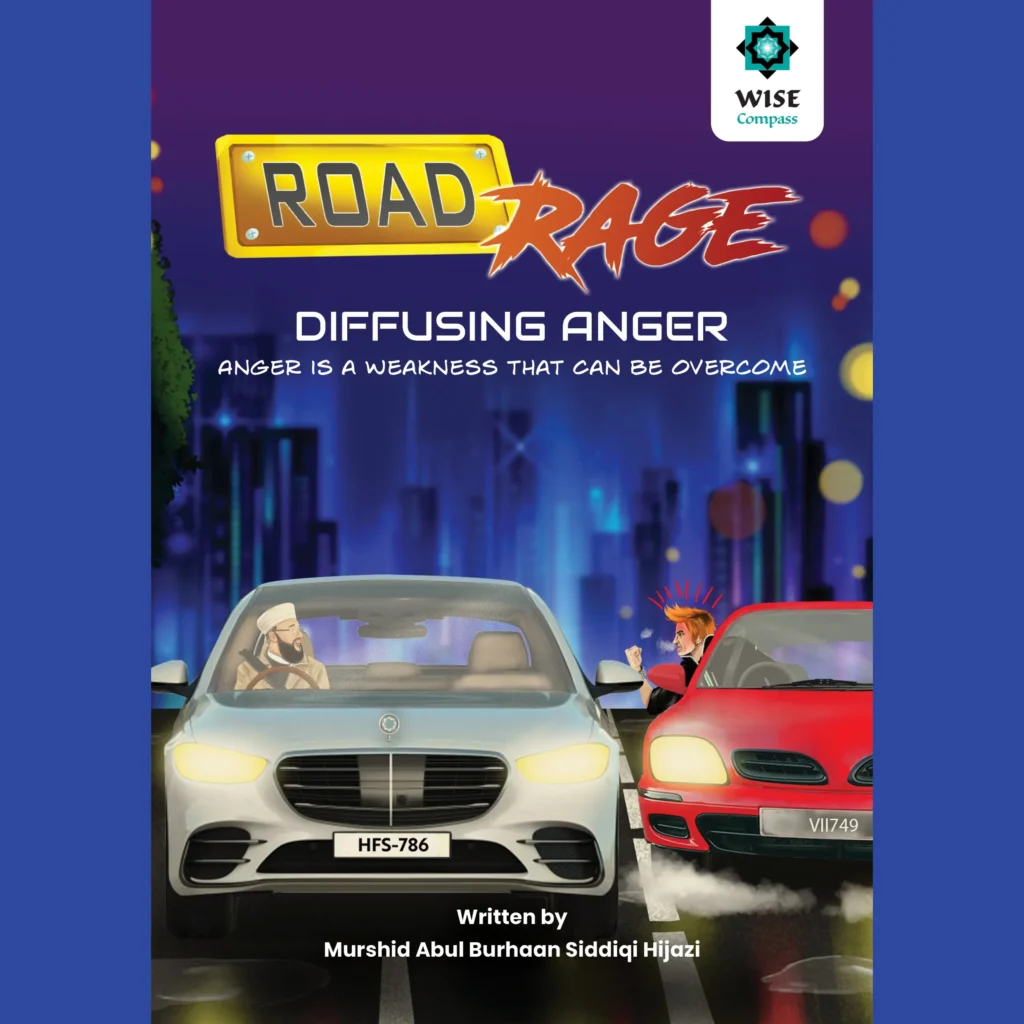
One of the most powerful things you can do for a child healing from this sensitivity is to let them see – through a story – that anger does not always win. Road Rage – Diffusing Anger is a Wise Compass story that does exactly that. It shows what happens when someone receives aggression and chooses gentleness in return and how far a kind word can travel. Reading it together gives your child a new picture of what is possible and begins to gently loosen the grip that their fear holds over them.

What to Look Out For When a Child Gets Scared of Raised Voices
- Flinching, freezing, or crying as an immediate reaction to a raised voice.
- Becoming hypervigilant and immediately trying to fix or soothe the situation.
- Withdrawing or becoming excessively compliant to avoid causing any trouble.
- Associating any raised tone with imminent emotional danger, even when the context is neutral.
Spiritual Insight
In Islam, the emotional impact we have on our children is of profound importance. The Prophet Muhammad ﷺ was known for his remarkable gentleness, even when correcting a mistake or expressing a strong emotion. He never used a harsh tone as a tool for control, especially with those who were more vulnerable than him.
Allah Almighty states in the noble Quran at Surah Al An’aam (6), Verses 151:
‘…And do not slaughter (or abort) your children out of poverty… ‘
This verse, while addressing a specific historical practice, carries a powerful symbolic meaning for parents today: we must never let our own pressures or fears, whether financial or emotional, be the cause of our children’s suffering. Our duty is to protect their peace, not to shatter it.
It is recorded in Jami Tirmidhi, Hadith 1921, that the holy Prophet Muhammad ﷺ said:
‘He who does not show mercy to our young ones… is not one of us. ‘
Mercy, in the prophetic sense, is not limited to physical care; it encompasses our tone, our timing, and the emotional safety we provide. Therefore, when your child recoils from a raised voice, they are not being dramatic. They are communicating that their nervous system needs gentleness in order to heal. The correct response is not shame, but softness. It is a call to make your home a sanctuary, not a source of alarm.