

How can I explain the Rizq meaning, that it includes all forms of sustenance, not just money?
The Rizq meaning in Islam refers to every form of provision Allah Almighty grants a person, not only money or material wealth. In Islamic teaching, Rizq includes food, good health, shelter, knowledge, loving relationships and inner peace, alongside financial provision. The noble Quran and the teachings of holy Prophet Muhammad ﷺ describe Rizq as a gift that is written and multiplied by Allah Almighty’s mercy, often in ways a person could never calculate or plan for. Teaching a child that Rizq means all forms of sustenance, not just money, helps them build gratitude for the everyday blessings they might otherwise overlook.
What Does Rizq Mean in Islam?
Rizq is an Arabic word that means ‘provision’ or ‘sustenance’. Unlike the everyday, narrower use of the word ‘provision’ in English, which people usually connect to income or a paycheque, the Islamic meaning of Rizq is deliberately wide. It refers to anything Allah Almighty gives a person that nourishes, benefits or sustains them, whether that provision is material, physical, emotional or spiritual. Understanding the full Rizq meaning is the starting point for teaching children true gratitude, since it shows them that Allah Almighty’s generosity reaches far beyond what they can save or spend.
Parenting Perspective
When we begin teaching our children about stewardship and provision, it is important to first establish the correct Rizq meaning, since children often equate it narrowly with money. To the young mind, accustomed to immediate material desires, Rizq is often narrowly equated with financial wealth. Our duty is to expand this perception, thereby nurturing a far deeper and more robust sense of gratitude and complete reliance upon Allah Almighty.
Expanding the Definition Beyond Finance
It’s important to make clear that the true Rizq meaning, within its authentic religious context, signifies all sustenance that nourishes, benefits, and sustains us throughout our lives, being vastly more extensive than mere monetary accumulation. To convey this truth effectively to developing minds, we must utilise tangible examples drawn directly from their immediate daily existence, demonstrating the breadth of Allah Almighty’s generosity.
Consider these everyday provisions: the nourishing food that provides them strength at mealtimes is Rizq; the robust health that allows them to run and play is a supreme form of Rizq; the shelter, warmth, and security they find within their home environment are vital blessings classified as Rizq. Furthermore, the love, affection, and profound emotional well-being they receive from family and community are crucial elements of their sustenance.
Even the basic necessity, the very air they breathe and the peace they enjoy, are integral parts of Allah Almighty’s boundless provision. It is essential that we help them fully grasp that Rizq is not limited to the tangible currency they may save or spend; it includes every blessing and benefit Allah Almighty grants that underpins a meaningful, God-conscious life.
A story that brings this lesson to life
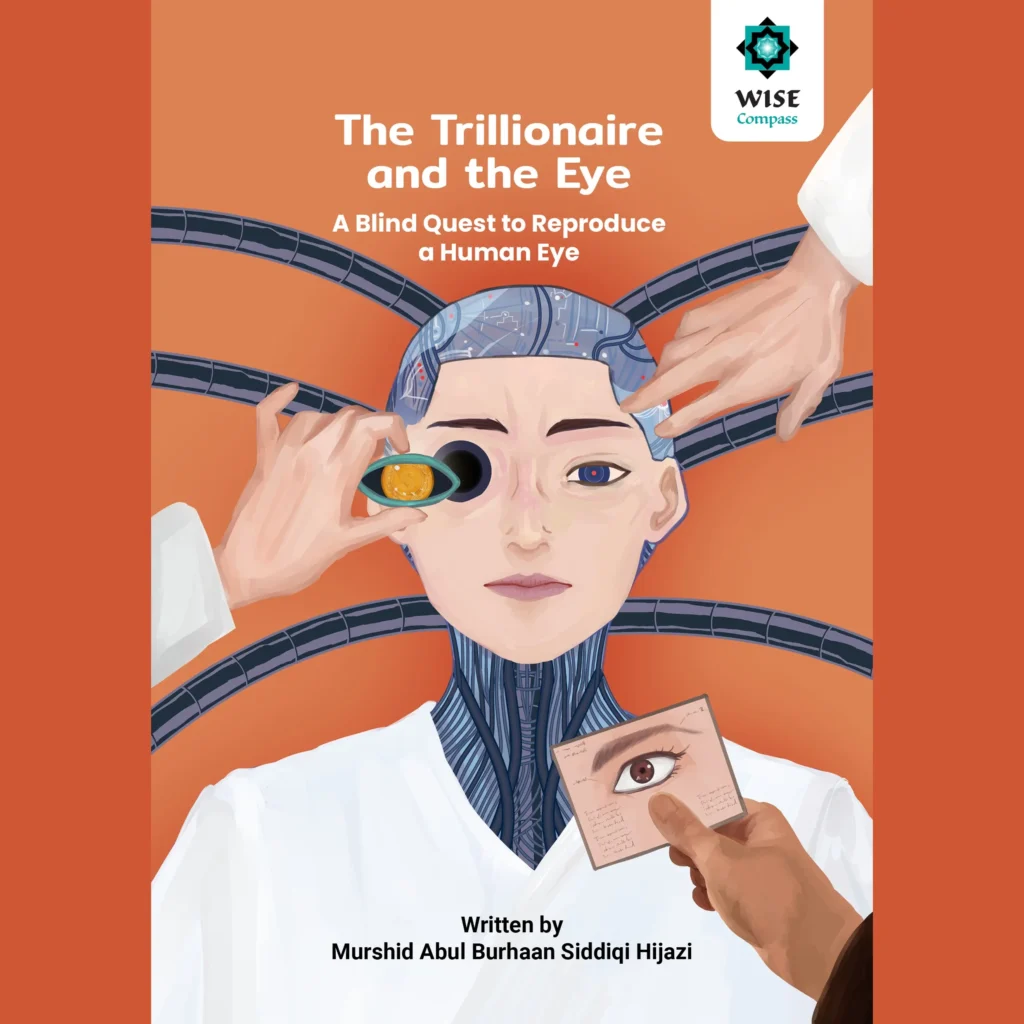
Sometimes children absorb an idea more deeply through a story than through explanation alone. In The Trillionaire and the Eye, a man with more wealth than he could ever spend sets out to achieve one final ambition — only to discover that money, however vast, cannot buy him everything he truly needs. It is a gentle but powerful illustration for children that Rizq (Sustenance) and true fulfilment come from Allah Almighty alone, not from riches or material success. Reading it alongside this discussion can help your child connect the concept of Rizq to a memorable character and story, making the lesson stick long after the conversation ends.


Connecting Stewardship to All Blessings
Once children grasp the holistic nature of Rizq, their concept of responsibility naturally deepens. They begin to understand that they are not merely the custodians of their pocket money but stewards over their physical health, their precious time, and the intellectual gifts bestowed upon them. This wider perspective fosters an attitude of perpetual thankfulness for both the visible and the invisible provisions, properly preparing them to appreciate the entirety of Allah Almighty’s grace.
Spiritual Insight
The profound understanding that Rizq encompasses all sustenance is a cornerstone of true Islamic Tawakkul (complete trust in God). It reframes existence as an experience wholly sustained moment by moment by Divine Mercy, which inherently demands continuous acknowledgement and gratitude across every facet of life.
The Quran employs powerful, evocative imagery to illustrate that Allah Almighty’s provision is dynamic and possesses the capacity for infinite multiplication, extending far beyond the limited metrics of human financial exchange.
Allah Almighty states in the noble Quran at Surah Al Baqarah (2), Verse 261:
‘The example of those who spend their wealth in the way of Allah Almighty is like a seed of grain which grows seven ears, and in each ear is a hundred grains…’
This magnificent analogy beautifully illustrates the boundless nature of Rizq. Although the context involves the spending of wealth, the fundamental underlying promise relates to the multiplication of blessing across both the spiritual and material spheres.
The provision supplied by Allah Almighty is demonstrated to be limitless and varied; it is not restricted to the physical currency that is dispersed but also encompasses immense spiritual reward and, frequently, unforeseen material dividends. This confirms that Rizq must be appreciated not only in what we earn through labour but also in every beneficial aspect of our existence, reminding us that provision is a holistic, integrated gift from our Creator.
The blessed tradition of holy Prophet Muhammad ﷺ powerfully reinforces this concept, assuring believers that Allah Almighty’s provision often manifests in ways that entirely defy human projection or financial planning, frequently favouring those who are sincere in their obedience.
It is recorded in Sunan Ibn Majah, Hadith number 3819, that holy Prophet Muhammad ﷺ said:
‘Whoever persists in asking for forgiveness, Allah Almighty will grant him relief from every worry, and a way out from every hardship, and will grant him provision from (sources) he could never imagine.’
This Hadith offers crucial spiritual insight: the Rizq granted by Allah Almighty to those whom He favours often surpasses what they could possibly conceive or calculate through worldly means. This sustenance is delivered in every form of good, perhaps manifested as renewed health after an illness, the gift of profound wisdom, loyal companionship, or sudden clarity of purpose.
By teaching children this principle, we anchor their reliance upon the immense capability of Allah Almighty, instilling the belief that while striving for Halal income is an obligation, their ultimate security and true well-being depend wholly upon the infinite, compassionate generosity of their Creator.
Understanding the Rizq meaning helps children see provision as something far bigger than money. Rizq encompasses far more than money; it includes every blessing and provision granted by Allah Almighty, from nourishing food and good health to love, emotional well-being, shelter, and peace. Teach your child that these everyday gifts are all forms of Rizq, demonstrating Allah Almighty’s boundless generosity. Help them understand that they are stewards not only of wealth but also of their time, health, and talents, cultivating a heart of gratitude and responsibility.
Explain that true provision often surpasses human expectation, as Allah Almighty multiplies blessings in both material and spiritual forms. By striving sincerely and trusting in Allah Almighty, children learn that their ultimate sustenance, protection, and success come from His infinite mercy and care, fostering reliance, contentment, and deep thankfulness.