










Raising a child with strong values in today’s world means intentionally anchoring everyday conversations, stories, and routines in those values, like honesty, empathy, patience, and gratitude, rather than leaving character formation to chance. Parents can achieve this by modelling the behaviour they want to see, using real and relatable stories to make abstract values tangible, and creating consistent home routines rooted in faith.
The noble Quran and the blessed example of holy Prophet Muhammad ﷺ offer a complete blueprint for character-building that remains relevant regardless of what era we are in – and despite the current pressures of social media, peer influence, and a fast-changing world. Small, repeated moments of guidance matter far more than one big lecture. With patience and consistency, children absorb the Islamic values that will shape their life’s decisions long after they leave home.
Every parent wants their child to grow into someone honest, kind, and grounded. But in a world full of shifting social norms, screens and constant distraction, raising a child with strong values takes more than good intentions; it takes a deliberate approach. Below are practical, faith-rooted steps that any parent can start using today.
Values are not taught in a single sitting or lecture; they are absorbed gradually through consistent exploration and discussion. Through the small conversations that happen at breakfast, in the car, or at bedtime, parents can connect with their children through conversation that addresses, explores and teaches values. Allah Almighty reminds us of the importance of consistent moral guidance through the advice of Prophet Luqman (AS) to his son, as recorded in the noble Quran in a passage often used as a model for parenting rooted in Tawheed (Belief in the Oneness of Allah Almighty) and good character. This makes it a natural starting point when discussing values with children, whatever their age:
Allah Almighty states in the noble Quran at Surah Luqman (31), Verse 13:
وَإِذْ قَالَ لُقْمَٰنُ لِٱبْنِهِۦ وَهُوَ يَعِظُهُۥ يَٰبُنَىَّ لَا تُشْرِكْ بِٱللَّهِ ۖ إِنَّ ٱلشِّرْكَ لَظُلْمٌ عَظِيمٌ
Wa iz qaala Luqmaanu libnihee wa huwa ya izuhoo yaa bunayya laa tushrik billaah; innash shirka lazulmun azeem
And [mention, O Muhammad], when Luqman (AS) said to his son while he was instructing him, ‘O my son, do not associate anything with Allah Almighty. Indeed, association [with Him] is a great injustice.’
For younger children (ages 4-7 years), you can explain it in this way:
‘We can see from this example how Prophet Luqman (AS) was a wise father who talked to his son gently and taught him to always remember Allah Almighty in everything he does. That is the best way for all of us to treat each other and the best way for us to remember Allah Almighty, Who has given us everything.’
Children remember stories far longer than they remember rules. Rather than simply telling a child ‘always tell the truth’, you can show them what honesty costs and what it earns through a real example. The Wise Compass story Honour Amongst Thieves follows a young man surrounded by 60 dangerous thieves who must choose between a comfortable lie and a promise of truthfulness made to his mother. It is a powerful, true account that helps children see honesty not as an abstract rule but as a choice with real consequences and real rewards. This is exactly the kind of Tarbiyah (Nurturing upbringing) that impacts a child and makes it easier for them to understand how values apply in their own lives and their own choices.

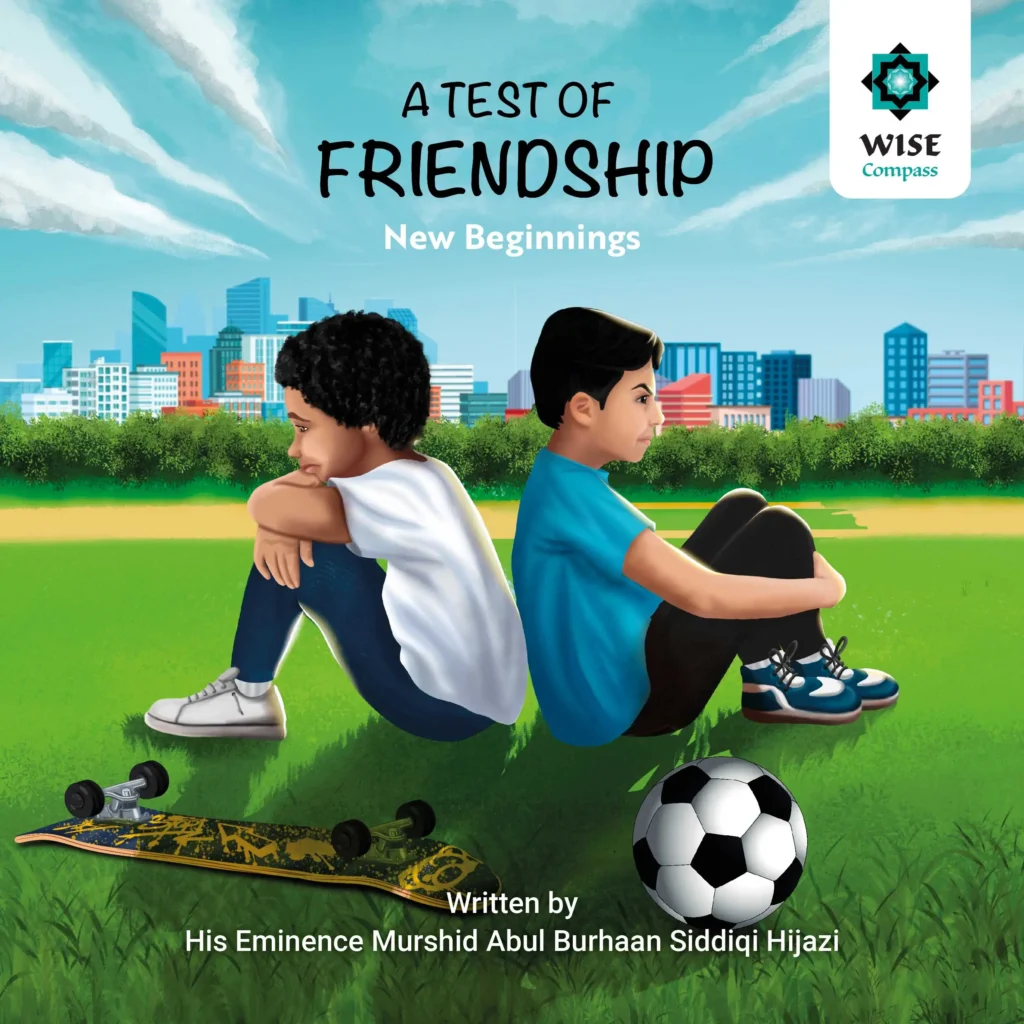
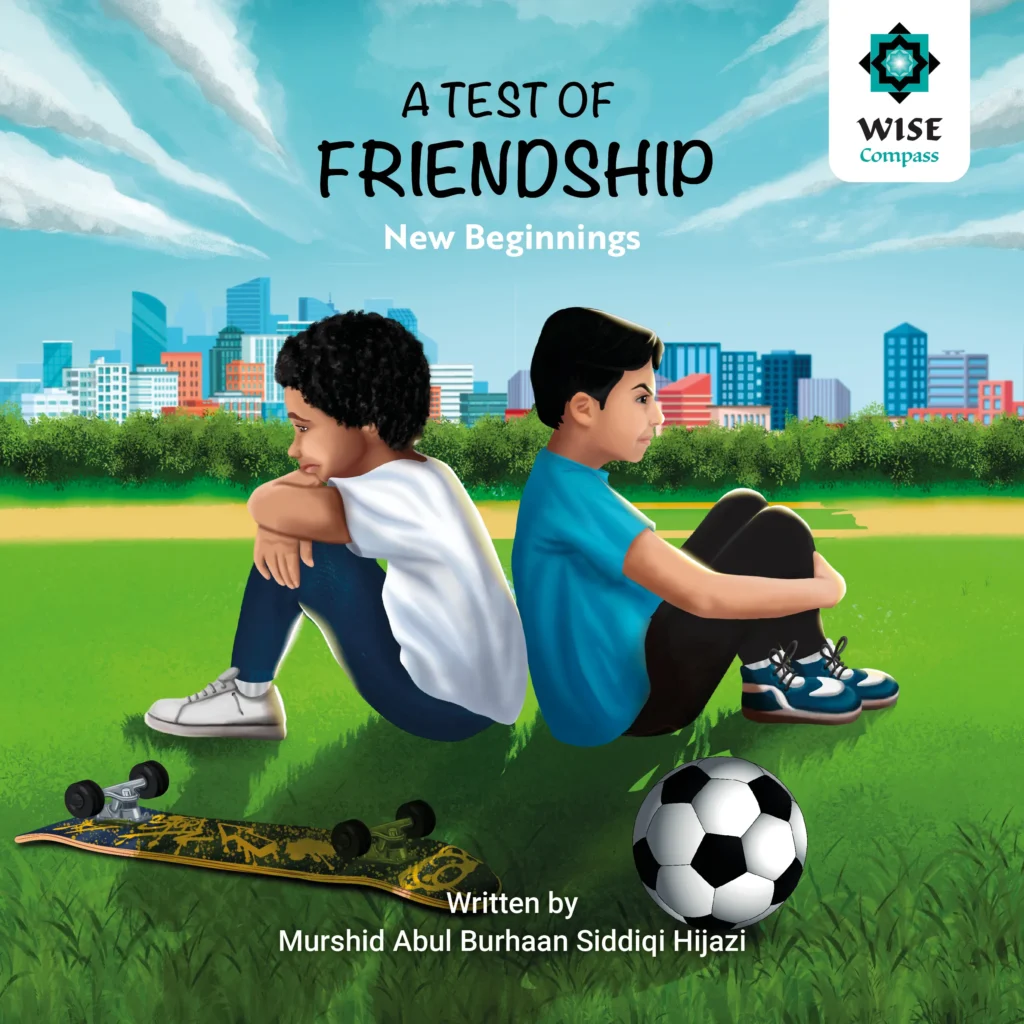
Jealousy, misunderstandings, and fallouts are a normal part of childhood friendships, but how a child handles them can shape their character for life. The Wise Compass story A Test of Friendship follows three friends navigating jealousy, a hurtful rumour, and the courage it takes to admit a mistake and make amends. Reading and discussing stories like this with your child gives them an opportunity to think about these issues without any pressure and gives them a safe space to talk about their own friendships and feelings as well as helping them to build their capacity for Sabr (patience) and forgiveness before real conflicts arise.
Anger is one of the hardest emotions for children and adults to manage well – both when they process and experience it themselves and when they are subjected to it by others. The Wise Compass book Road Rage – Diffusing Anger shows how a moment of misdirected frustration can be diffused entirely through a kind and compassionate response. By using a story to broach this sensitive subject, parents can help their child think about the topic without any embarrassment and ease them into discussion about it. Using this story also means that parents can start conversations about how their child responds when they feel wronged or under attack by someone’s misdirected anger and gently model that responding with patience is always a stronger choice than reacting with anger.

Children absorb far more from what they observe than what they are told. This principle is beautifully captured in a well-known Hadith about parental responsibility. It is recorded in Sahih Bukhari, Hadith 893, that holy Prophet Muhammad ﷺ said:
‘Each of you is a shepherd and each of you is responsible for his flock.’
This Hadith is a reminder that a parent’s own honesty, patience, and Akhlaq (character) become the template that their child will copy, often without even realising it.
A consistent bedtime or wind-down reading routine gives parents a natural, low-pressure way to introduce values night after night. Forming a habit of reading stories that teach and embody positive values is one of the best gifts any parent can give to their child. For younger children, bedtime stories for kids that carry gentle, faith-based lessons help build a moral vocabulary early on. As children grow older and start reading independently, moving on to books for age 7+ keeps the habit alive while introducing more nuanced themes such as honesty, justice, and self-control. In both cases, children are taught critical and independent thinking about how they experience and understand themselves and given a strong, personal foundation of positive values.
Unregulated screen time, social media, and peer pressure make it harder than ever for values to take root without deliberate effort – for adults and children alike! Surrounding your child with a steady stream of positive, faith-based input helps counterbalance the noise of the outside world. Through conversation, discussion, role-modelling and quality Islamic stories for kids, you can help keep their moral compass strong and pointed in the right direction.
Character-building can begin as early as toddlerhood through simple, consistent modelling, gentle words, sharing, and patience shown by the parent. Formal conversations about values become more effective from around age four, when children can start to understand cause and effect and relate to short stories with a clear lesson.
The most effective approach is indirect: use stories, real-life examples, and your own behaviour rather than repeated verbal instructions. Children tend to switch off during lectures but stay engaged with a story, a discussion question, or a moment they can relate to from their own day.
This is common and does not mean your efforts are failing or that your child will not be able to benefit from your teaching. Always remember that your child has been entrusted to you, and that you are not there to harshly dictate to them, nor are you there to appease and spoil them. Keep home a safe space for open conversation; acknowledge what your child is exposed to outside and use those moments as discussion points rather than shutting the topic down.
Your role as their parent is to guide them, which means that you should nurture their ability to think for themselves, with wisdom, compassion and consideration. This will mean challenging them as well as supporting them. This builds their own ability to reason through conflicting influences as well as building trust between you.
Excessive or unsupervised screen time can expose children to values, language, and behaviour that are detrimental to their development and may conflict with what parents are trying to instil. Practically speaking, it also reduces the time available for conversations and shared reading that will help build their character and independent thinking skills. Setting clear limits and choosing quality content together helps ensure that screen use is supportive, rather than undermining, to a child’s development.
Yes. Consistency matters more than quantity of time. A few minutes of focused conversation at dinner, a short meaningful bedtime story, or a brief mindful discussion in the car can be just as impactful as long stretches of time, as long as they happen regularly. It is effective for both parents to make a co-ordinated effort to connect with their child – working together as a team can make it manageable no matter what your particular home life or lifestyle may be.
Sharing the task of story time or maximising car journey time with meaningful conversation, depending on which parent is available, not only gives your child consistent nurture, but it also presents a united tag-team of parents who love and care for them.
As a parent, you should be deliberate and intentional about who you allow into your child’s life. You should ensure that anyone with a significant relationship with your child is aware and committed to reinforcing the same values and nurture that you intend for them. Grandparents, aunts, uncles, and the wider community can often reinforce the same lessons a child hears at home, giving them additional role models and a broader sense of accountability. A supportive community can give children a sense of belonging that strengthens their values.
Look for small, consistent signs rather than perfection: a child who apologises unprompted, shares without being asked, or pauses before reacting in anger is showing that the lessons are taking root. Mistakes may still happen, but the end goal is for their lifelong, holistic development.