




Few words carry as much weight or as much misunderstanding in the Mawlid conversation as bid’ah. Once you understand how the term actually works in Islamic scholarship, it becomes clear why most scholars never saw Mawlid as a problem in the first place.
A common misconception is that bid’ah simply means “forbidden innovation”. In reality, classical scholarship most notably articulated by Imam al-Shafi’i and later Imam al-Suyuti draws a clear distinction:
Mawlid, under this well-established framework, falls squarely into the first category: a new form for an old, universally accepted substance: love and remembrance of the Prophet ﷺ.
This isn’t a theoretical workaround. Islam already embraces numerous practices not done in exactly the same form during the Prophet’s ﷺ lifetime yet considered entirely legitimate, the compilation of the Qur’an into a single mushaf under Abu Bakr and Uthman, the establishment of organised tarawih prayers in congregation under Umar (who himself called it “a good innovation”), and the founding of Islamic universities and formalised madrasahs. Mawlid sits comfortably alongside these precedents.
A smaller body of scholarship, mainly within Salafi thought, holds that no innovation in matters of worship should be categorised as good, however beneficial it appears. This is a sincerely held methodological position, even where it represents the less widely followed view historically.
The “good innovation” framework isn’t a loophole, it’s a longstanding, respected tool within Islamic legal theory, used by some of the most rigorous scholars in Islamic history to evaluate exactly these kinds of questions. Applied consistently, it explains why Mawlid, tarawih in congregation, and the compiled mushaf are all celebrated rather than questioned.
Given this well-reasoned majority position, most scholars see nothing to hesitate over: gathering to recite the seerah and celebrate the Prophet’s ﷺ birth is a legitimate, praiseworthy expression of faith, not a risky departure from it.
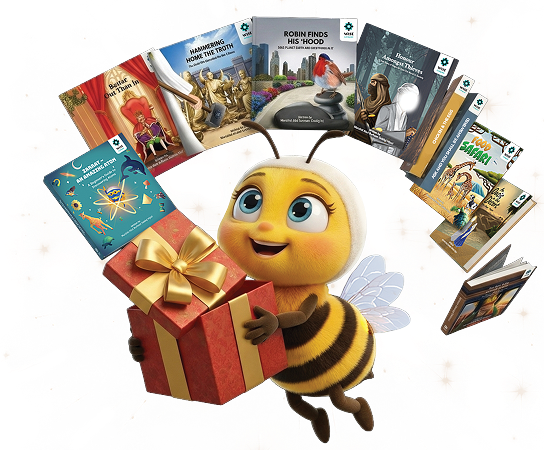
Bring the spirit of remembrance into your home this Mawlid with our Seerah books for kids; a simple, joyful way to mark an occasion embraced across the Muslim world.