


The Islamic New Year is marked by the sacred month of Muharram, the first month of the Islamic lunar calendar. This month commemorates the Hijrah (Migration) of Holy Prophet Muhammad ﷺ from Makkah to Madinah in 622 CE. Unlike other cultural new years that are often celebrated with fireworks, parties or over-indulgence, Muslims greet the Islamic New Year and the month of Muharram with quiet reflection, gratitude, and renewed intention.
There is a particular day in Muharram that holds deep spiritual significance, and it has been recommended by Holy Prophet Muhammad ﷺ for Muslims to fast on this day and on either the day before or the day after as well. It is the 10th of Muharram, known as Yaum-e-Ashura (The Day of Ashura). As a parent, this is a beautiful opportunity to teach your child about:
Every year, when the Islamic New Year arrives, many Muslim families find themselves navigating a quiet tension. While the widely-known and followed traditions of the Gregorian New Year fill screens and streets with celebration, the Islamic New Year slips in gently, without fanfare, without any grand countdown or excitement. and children notice.
They notice when something that their family and faith holds sacred is not seen as that by others – when something personally important is not apparently publicly valued. Without context and conversation, that difference can become internalised as confusion, or worse, a feeling that their faith tradition has nothing worth marking or celebrating.
But it does. It has something far more enduring than fireworks or fanfare. And it is up to us as parents and caregivers for children to make sure they know their history, their heritage, and their real heroes.
The Islamic New Year is not quieter because it is less important. It is different because what it commemorates is different, a migration made in fear and faith, a new beginning built not on noise but on trust in Allah Almighty. Teaching your child this from an early age plants a seed of Islamic identity that, Insha’Allah (If Allah Almighty Wills), will grow strong.
This guide gives you the knowledge, the language, and the tools to have that conversation and begin your child on their journey to faith from their earliest years.
The Islamic calendar is a Qamariyya (Lunar) calendar; it follows the cycles of the Moon rather than the Sun. Each month begins with the sighting of the new crescent Moon, and a Hijri (Islamic calendar) year is approximately 354 days long, about 11 days shorter than the Gregorian solar year. This is why Islamic dates shift earlier each year when viewed against the Gregorian calendar.
The Hijri calendar has twelve months:
We have been informed in various Hadith that four of these months are considered Ash-hur Al-Hurum (Sacred months) in Islam. These four are: Muharram, Rajab, Dhul Qa’dah, and Dhul Hijjah. And Muharram, the first month and the month of the Islamic New Year, is among the most honoured.
Allah Almighty Himself draws our attention to the importance of time and its divisions, as well as the sacredness of certain months. In highlighting the sacredness of certain months, He reminds us that the passage of time is not neutral. Some moments carry greater weight, greater opportunity for mercy and nearness to Him. The Islamic New Year is one such threshold.
The Islamic calendar is named after the Hijrah (Migration), the journey that Holy Prophet Muhammad ﷺ made from Makkah to Madinah in 622 CE. This was not merely a change of city. It was a turning point in the history of Islam: the moment the early Muslim community moved from a state of persecution to one where they could build a society rooted in the Deen (Religion) of Allah Almighty.
The second Caliph of Islam, Murshid Khalifa Umar Ibn Al Khattab (RA), established the Hijri calendar as the official Islamic calendar, marking the year of the Hijrah as Year 1. This was not done to celebrate a battle or a conquest, but to honour the sacrifice, courage, and Tawakkul (Trust in Allah Almighty) of the earliest believers. It was a reminder, embedded into the very structure of how we calculate time, that the beginning of all good things starts with placing your trust entirely in Allah Almighty.
Muharram is not just the first month of the year; it is one of the most sacred months in the Islamic calendar. Regarding its virtue, a powerful and well-known narration describes how Holy Prophet Muhammad ﷺ spoke of it in the highest terms.
It is recorded in Sahih Muslim, Hadith 1163, that Holy Prophet Muhammad ﷺ said:
‘The best fasting after Ramadan is the month of Allah Almighty, Muharram.’
This single narration informs how we should approach the Islamic New Year. It is not a passive beginning but an active invitation to fast, to reflect, and to draw closer to Allah Almighty.
The 10th of Muharram is called Yaum-e-Ashura (The Day of Ashura). It carries a history that predates Islam itself.
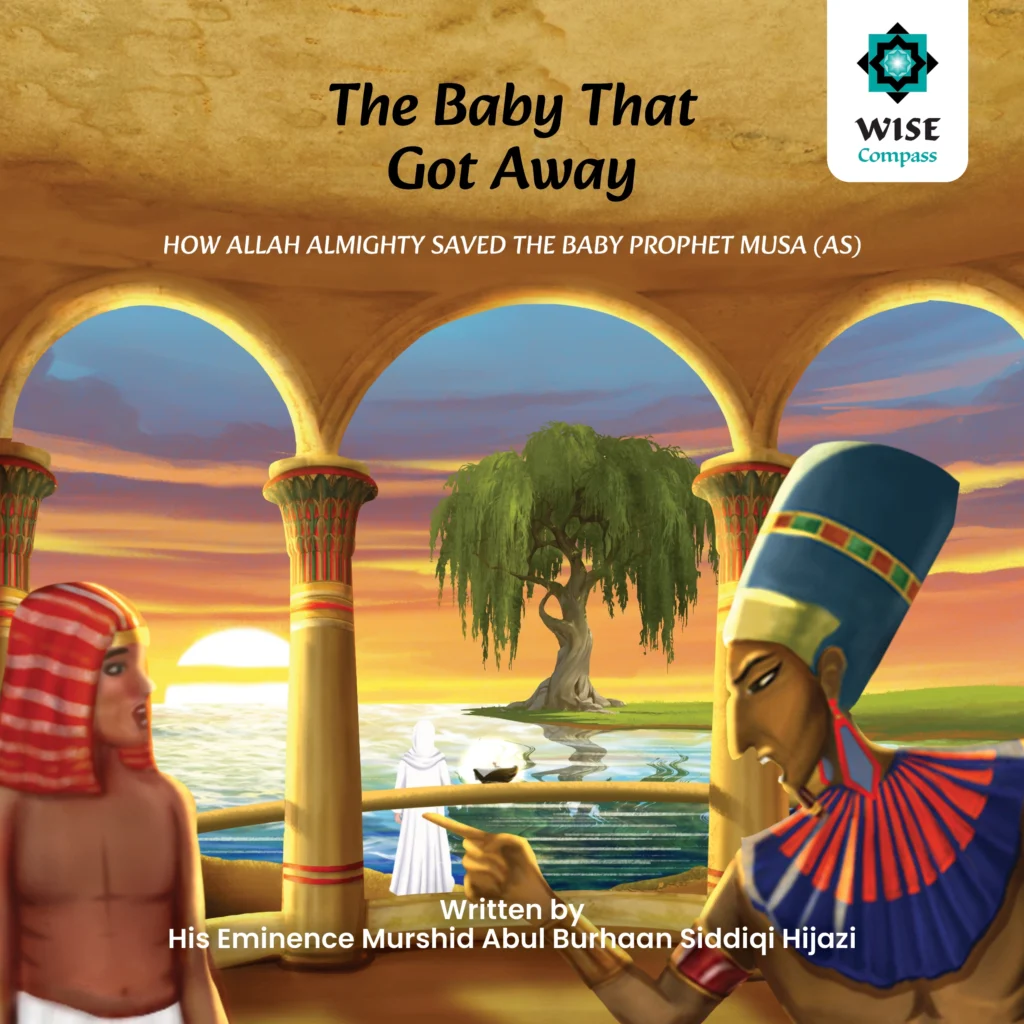
When Holy Prophet Muhammad ﷺ arrived in Madinah, he observed that the Jewish community fasted on this day. When he enquired about the reason, he was informed that it was the day Allah Almighty saved Prophet Musa (AS) from Pharaoh, parting the Red Sea and delivering the Bani Israeel from oppression.
Holy Prophet Muhammad ﷺ responded that Muslims have a closer connection to Prophet Musa (AS), and he recommended fasting on this day, encouraging believers to also fast on the 9th or 11th of Muharram to distinguish the Muslim practice from any other religion or practice.
If we contemplate the depth of that miracle, whereby a desperate people placed their trust entirely in Allah Almighty and were carried through impossible circumstances to safety and deliverance from evil, we may understand why it is marked by an act of Shukr (Gratitude). The fast of Ashura is a reminder of mercy and gratitude to us all, and something profound for us to understand about the Islamic New Year itself. It begins in remembrance. It begins in thankfulness.
To a child, rituals, rites, and history make most sense when they are explained to them, often by way of a story. And the Islamic New Year has one of the most remarkable stories in all of Islamic history.
When the persecution of Muslims in Makkah became unbearable, Allah Almighty granted His beloved Prophet ﷺ the command to make Hijrah to Madinah. The journey was dangerous. The enemies of Islam were hunting for Holy Prophet Muhammad ﷺ. He and his beloved companion Murshid Khalifa Abu Bakr Al Siddiq (RA) hid in the Cave of Thawr as their pursuers searched the hillside.
In those moments of danger, Murshid Khalifa Abu Bakr Al Siddiq (RA) was on high alert for the best practical assessment of circumstances and most concerned, not for himself, but for Holy Prophet Muhammad ﷺ. It is recorded that he said to Holy Prophet ﷺ, ‘If any of them look down at their feet, they will see us.’
Holy Prophet Muhammad ﷺ replied with absolute certainty and Tawakkul: ‘What do you think of two, the third of whom is Allah Almighty?’
That calm in the face of danger – that unshakeable certainty that Allah Almighty was present and protecting – that is the spirit the Islamic New Year calls us back to.
For a child, the question is simple and powerful: ‘When you feel afraid or like things are very hard, who can you turn to?’ The Islamic New Year is a yearly reminder that the answer is always, always, Allah Almighty.
This is one of the most common questions children ask, and one of the most important to answer honestly and clearly.
The Islamic New Year is a time of reflection and gratitude, not a festive celebration in the way the Gregorian New Year is marked. There is no prescribed Islamic practice of parties, fireworks, or exchanging gifts for the beginning of the next year. What is encouraged is introspection, Dua, extra fasting in Muharram, especially on Ashura, and beginning the year with renewed good intentions toward positivity and piety.
For younger children (ages 4-7), you can explain it this way:
‘The Islamic New Year is when we say thank you to Allah Almighty for all He has given us and ask Him to help us be even better in the year ahead.’
For older children (ages 8-12), you can go deeper:
‘The Islamic New Year is the start of the Hijri calendar, the calendar Muslims use. It starts in Muharram, which is one of the most special months of the year. Muslims use this time of the new year to think about the past year, make intentions for the year ahead, and fast, especially on the 10th of Muharram, to say thank you to Allah Almighty for the blessings He has given us.’
Here are some meaningful ways to mark the Islamic New Year at home:
Before a new year begins, it is worth pausing to remember Whose year it truly is. Allah Almighty did not simply create the universe and let it run without order. He created the laws that govern our physical, known universe, including time itself, and it is Allah Almighty alone Who has Sovereignty and Absolute Power over time. Every new year, Hijri or Gregorian, arrives only because He Wills it so.
To understand why the Islamic calendar is based on the Moon cycles and why certain months carry sacred status, we look to the noble Quran. Allah Almighty draws our attention to the divine design of time itself.
Allah Almighty states in the noble Quran at Surah Al Tawbah (9), Verse 36:
إِنَّ عِدَّةَ الشُّهُورِ عِنْدَ اللَّهِ اثْنَا عَشَرَ شَهْرًا فِي كِتَابِ اللَّهِ يَوْمَ خَلَقَ السَّمَاوَاتِ وَالْأَرْضَ مِنْهَا أَرْبَعَةٌ حُرُمٌ
Inna ‘iddata ash-shuhoori ‘indallahi ithnaa ‘ashara shahran fee kitaabillahi yawma khalaqas-samaawaati wal-arda minhaa arba’atun hurum
Indeed, the number of months with Allah Almighty is twelve lunar months in the record of Allah Almighty since the day He created the Heavens and the Earth; of these, four are sacred
This Ayah (Verse) is not simply a piece of astronomical information. It is a declaration that the structure of time, including the Islamic New Year and the sanctity of Muharram, was written by Allah Almighty from the moment of creation itself. Teaching your child this verse gives them a profound understanding: when they observe the Islamic New Year, they are honouring a system designed by Allah Almighty before the Earth was even formed.
One of the most loving acts a parent can do is to teach their child to begin the new year with words of Dua, speaking directly to Allah Almighty before anything else. This is one of the Islamic New Year traditions that matter the most.
A Dua widely shared among Muslims at the start of the new Hijri year, reflecting the spirit of seeking guidance and protection from Allah Almighty is:
Arabic:
اللَّهُمَّ أَدْخِلْهُ عَلَيْنَا بِالأَمْنِ وَالإِيمَانِ وَالسَّلامَةِ وَالإِسْلامِ وَرِضْوَانٍ مِنَ الرَّحْمَنِ
Transliteration:
Allahumma adkhilhu ‘alayna bil-amni wal-eemani was-salaamati wal-Islaami wa ridwaanin minar-Rahmaan
Meaning (Simple English):
O Allah Almighty, bring it (the new year) upon us with peace, faith, safety, Islam, and the pleasure of the Most Merciful
You should print this Dua out and put it on your fridge or some other appropriate, prominent and visible shared space in your home. Repeat it with your child on the first day of Muharram. Teach them that before anything else, before plans, before resolutions, before worrying about the year ahead, we ask Allah Almighty to place Barakah (Blessing) in it.
Parenting Tip: The New Year Intentions Journal
On the first day of Muharram, sit with your child and a notebook. Ask them three questions and write the answers together:
Keep the notebook and revisit it on next year’s Islamic New Year. Children are astonished and delighted to see how their answers grow. This simple exercise builds reflective thinking, Islamic identity, and the beautiful habit of beginning every year in gratitude and intention. It is a beautiful way to reflect the example of the earliest Muslims who began their new era with the Hijrah.
The Islamic New Year invites us to reflect on beginnings. And perhaps no beginning in Islamic history is more extraordinary, or more quietly powerful, than the story of Sayyidah Murshidah Haajrah (RA).
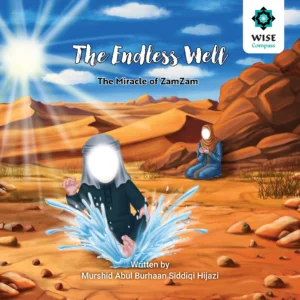
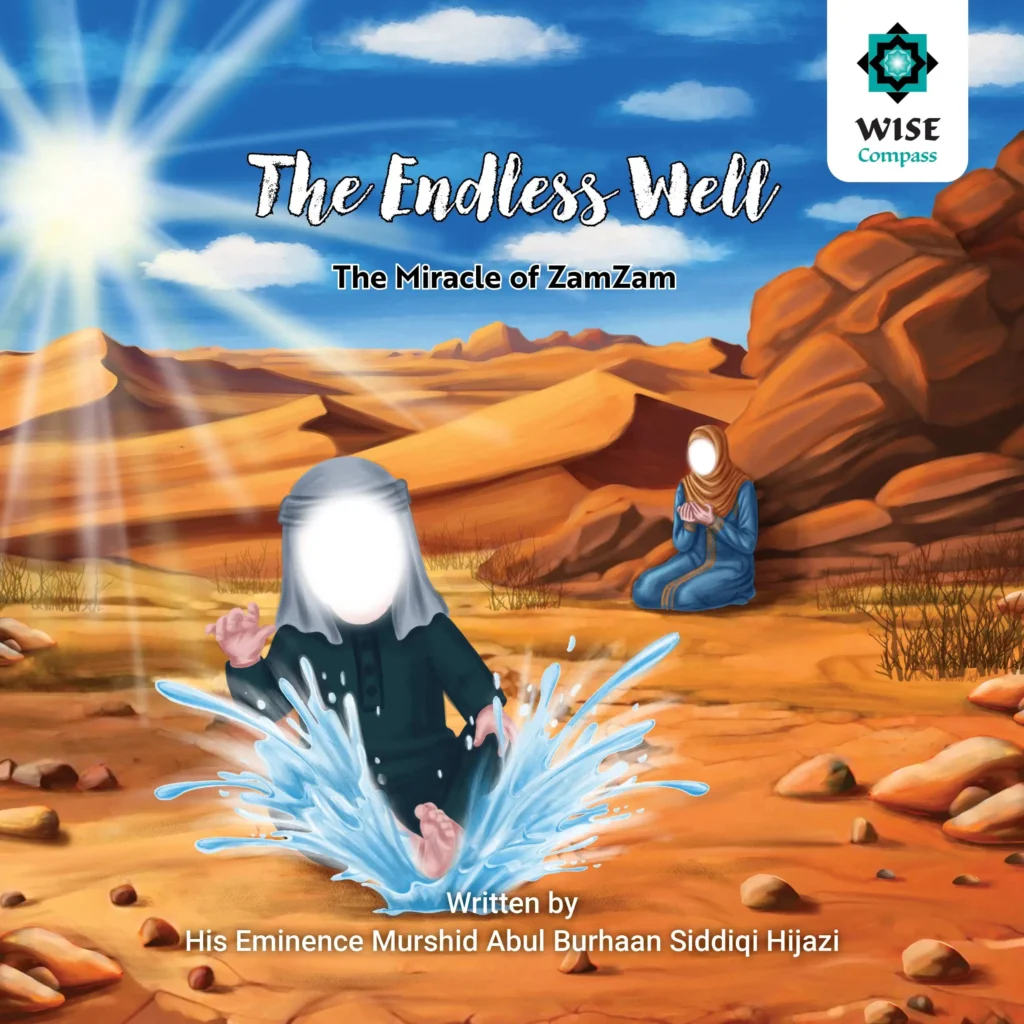
Left in the barren valley of Makkah by Prophet Ibraheem (AS) at the command of Allah Almighty, with only her infant son Prophet Ismaeel (AS) and a small supply of provisions, Sayyidah Murshidah Haajrah (RA) did not despair. When the provisions ran out and her child was crying from thirst, she ran seven times between the hills of Safa and Marwah, searching desperately for water. And then the miraculous and endless waters of ZamZam (The sacred well) burst forth from the ground to quench the thirst of these servants of Allah Almighty.
The act of a mother’s desperation and her absolute refusal to give up on the mercy of Allah Almighty became one of the defining acts of Islamic history and Islamic religious practice. To this day, during Hajj, millions of Muslim Hujjaj (Hajj pilgrims) re-enact these very steps taken by Sayyidah Murshida Haajrah (RA), by way of Sa’ee (The ritual of walking between Safa and Marwah). And to this day, the blessed water of ZamZam continues to flow and quench the thirst of millions of pilgrims who come to worship their Creator, Allah Almighty, daily.
This is not simply a miracle. It is a lesson about what new beginnings require of us: not comfort, not certainty, not ease, but Tawakkul (Trust in Allah Almighty). Allah Almighty did not remove Sayyidah Murshidah Haajrah (RA) from the desert. He answered her prayers and her sincerity there, in the middle of her struggle.
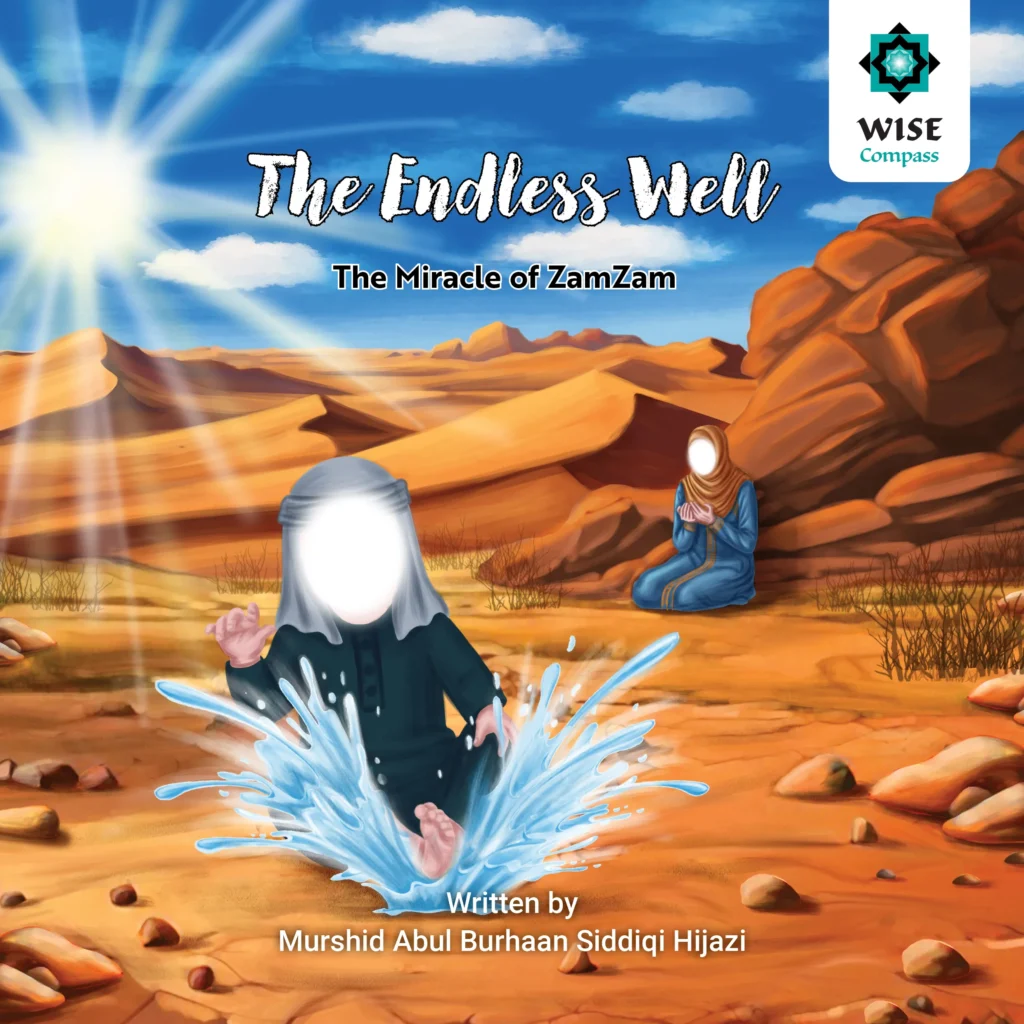
The Endless Well, from the Wise Compass library, tells this breathtaking story through the eyes of a curious eagle who watches over Sayyidah Murshidah Haajrah (RA) and Prophet Ismaeel (AS). It is told with warmth, wonder, and the kind of clarity that makes one of the most important stories in Islam accessible to every child and deeply moving for every parent.
Explore The Endless Well in the Wise Compass library
Read it with your child this Muharram. Let the story run like the blessed water it speaks about and do what stories do best, sink deeper into our minds, revive our hearts, and remain in our lives longer than mere explanations can.
There is no obligation in Islam to mark the Islamic New Year in any specific ritual way. What is encouraged is to begin Muharram with mindfulness, increased worship, and fasting, particularly on Yaum-e-Ashura, the 10th day of Muharram. The Islamic New Year is a time of reflection and renewed intention rather than a prescribed celebration, and the distinction matters: Muslims mark it purposefully, not festively.
The Islamic New Year shifts by approximately 11 days each Gregorian year because the Hijri calendar is lunar. The Islamic New Year 1447 AH (Anno Hegirae, Year of the Hijrah) falls in late June 2025 and therefore it can be anticipated that this will be 11 days sooner in 2026, circa mid-June 2026. As always, the precise date depends on the sighting of the crescent Moon during the year and month in question and may vary slightly by country.
Yaum-e-Ashura (The Day of Ashura) is the 10th of Muharram. Holy Prophet Muhammad ﷺ recommended fasting on this day (and one day before or after also) in gratitude to Allah Almighty for saving Prophet Musa (AS) from Pharaoh on the Day of Ashura. For a child, it can be explained simply: ‘We fast on this day to say a special thank you to Allah Almighty for looking after Prophet Musa (AS) and the people with him, just like Allah Almighty always looks after those who trust in Him.’ It is a day of gratitude, reflection, and Dua.
Fasting in Islam is only expected of adults who are physically able and children are not required to fast. However, involving children in the spirit of Ashura, through discussion, story, Dua, and even partial fasting for older children who wish to, is strongly encouraged. Many children feel great pride and connection to their Deen when they are included in meaningful acts of worship, even at a simplified level.
This is a valuable question to answer honestly with your child. The Gregorian New Year, celebrated on 1st January, is a cultural event that many people celebrate with parties and fireworks. The Islamic New Year is a spiritual milestone, a time to reflect, give thanks to Allah Almighty, fast, and make sincere intentions for the year ahead. Neither is wrong in what it represents. But the Islamic New Year calls Muslims to a deeper kind of beginning: one rooted in purpose, in gratitude, and in closeness to Allah Almighty. Explaining this distinction helps children understand that their tradition is not missing something; it is offering something different and something far richer in fact than any frivolous or temporary celebration can ever offer,
For young children, simplicity is the key. You might say: ‘Muslims have their own special calendar that follows the Moon. Every month starts when we can see a new Moon in the sky. Our new year begins in a month called Muharram, and it moves a little bit each year because the Moon’s calendar is slightly shorter than the Sun’s calendar.’ Many children find the Moon-based calendar special once it is explained in this way, and it opens conversations about Allah Almighty’s design of the universe, the Sun, the Moon, the stars, and how they all work together according to His Divine command and plan.
For younger children, making a simple Dua together and reading a meaningful Islamic story is a beautiful and sufficient method. For older children, discussing the story of the Hijrah, fasting on Ashura with parental support, and writing down intentions for the new year are more deeply impactful. The Parenting Tip journaling exercise included in this article is suitable for children aged 7 years and above. What matters most is that the Islamic New Year does not simply pass unnoticed in your family and that your child knows their family pauses, reflects, and begins the year with their heart turned towards Allah Almighty.